CAS 63-74-1
:Sulfamilamida
Descrição:
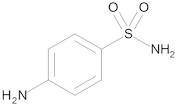
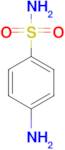
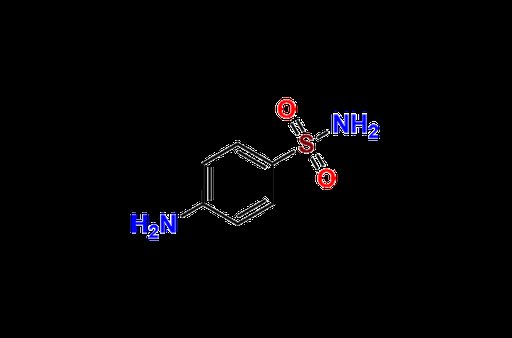
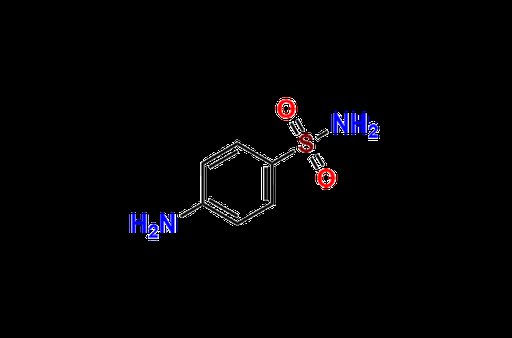
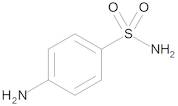
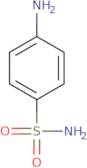
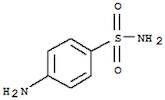
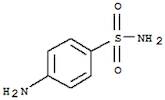
Sulfamilamida, com o número CAS 63-74-1, é um composto orgânico que pertence à classe de antibióticos sulfonamida. É caracterizado pelo seu grupo funcional sulfonamida, que consiste em um grupo sulfonila (–SO2) ligado a uma amina (–NH2). Este composto é tipicamente um sólido cristalino branco que é solúvel em água e apresenta um ponto de fusão que varia com a pureza. Sulfamilamida foi historicamente significativo como um dos primeiros agentes antibacterianos sintéticos, inibindo efetivamente o crescimento bacteriano ao interferir na síntese do ácido fólico. Seu mecanismo de ação envolve imitar o ácido para-aminobenzoico (PABA), um substrato necessário para o metabolismo bacteriano. Embora Sulfamilamida tenha sido amplamente substituído por antibióticos mais eficazes, lançou as bases para o desenvolvimento de medicamentos sulfa e continua a ser importante no estudo da química medicinal. Além disso, tem aplicações em vários campos, incluindo bioquímica e farmacologia, e é utilizado em ambientes de pesquisa para explorar a resistência a antibióticos e o metabolismo microbiano.
Fórmula:C6H8N2O2S
InChI:InChI=1S/C6H8N2O2S/c7-5-1-3-6(4-2-5)11(8,9)10/h1-4H,7H2,(H2,8,9,10)
Chave InChI:InChIKey=FDDDEECHVMSUSB-UHFFFAOYSA-N
SMILES:S(N)(=O)(=O)C1=CC=C(N)C=C1
Sinónimos:- (4-(Aminosulfonyl)phenyl)amine
- 1162F
- 4-(Aminosulfonyl)aniline
- 4-Aminobenzene-1-sulfonamide
- 4-Aminobenzenesulfonamide
- 4-Aminophenylsulfonamide
- 4-Aminosulfoneamide
- 4-Sulfamoylaniline
- A-349
- AVC
- Albexan
- Albosal
- Ambeside
- Aminobenzenesulfonamide
- Antistrept
- Astreptine
- Astrocid
- Bacteramid
- Bactesid
- Collomide
- Colsulanyde
- Copticide
- Deseptyl
- Dipron
- Ergaseptine
- Erysipan
- Estreptocida
- Exoseptoplix
- Gerison
- Gombardol
- Infepan
- Lusil
- Lysococcine
- Neococcyl
- Orgaseptine
- P-Aminophenylsulfonamide
- Pabs
- Prontalbin
- Prontylin
- Proseptal
- Proseptine
- Proseptol
- Pysococcine
- Sanamid
- Septanilam
- Septinal
- Septolix
- Septoplex
- Septoplix
- Stramid
- Strepamide
- Strepsan
- Streptagol
- Streptamid
- Streptasol
- Streptocid
- Streptocide
- Streptoclase
- Streptocom
- Streptol
- Strepton
- Streptopan
- Streptosil
- Streptozol
- Streptozone
- Streptrocide
- Sulfamidyl
- Sulfamine
- Sulfana
- Sulfanalone
- Sulfanidyl
- Sulfanil
- Sulfanilamid
- Sulfanilamida
- Sulfanilimide
- Sulfocidine
- Sulfonamid
- Sulfonamide
- Sulfonylamide
- Sulphanilamide
- Sulphonamide
- Therapol
- Tolder
- Vagitrol
- p-Aminobenzenesulfonamide
- p-Anilinesulfonamide
- p-Sulfamidoaniline
- p-Sulfamoylaniline
- sulfonamide p
- prontosil albom
- aniline-p-sulfonic amide
- pronzin album
- rubiazol a
- septamide album
- fourneau 1162
- Industrial Sulfanilamide
- Sulphanilamide crystals
- prontosil white
- stopton album
- Streptocid album
- Prontosil album
- Sulfanilamide
- prontosil i
- 1162 F
- F 1162
- F 1162
- Ver mais sinónimos
Ordenar por
Pureza (%)
0
100
|
0
|
50
|
90
|
95
|
100
Ministry of Agriculture Veterinary Drug Mixture 348 10 µg/mL in Acetonitrile:Water
CAS:- 102-65-8
- 112398-08-0
- 115550-35-1
- 122-11-2
- 1220-83-3
- 127-69-5
- 127-71-9
- 127-79-7
- 144-80-9
- 144-83-2
- 23282-55-5
- 2447-57-6
- 2462-17-1
- 526-08-9
- 57-67-0
- 59-40-5
- 63-74-1
- 68-35-9
- 70458-92-3
- 723-46-6
- 738-70-5
- 82419-36-1
- 91296-86-5
- 93106-60-6
- 98079-51-7
Cor e Forma:Mixture4-Aminobenzenesulfonamide
CAS:Fórmula:C6H8N2O2SPureza:99.0%Cor e Forma:Crystalline PowderPeso molecular:172.2Sulphanilamide
CAS:Impurity Sulfamethoxazole EP Impurity E
Applications The active metabolite of the antibacterial dye, Sulfamidochrysoidine. Inhibits folic acid synthesis in prokaryotes. Antibacterial.
References Colebrook, L., et al.: Lancet, 233, 1291 (1937), Dye, C., et al.: Nat. Rev. Microbiol., 7, 81 (2009), Isik, S., et al.: Bioorg. Med. Chem., 17, 1158 (2009),Fórmula:C6H8N2O2SCor e Forma:NeatPeso molecular:172.2Sulphanilamide
CAS:Sulphanilamide is an antimicrobial agent that inhibits the growth of bacteria by binding to their enzymes and blocking protein synthesis. In addition, sulphanilamide has been shown to inhibit the production of sulfanilamide, a potent inhibitor of tetracycline. Sulphanilamide is soluble in water and alcohol but not in organic solvents. The solubility of sulphanilamide can be increased by adding sodium salts or pH adjustment. Sulphanilamide is also used for wastewater treatment as it has inhibitory properties against sulfate-reducing bacteria. X-ray crystal structures have revealed that sulphanilamide binds to the active site of bacterial beta-lactamases through hydrogen bonds with both the NH group and the COOH group on its sulfur atom, resulting in inhibition of these enzymes. Sulphanilamide also interferes with bacterial DNA replication by inhibiting dna gyrase and topoisomerase IV. Sulphanilamide alsoFórmula:C6H8N2O2SCor e Forma:PowderPeso molecular:172.21 g/molSulphanilamide extrapure AR, 99%
CAS:Fórmula:C6H8N2O2SPureza:min. 99%Cor e Forma:White to off white, Crystalline powder, Clear to slight opalascent, Colourless to almost colourless, Clear, Colourless to almost colourlessPeso molecular:172.20Sulphanilamide pure, 99%
CAS:Fórmula:C6H8N2O2SPureza:min. 99%Cor e Forma:White to Off white, Crystalline powder, Clear to slight opalascent, Colourless to pale yellow, Clear, Colourless to pale yellowPeso molecular:172.20Sulphanilamide extrapure AR, ExiPlus, Multi-Compendial, 99%
CAS:Fórmula:C6H8N2O2SPureza:min. 99%Cor e Forma:White to off white, Crystalline powder, Clear to slight opalascent, Colourless to almost colourless, Clear, Colourless to almost colourlessPeso molecular:172.20