CymitQuimica logo

CAS 6482-34-4

:

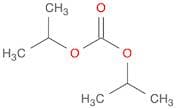
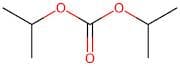
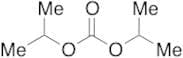
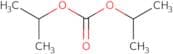
Carbonato de diisopropila

Descrição:
Carbonato de diisopropila (DIPC) é um composto orgânico com a fórmula química C7H14O3. É classificado como um éster de carbonato e é caracterizado por sua forma líquida clara e incolor com um odor suave e agradável. O DIPC é conhecido por sua baixa toxicidade e é frequentemente utilizado como solvente e reagente na síntese orgânica. Possui um ponto de ebulição relativamente baixo e é solúvel em vários solventes orgânicos, tornando-o versátil em aplicações químicas. O composto é estável em condições normais, mas deve ser armazenado longe de agentes oxidantes fortes. Carbonato de diisopropila também é utilizado na produção de produtos farmacêuticos, agroquímicos e como plastificante. Suas propriedades, como baixa volatilidade e boa solubilidade, fazem dele uma alternativa atraente a solventes mais perigosos em vários processos industriais. Além disso, o DIPC pode ser utilizado na formulação de revestimentos e adesivos, contribuindo para sua importância tanto em pesquisas quanto em aplicações comerciais.
Fórmula:C20H26O3
InChI:InChI=1/C20H26O3/c1-15-6-11-19(18(14-15)20(2,3)4)23-13-12-22-17-9-7-16(21-5)8-10-17/h6-11,14H,12-13H2,1-5H3
SMILES:Cc1ccc(c(c1)C(C)(C)C)OCCOc1ccc(cc1)OC
Sinónimos:
  • Bis-2-propyl carbonate
  • Carbonic acid bis(1-methylethyl) ester
  • Dipropan-2-Yl Carbonate
  • 2-Tert-Butyl-1-[2-(4-Methoxyphenoxy)Ethoxy]-4-Methylbenzene
Ordenar por

Pureza (%)
0
100
|
0
|
50
|
90
|
95
|
100
7 produtos.
  • Diisopropyl carbonate

    CAS:
    Fórmula:C7H14O3
    Pureza:98%
    Cor e Forma:Liquid
    Peso molecular:146.1843

    Ref: IN-DA0036VP

    1g
    26,00€
    5g
    67,00€
    10g
    105,00€
    25g
    200,00€
    100g
    354,00€
    250mg
    25,00€
  • Diisopropyl carbonate

    CAS:
    Diisopropyl carbonate
    Pureza:98%
    Peso molecular:146.19g/mol

    Ref: 54-OR75003

    1g
    30,00€
    5g
    58,00€
    25g
    215,00€
    100g
    447,00€
    500g
    1.913,00€
  • Tenofovir Impurity 84

    CAS:
    Fórmula:C7H14O3
    Peso molecular:146.19

    Ref: 4Z-T-02129

    5mg
    A consultar
    10mg
    A consultar
    25mg
    A consultar
    50mg
    A consultar
    100mg
    A consultar
  • Diisopropyl carbonate

    CAS:
    Fórmula:C7H14O3
    Pureza:97%
    Cor e Forma:Liquid
    Peso molecular:146.186

    Ref: 10-F424157

    1g
    20,00€
    5g
    57,00€
    10g
    98,00€
    25g
    196,00€
    100g
    366,00€
  • Diisopropyl Carbonate (Stabilized with Calcium Carbonate)

    Produto Controlado
    CAS:
    <p>Applications Diisopropyl Carbonate is used in the synthesis of Huperizine A (H826000) a reversible alkaloid inhibitor of AChE which crosses the blood-brain barrier. A potential therapeutic agent for Alzheimer’s disease. It reduces cell death induced by glutamate in primary cultures derived from forebrain, hippocampus, cortex and cerebellum of embryonic rat brain.<br>References Ding, X. et al.: Tetrahedron 68, 6240 (2012); Wang, Y.-E., et al.: Acta Pharmacol. Sin., 7, 110 (1986), Ved, H.S., et al.: Neuroreport, 8, 963 (1997)<br></p>
    Fórmula:C7H14O3
    Cor e Forma:Neat
    Peso molecular:146.18

    Ref: TR-D455500

    10g
    586,00€
    25g
    896,00€
    2500mg
    209,00€
  • Diisopropyl carbonate

    CAS:
    Fórmula:C7H14O3
    Peso molecular:146.18

    Ref: ST-EA-CP-T5044

    10mg
    A consultar
    25mg
    A consultar
    50mg
    A consultar
    100mg
    A consultar
  • Diisopropylcarbonate

    CAS:
    <p>Diisopropylcarbonate is a chemical compound that is used as a polymerization initiator. It is also used in the production of polycarbonates, as a corrosion inhibitor, and to inhibit the formation of fatty acids in animal feed. Diisopropylcarbonate has been shown to react with chlorine gas to yield dichlorocarbonic acid and hydrogen chloride. This reaction is an example of oxidative carbonylation. The average particle diameter of diisopropylcarbonate ranges from 0.1-0.2 microns, which can be varied by changing its boiling point or pressure during synthesis. Diisopropylcarbonate can also be prepared by reacting ethylene with carbon monoxide and hydrogen chloride at high temperature and pressure.</p>
    Fórmula:C7H14O3
    Pureza:Min. 95%
    Peso molecular:146.18 g/mol

    Ref: 3D-FD150101

    50g
    863,00€
    100g
    1.036,00€