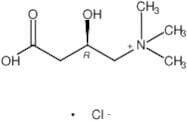
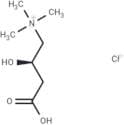
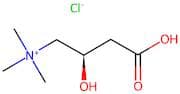
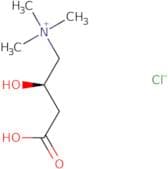
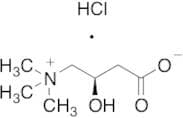
CAS 6645-46-1
:(R)-(3-carboxi-2-hidroxipropil)trimetilamônio cloreto
Descrição:
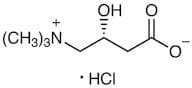
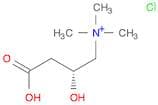
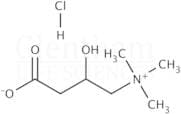
(R)-(3-carboxi-2-hidroxipropil)trimetilamônio cloreto, com o número CAS 6645-46-1, é um composto de amônio quaternário caracterizado por seu grupo trimetilamônio e um grupo funcional ácido carboxílico. Este composto é tipicamente um sólido ou pó branco cristalino que é solúvel em água, tornando-o útil em várias aplicações, incluindo como surfactante, emulsificante ou em sistemas biológicos. Sua estrutura inclui um átomo de nitrogênio carregado positivamente ligado a três grupos metila e uma cadeia de hidroxipropila que contém tanto um ácido carboxílico quanto um grupo hidroxila, contribuindo para sua natureza anfifílica. Essa anfifilicidade permite que ele interaja com substâncias hidrofílicas e hidrofóbicas, aumentando sua utilidade em formulações. Além disso, a presença do grupo de amônio quaternário confere propriedades antimicrobianas, tornando-o relevante em aplicações farmacêuticas e cosméticas. Dados de segurança devem ser consultados para manuseio e potencial toxicidade, uma vez que compostos de amônio quaternário podem apresentar graus variados de atividade biológica.
Fórmula:C7H16NO3·Cl
InChI:InChI=1S/C7H15NO3.ClH/c1-8(2,3)5-6(9)4-7(10)11;/h6,9H,4-5H2,1-3H3;1H/t6-;/m1./s1
Chave InChI:InChIKey=JXXCENBLGFBQJM-FYZOBXCZSA-N
SMILES:C([N+](C)(C)C)[C@@H](CC(O)=O)O.[Cl-]
Sinónimos:- (2R)-
- (2R)-3-carboxy-2-hydroxy-N,N,N-trimethylpropan-1-aminium chloride
- (R)- 1-Propanaminium
- (R)-(-)-Carnitine hydrochloride
- (R)-(3-Carboxy-2-hydroxypropyl)trimethylammoniumchlorid
- (R)-3-Carboxy-2-Hydroxy-N,N,N-Trimethyl-1-
- (R)-3-Carboxy-2-hydroxy-N,N,N-trimethylpropan-1-aminiumchloride
- (R)-Carnitinehydrochloride
- 1-Butanaminium, 2,4-dihydroxy-N,N,N-trimethyl-4-oxo-, chloride (1:1), (2R)-
- 1-Propanaminium, 3-carboxy-2-hydroxy-N,N,N-trimethyl-
- 1-Propanaminium, 3-carboxy-2-hydroxy-N,N,N-trimethyl-, chloride, (2R)-
- 1-Propanaminium, 3-carboxy-2-hydroxy-N,N,N-trimethyl-, chloride, (R)-
- 3-Carboxy-2-Hydroxy-N,N,N-Trimethyl-,Chloride,(R)-1-Propanaminiu
- 3-carboxy-2-hydroxy-N,N,N-trimethyl-, chloride, (2R)-
- <span class="text-smallcaps">L</span>-(-)-Carnitine hydrochloride
- Ammonium, (3-carboxy-2-hydroxypropyl)trimethyl-, chloride, (-)-
- L-(-)-Carnitine hydrochloride
- L-(3-Carboxy-2-Hydroxypropyl)Trimethylammoniumchloride
- L-Carnitinechloride
- Lc-80
- Levocarnitine chloride
- Levocarnitinechloride
- Propanaminiumchloride
- chlorure de (R)-(3-carboxy-2-hydroxypropyl)trimethylammonium
- cloruro de (R)-(3-carboxi-2-hidroxipropil)trimetilamonio
- Ver mais sinónimos
Ordenar por
Pureza (%)
0
100
|
0
|
50
|
90
|
95
|
100
11 produtos.
L-Carnitine Hydrochloride
CAS:Fórmula:C7H15NO3·HClPureza:>98.0%(T)Cor e Forma:White to Almost white powder to crystalPeso molecular:197.66L-Carnitine hydrochloride
CAS:Fórmula:C7H15NO3·HCIPureza:98.0 - 102.0 % (dried basis)Cor e Forma:White powderPeso molecular:197.66L-Carnitine hydrochloride
CAS:L-Carnitine hydrochloride, a polar zwitterion, supports mitochondrial β-oxidation, fatty acid transport, antioxidant activity, and metabolic research.Fórmula:C7H16ClNO3Pureza:99.749%Cor e Forma:White To Slightly Beige Crystalline PowderPeso molecular:197.66L-Carnitine hydrochloride
CAS:L-Carnitine hydrochlorideFórmula:C7H16NO3·ClPureza:99%Cor e Forma: white solidPeso molecular:197.66g/molL-Carnitine hydrochloride
CAS:L-Carnitine hydrochloride is a naturally occurring amino acid that is involved in the metabolism of fat. L-Carnitine hydrochloride is a low-dose form of L-carnitine and has been shown to improve symptoms of diabetic neuropathy by increasing tissue levels of carnitine and reducing oxidative stress. This drug also has biological properties that include the ability to increase cellular energy production, and to improve the activity of primary cells in tissue culture. It also has proton buffering effects, which have been demonstrated using light microscopy on muscle cells from rats with papillary muscle. In addition, this drug has been shown to have antioxidant properties when tested on redox potential in rat liver mitochondria. L-Carnitine hydrochloride can be used as treatment for congestive heart failure, cardiac arrhythmias, and other metabolic disorders.Fórmula:C7H16NO3·ClPureza:Min. 95%Cor e Forma:White PowderPeso molecular:197.66 g/mol(R)-3-Carboxy-2-hydroxy-N,N,N-trimethylpropan-1-aminium chloride
CAS:Fórmula:C7H16ClNO3Pureza:98%Cor e Forma:SolidPeso molecular:197.66(R)-3-Carboxy-2-hydroxy-N,N,N-trimethylpropan-1-aminium Chloride
CAS:Produto ControladoStability Hygroscopic
Applications (R)-3-Carboxy-2-hydroxy-N,N,N-trimethylpropan-1-aminium chloride is an important co-factor of mammalian mitochondrial energy metabolism. It is also a good active ingredient for dry-skin.
References Geier, David A., et al.: Neurochem. Res., 38(11), 2336-2341 (2013);Tanno, Osamu, et al.: Fragrance J., 33(8), 82-85 (2005);Fórmula:C7H16NO3·ClCor e Forma:White To Off-WhitePeso molecular:197.66