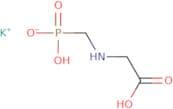
CAS 70901-12-1
:Glifosato de potássio
Descrição:
Glifosato de potássio é um composto químico que serve como forma salina de glifosato, um herbicida amplamente utilizado. É caracterizado por sua eficácia no controle de um amplo espectro de ervas daninhas, particularmente espécies anuais e perenes. Como herbicida sistêmico, Glifosato de potássio é absorvido pela folhagem e translocado por toda a planta, levando, em última instância, à sua morte. O composto é tipicamente solúvel em água, o que facilita sua aplicação em práticas agrícolas. Seu modo de ação envolve a inibição de uma via enzimática específica (a via do ácido shikímico) que é essencial para o crescimento e desenvolvimento das plantas, tornando-o seletivo para plantas em relação aos animais. Glifosato de potássio é frequentemente preferido por seu perfil de toxicidade mais baixo em comparação com outros herbicidas, embora ainda seja importante manuseá-lo com cuidado e seguir as diretrizes de segurança. Além disso, seu uso está sujeito à supervisão regulatória para garantir a segurança ambiental e a eficácia em aplicações agrícolas.
Fórmula:C3H8NO5P·xK
InChI:InChI=1S/C3H8NO5P.K/c5-3(6)1-4-2-10(7,8)9;/h4H,1-2H2,(H,5,6)(H2,7,8,9);
Chave InChI:InChIKey=MFRGZCUFVVSDIM-UHFFFAOYSA-N
SMILES:C(NCC(O)=O)P(=O)(O)O.[K]
Sinónimos:- 39600-42-5
- 70901-12-1
- Glycine, N-(phosphonomethyl)-, potassium salt
- Glycine, N-(phosphonomethyl)-, potassium salt (1:?)
- Glyphosate potassium salt
- N-(Phosphonomethyl)glycine potassium salt
- Potassium N-(phosphonomethyl)glycine
- Potassium glyphosate
- Roundup Gold
- Uragan Forte
- VisionMAX
- glycine, N-(phosphonomethyl)-, potassium salt (1:1)
- Ver mais sinónimos
Ordenar por
Pureza (%)
0
100
|
0
|
50
|
90
|
95
|
100
2 produtos.
N-(Phosphonomethyl)-glycine potassium,50% aqueous solution
CAS:Glyphosate is a herbicide that inhibits the enzyme EPSP synthase, which is responsible for the synthesis of essential aromatic amino acids in plants. Glyphosate is rapidly absorbed by plants and has been shown to inhibit cellular metabolic reactions in plant tissues. It is also resistant to biodegradation. Glyphosate has been shown to cause an increase in the production of fatty acids and glycol ethers, which are toxic to animals, including humans. In addition, glyphosate may have synergic effects with potassium ions, which are necessary for plant growth and development. Potassium ions have also been shown to enhance the reaction between glyphosate and other chemicals such as phenol or nitrite, leading to the formation of toxic reaction products.Fórmula:C3H7KNO5PPureza:Min. 95%Cor e Forma:Clear LiquidPeso molecular:207.16 g/mol