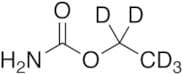
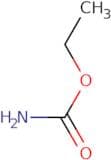
CAS 73962-07-9
:uretano-etilo-D5
- (2H5)ethyl carbamate
- 1,1,2,2,2-pentadeuterioethyl carbamate
- Ethylurethane-(ethyl-D5)
- Ethan-d5-ol, carbaMate
- Ethyl carbamate-D5 Solution, 100ppm
- Ethyl-d5 carbamate Solution in Methanol, 100μg/mL
- [2H5]-Urethane
- URETHANE-ETHYL-D5, 98 ATOM % D
- urethane-d5(ethyl-d5)
- Ethyl Carbamate- ethyl-D5
- URETHANE-ETHYL-D5
- ETHYL-D5 CARBAMATE
- CarbaMic Acid (Ethyl-d5)Ester
- Urethane-(ethyl-d5), 98%, 98 atom%D
- Deuterated urethane
- Carbamic acid ethyl ester-(ethyl-D5)
- Ver mais sinónimos
Ethyl-d5 Carbamate
CAS:Fórmula:CD3CD2OCONH2Pureza:99 atom % DCor e Forma:White SolidPeso molecular:94.07906Urethane-d5
CAS:Produto ControladoApplications Isotope labelled Urethane (U82500), which is a naturally occurring contaminant in fermented foods, particularly wine, stone-fruit brandies, and bread. This substance is reasonably anticipated to be a human carcinogen (1) despite being an additive in some alcoholic beverages and foods (2). It binds covalently with DNA however due to its low unavoidable daily intake, it is considered of negligible concern (3).Drinking water contaminant candidate list 3 (CCL 3) compound as per United States Environmental Protection Agency (EPA). Environmental contaminants; Food contaminants.
References 1. Mirvish, S. et al.: Adv. Cancer Res. 1968;11:1-42.2. Battaglia R. et al.: Food Addit Contam. 1990 Jul-Aug;7(4):477-96.3. Zimmerli B. et al.: Mutat Res. 1991 Mar-Apr;259(3-4):325-50.Fórmula:C32H5H2NO2Cor e Forma:White To Light BrownPeso molecular:94.12Urethane-d5
CAS:Produto ControladoUrethane-d5 is a compound that is widely used in various research applications. It is a deuterated form of urethane, which is a chemical compound derived from methanol and dimethyl fumarate. Urethane-d5 has been extensively studied for its potential as a steroid precursor and its role in the synthesis of 27-hydroxycholesterol. It has also been investigated for its interaction with other compounds such as tenofovir, calpain, and dopamine. Additionally, urethane-d5 has shown reactivity towards proton donors and has been utilized in studies related to peptidoglycan metabolism. This controlled product is commonly dissolved in solvents like dimethyl sulfoxide and can be incorporated into various experimental protocols involving etoricoxib, famotidine, cellulose, and other substances. With its diverse range of applications, urethane-d5 offers researchers a valuable tool for their scientific investigations.Fórmula:C3H7NO2Pureza:Min. 95%Peso molecular:94.12 g/mol