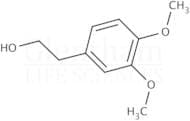
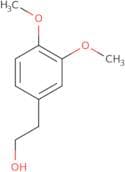
CAS 7417-21-2
:2-(3,4-Dimetoxifenil)etanol
Descrição:
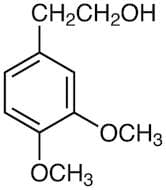
2-(3,4-Dimetoxifenil)etanol, com o número CAS 7417-21-2, é um composto orgânico caracterizado por sua estrutura fenólica e a presença de dois grupos metóxi no anel aromático. Este composto apresenta um grupo hidroxila (-OH) ligado a uma cadeia etílica de dois carbonos, o que contribui para sua classificação como um álcool. Os grupos metóxi aumentam a solubilidade do composto em solventes orgânicos e podem influenciar sua reatividade e atividade biológica. Tipicamente, compostos como este exibem polaridade moderada devido ao grupo hidroxila, permitindo a formação de ligações de hidrogênio. A presença dos substituintes metóxi também pode afetar as propriedades eletrônicas do composto, impactando potencialmente suas interações em sistemas biológicos. 2-(3,4-Dimetoxifenil)etanol pode ser de interesse em vários campos, incluindo química medicinal e ciência dos materiais, devido às suas potenciais propriedades farmacológicas e aplicações na síntese de moléculas mais complexas. Sua estabilidade, reatividade e características de solubilidade fazem dele um composto valioso para mais pesquisas e desenvolvimento.
Fórmula:C10H14O3
InChI:InChI=1/C10H14O3/c1-12-9-4-3-8(5-6-11)7-10(9)13-2/h3-4,7,11H,5-6H2,1-2H3
Chave InChI:InChIKey=SRQAJMUHZROVHW-UHFFFAOYSA-N
SMILES:O(C)C1=C(OC)C=CC(CCO)=C1
Sinónimos:- 1,2-Dimethoxy-4-(2-hydroxyethyl)benzene
- 1-(2-Hydroxyethyl)-3,4-dimethoxybenzene
- 2-(3,4-Dimethoxyphenyl)ethan-1-ol
- 2-(3,4-Dimethoxyphenyl)ethanol
- 3,4-Dimethoxy-β-phenethyl alcohol
- 3,4-Dimethoxybenzeneethanol
- 3,4-Dimethoxyphenethanol
- 3,4-Dimethoxyphenyl ethanol
- 3,4-Dimethyoxyphenethyl Alcohol
- Af 821
- Benzeneethanol, 3,4-dimethoxy-
- Homoveratryl alcohol
- NSC 101852
- NSC 179202
- Phenethyl alcohol, 3,4-dimethoxy-
- AKOS 222-31
- 3,4-DIMETHOXYPHENETHYL ALCOHOL 98%
- 3,4-Dimethoxybenzeneethanol, 3,4-Dimethoxyphenethyl alcohol, Homoveratryl alcohol
- 3,4-DIMETHOXYPHENETHYL ALCOHOL
- 3,4-DIAMETHOXYBENZYL METHANOL
- Ver mais sinónimos
Ordenar por
Pureza (%)
0
100
|
0
|
50
|
90
|
95
|
100
8 produtos.
2-(3,4-Dimethoxyphenyl)ethanol
CAS:Fórmula:C10H14O3Pureza:>98.0%(GC)Cor e Forma:White to Light yellow to Light orange powder to crystalPeso molecular:182.222-(3,4-Dimethoxyphenyl)ethanol, 98%
CAS:This Thermo Scientific Chemicals brand product was originally part of the Alfa Aesar product portfolio. Some documentation and label information may refer to the legacy brand. The original Alfa Aesar product / item code or SKU reference has not changed as a part of the brand transition to Thermo SciFórmula:C10H14O3Pureza:98%Cor e Forma:White to pale yellow or pale cream, Powder or chunksPeso molecular:182.222-(3,4-Dimethoxyphenyl)ethanol
CAS:Fórmula:C10H14O3Pureza:98%Cor e Forma:SolidPeso molecular:182.2164Ref: IN-DA00F9VT
5kgA consultar10kgA consultar5g20,00€1g21,00€10g25,00€25g53,00€100g131,00€500g365,00€3,4-Dimethoxyphenethyl alcohol
CAS:3,4-Dimethoxyphenethyl alcoholFórmula:C10H14O3Pureza:≥95%Cor e Forma: white to faint yellow. viscous liquidPeso molecular:182.22g/mol3,4-Dimethoxyphenyl ethanol
CAS:3,4-Dimethoxyphenyl ethanol is a product of the asymmetric synthesis of 3,4-dimethoxyphenylacetic acid. It has been shown to have high redox potentials and hydrochloric acid resistance. 3,4-Dimethoxyphenyl ethanol has been used in the delignification of cellulose fibers and has also been shown to have photophysical and photochemical properties. This compound binds with hydroxyl groups on proteins, which may be due to its ability to undergo acylation reactions. The binding of 3,4-dimethoxyphenyl ethanol with human liver microsomes was found to be rapid and reversible. Kinetic analysis showed that this binding can be explained by substrate binding or acylation reaction.Fórmula:C10H14O3Pureza:Min. 95%Cor e Forma:White PowderPeso molecular:182.22 g/mol