CAS 75968-40-0
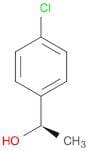
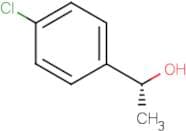
:(R)-1-(4-Clorofenil)etanol
Descrição:
(R)-1-(4-Clorofenil)etanol, com o número CAS 75968-40-0, é um composto orgânico caracterizado por sua estrutura quiral, que inclui um grupo hidroxila (-OH) ligado a um átomo de carbono secundário. Este composto apresenta um grupo 4-clorofenila, indicando a presença de um átomo de cloro substituído no anel fenólico, o que pode influenciar sua reatividade química e propriedades físicas. A quiralidade da molécula significa que ela existe em duas formas enantioméricas, sendo a configuração (R) uma delas, que pode ter atividades biológicas e interações distintas. Tipicamente, compostos como este podem exibir solubilidade moderada em solventes polares devido ao grupo hidroxila, enquanto o anel aromático contribui para características hidrofóbicas. A presença do átomo de cloro pode aumentar a lipofilicidade do composto e também pode afetar suas propriedades farmacológicas. Esses compostos são frequentemente de interesse na química medicinal e podem servir como intermediários na síntese de produtos farmacêuticos ou agroquímicos.
Fórmula:C8H9ClO
Sinónimos:- (1R)-1-(4-chlorophenyl)ethanol
- (R)-1-(4-Chloro-phenyl)-ethanol
- R-1-(4-Chloro)phenethyl Alcohol
- (R)-(+)-1-(4-chlorophenyl)ethan-1-ol
- (R)-(+)-1-(4-chlorophenyl)-1-ethanol
Ordenar por
Pureza (%)
0
100
|
0
|
50
|
90
|
95
|
100
5 produtos.
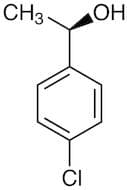
(R)-1-(4-Chlorophenyl)ethan-1-ol
CAS:Fórmula:C8H9ClOPureza:>98.0%(GC)Cor e Forma:Colorless to Light yellow clear liquidPeso molecular:156.61(R)-1-(4-Chlorophenyl)ethanol
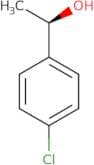
CAS:(R)-1-(4-Chlorophenyl)ethanol is a chiral alcohol that can be used in the synthesis of enantiopure compounds. The racemic mixture of this alcohol is not suitable for use as a substrate in asymmetric synthesis because it has no optical activity. This alcohol is oxidized by dehydrogenase enzymes to form (S)-1-(4-chlorophenyl)ethanol and an H radical, which then reacts with O2 to form HO2 and (R)-1-(4-chlorophenyl)ethyl radical. The reactivity of these two radicals will depend on the concentration of the substrate and the presence of other substrates that compete with it for binding sites on the enzyme. In general, short-chain alcohols are more easily hydrated than longer chain alcohols. The reaction rate also increases with temperature, although at high temperatures, substrate binding and product release may become limiting factors.Fórmula:C8H9ClOPureza:Min. 95%Peso molecular:156.61 g/mol