CAS 763-69-9
:Etil 3-etoxipropionato
Descrição:
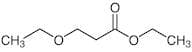
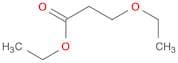
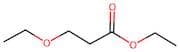
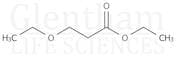
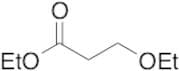
Etil 3-etoxipropionato, com o número CAS 763-69-9, é um composto orgânico classificado como um éster. É caracterizado por sua forma líquida clara e incolor e tem um odor agradável e frutado. A estrutura molecular consiste em um grupo etílico e uma porção de 3-etoxipropionato, que contribui para sua solubilidade em solventes orgânicos, enquanto é menos solúvel em água. Este composto é utilizado principalmente como solvente em várias aplicações, incluindo revestimentos, tintas e tintas, devido à sua capacidade de dissolver uma ampla gama de substâncias. Etil 3-etoxipropionato exibe volatilidade moderada e tem um ponto de ebulição relativamente baixo, tornando-o adequado para uso em formulações que requerem tempos de secagem rápidos. Além disso, é considerado de baixa toxicidade, mas ainda devem ser observadas precauções de segurança ao manuseá-lo, como com qualquer substância química. No geral, suas propriedades únicas o tornam valioso em aplicações industriais, particularmente na formulação de produtos que requerem características eficazes de solvente.
Fórmula:C7H14O3
InChI:InChI=1/C7H14O3/c1-3-9-6-5-7(8)10-4-2/h3-6H2,1-2H3
Chave InChI:InChIKey=BHXIWUJLHYHGSJ-UHFFFAOYSA-N
SMILES:C(C(OCC)=O)COCC
Sinónimos:- 3-Ethoxypropanoic acid ethyl ester
- 3-Ethoxypropionate d'ethyle
- 3-Ethoxypropionic acid ethyl ester
- 3-Etoxipropionato De Etilo
- Ai3-03254
- Beta-Aethoxypropionsaeure-Aethylester
- Bis-(2-Ethoxy)ethyl peroxydicarbonate
- Brn 1751976
- EEP
- Ektapro EEP
- Ethoxypropionic acid, ethyl ester
- Ethyl 3-ethoxypropanoate
- Ethyl 4-oxahexanoate
- Ethyl Ethoxypropionate
- Ethyl beta-ethoxypropionate
- Ethyl β-ethoxypropionate
- Ethyl-3-ethoxypropionat
- Ethylester kyseliny 3-ethoxypropionove
- Ethylester kyseliny 3-ethoxypropionove [Czech]
- Nsc 8870
- Powerblox SV 33
- Propanoic acid, 3-ethoxy-, ethyl ester
- Propionate, 3-Ethoxy-, Ethyl
- Propionic acid, 3-ethoxy-, ethyl ester
- Sankio EEP
- Solfine EP
- Ucar Ester EEP
- β-Ethoxypropionic acid ethyl ester
- Ethyl-3-ethoxypropionate
- Ethyl 3-ethoxypropionate
- 4-03-00-00697 (Beilstein Handbook Reference)
- 3-ethoxy-propanoicaciethylester
- beta-Ethoxypropionic acid ethyl ester
- Propanoicacid,3-ethoxy-,ethylester
- 3-ethoxy-propanoicacidethylester
- ethoxypropionicacid,ethylester
- Ethyl 3-ethoxypropionate, 99+%
- 3-ethoxy-propionicaciethylester
- Ektapro EEP Solvent
- ethylesterkyseliny3-ethoxypropionove
- Ethyl ester of 3-ethoxypropanoic acid
- Ethylethoxy propionate
- Ver mais sinónimos
Ordenar por
Pureza (%)
0
100
|
0
|
50
|
90
|
95
|
100
9 produtos.
Ethyl 3-Ethoxypropionate
CAS:Fórmula:C7H14O3Pureza:>99.0%(GC)Cor e Forma:Colorless to Almost colorless clear liquidPeso molecular:146.19Ethyl 3-ethoxypropionate, 99+%
CAS:Ethyl 3-ethoxypropionate is used in the synthesis of phenols and selective inhibitors of cyclin-dependant kinase 4/6 for novel cancer therapies. It is also used as a solvent to prepare polymers. Further, it is used in paints and coatings. This Thermo Scientific Chemicals brand product was originallyFórmula:C7H14O3Pureza:99+%Cor e Forma:Clear colorless, LiquidPeso molecular:146.19Ethyl 3-ethoxypropionate
CAS:Fórmula:C7H14O3Pureza:≥ 99.0%Cor e Forma:Clear, colourless to light yellow liquidPeso molecular:146.19Ethyl 3-Ethoxypropionate
CAS:Ethyl 3-ethoxypropionate is a cycloaddition product of ethyl 3-ethoxypropanoate. It has been shown to be more chemically stable than the reactants and has an increased uptake in the reaction solution. Ethyl 3-ethoxypropionate is able to undergo a cycloaddition process with diethyl succinate under conditions of high temperature and pressure, leading to the formation of methyl ethyl malonic acid. This chemical reaction takes place via an intermolecular hydrogen bonding interaction between the ethoxy group on one molecule and the ester group on the other molecule. The cyclohexane ring on each molecule also forms a hydrogen bonding interaction with its corresponding methyl or ethyl groups. Ethyl 3-ethoxypropionate is not reactive in its pure form but can undergo reactions when exposed to chemicals such as potassium hydroxide, which leads to its degradation into propionic acid and ethanol.Fórmula:C7H14O3Pureza:Min. 95%Peso molecular:146.19 g/mol