CAS 766-51-8
:2-Cloroanisol
Descrição:
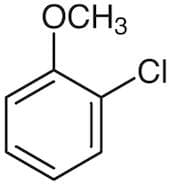
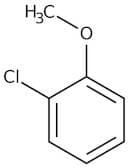
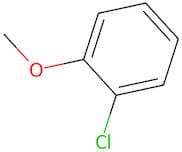
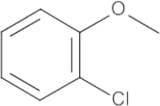
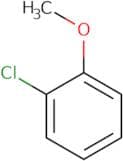
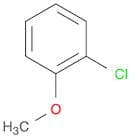
2-Cloroanisol, com o número CAS 766-51-8, é um composto orgânico caracterizado por um grupo cloro ligado à segunda posição de uma molécula de anisole, que consiste em um grupo metóxi (–OCH₃) ligado a um anel benzênico. Este composto geralmente aparece como um líquido incolor a amarelo pálido com um odor doce e aromático. É ligeiramente solúvel em água, mas mais solúvel em solventes orgânicos como etanol e éter. 2-Cloroanisol é conhecido por seu uso na síntese de vários intermediários químicos e também pode servir como agente aromatizante ou componente de fragrância. Sua estrutura química permite que participe de reações de substituição aromática eletrofílica, tornando-se um bloco de construção versátil na síntese orgânica. Além disso, é importante manusear este composto com cuidado devido à sua potencial toxicidade e impacto ambiental, bem como sua classificação como substância perigosa. Medidas de segurança adequadas devem ser observadas ao trabalhar com 2-Cloroanisol em ambientes laboratoriais ou industriais.
Fórmula:C7H7ClO
InChI:InChI=1S/C7H7ClO/c1-9-7-5-3-2-4-6(7)8/h2-5H,1H3
Chave InChI:InChIKey=QGRPVMLBTFGQDQ-UHFFFAOYSA-N
SMILES:O(C)C1=C(Cl)C=CC=C1
Sinónimos:- 1-Chloro-2-methoxybenzene
- 2-Chloromethoxybenzene
- 2-Chlorophenol methyl ether
- 2-Methoxy-1-chlorobenzene
- 2-Methoxyphenyl chloride
- Anisole, o-chloro-
- Benzene, 1-chloro-2-methoxy-
- NSC 155175
- o-Chloroanisole
- o-Chloromethoxybenzene
- o-Chlorophenyl methyl ether
- Ver mais sinónimos
Ordenar por
Pureza (%)
0
100
|
0
|
50
|
90
|
95
|
100
9 produtos.
2-Chloroanisole
CAS:Fórmula:C7H7ClOPureza:>98.0%(GC)Cor e Forma:Colorless to Almost colorless clear liquidPeso molecular:142.582-Chloroanisole, 98%
CAS:This Thermo Scientific Chemicals brand product was originally part of the Alfa Aesar product portfolio. Some documentation and label information may refer to the legacy brand. The original Alfa Aesar product / item code or SKU reference has not changed as a part of the brand transition to Thermo SciFórmula:C7H7ClOPureza:98%Cor e Forma:Liquid, Clear colorlessPeso molecular:142.582-Chloroanisole
CAS:2-Chloroanisole is a chlorinated aromatic compound that has been used in industrial settings as a solvent and intermediate. It is a precursor in the synthesis of various organic compounds, such as benzoate esters, and it is also used for the conversion of catechol to 2-chloroacetophenone. 2-Chloroanisole has been found to be an effective methylating agent, which can be used for the production of methyl benzoate. The reaction mechanism proceeds via an electrophilic attack of chlorine on the benzene ring. This mode of reaction is known as the Suzuki coupling reaction. The rate of this reaction increases with increasing temperature and pH. To produce ionization techniques that are sensitive to different isotopomers, activated carbon can be used as a catalyst. Activated carbon also has the ability to remove volatile organic compounds from air or water, which makes it useful for removing chlorinated aromatic compounds from contaminated environments.Fórmula:C7H7ClOPureza:Min. 95%Cor e Forma:Clear LiquidPeso molecular:142.58 g/molRef: IN-DA003393
Produto descontinuado