![1-{4-[7-(diethylamino)-4-methyl-2-oxo-2H-chromen-3-yl]phenyl}-1H-pyrrole-2,5-dione](/_next/image/?url=https%3A%2Fstatic.cymitquimica.com%2Fcas-image%2Fthumb-webp%2F292327-1-4-7-diethylamino-4-methyl-2-oxo-2h-chromen-3-yl-phenyl-1h-pyrrole-25-dione.webp&w=3840&q=75)
CAS 76877-33-3
:1-{4-[7-(dietilamino)-4-metil-2-oxo-2H-cromen-3-il]fenil}-1H-pirrol-2,5-diona
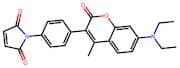
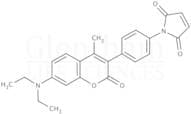
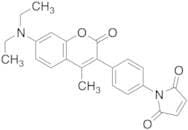
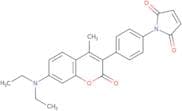
- 3-(4-Maleimidophenyl)-4-methyl-7-(diethylamino)coumarin
1-[4-[7-(diethylamino)-4-methyl-2-oxochromen-3-yl]phenyl]pyrrole-2,5-dione
CAS:Fórmula:C24H22N2O4Pureza:98%Cor e Forma:SolidPeso molecular:402.44257-Diethylamino-3-(4-maleimidophenyl)-4-methylcoumarin
CAS:Fórmula:C24H22N2O4Pureza:≥ 95.0%Cor e Forma:Pale yellow to yellow or orange powder or solidPeso molecular:402.447-Diethylamino-3-(4-maleimidophenyl)-4-methylcoumarin
CAS:Produto ControladoApplications 7-Diethylamino-3-(4-maleimidophenyl)-4-methylcoumarin is a thiol-reactive fluorescent probe. 7-Diethylamino-3-(4-maleimidophenyl)-4-methylcoumarin (CPM) is a thiol-reactive fluorescent probe. CPM selectively forms Michael adducts in the presence of hyperreactive sulfhydryls. CPM has been used to monitor the release of thiols, quantitate thiol in microplate reactions, and to distinguish proliferating cancer cells by nucleolar protein staining. Dyes and metabolites.
References 1. Sippel, T.O. 1981. J. Histochem. Cytochem. 29: 1377-1381. PMID: 73204962. Liu, G., et al. 1994. J. Biol. Chem. 269: 33028-33034. PMID: 78065313. Liu, G., et al. 1994. Mol. Pharmacol. 45: 189-200. PMID: 81146704. Feng, W., et al. 1999. Mol. Pharmacol. 55: 821-831. PMID: 102205605. Han, M.S., et al. 2004. J. Org. Chem. 69: 2853-2855. PMID: 150749386. Ptak, C.P., et al. 2005. Biochemistry. 44: 62-71. PMID: 156288467. Khersonsky, O., et al. 2006. Chembiochem. 7: 49-53. PMID: 16329153Fórmula:C24H22N2O4Cor e Forma:NeatPeso molecular:402.447-Diethylamino-3-(4'-maleimidylphenyl)-4-methylcoumarin
CAS:7-Diethylamino-3-(4'-maleimidylphenyl)-4-methylcoumarin is a fluorescent probe that can be used to measure the cytosolic calcium concentration. This probe binds to heparin, which is a positive ionic charge and has been shown to cause an increase in cytosolic calcium levels in cultured cells. 7-Diethylamino-3-(4'-maleimidylphenyl)-4-methylcoumarin has been used to successfully monitor changes in cytosolic calcium levels in response to pharmacological agents, such as the monoclonal antibody TNF-α. 7-Diethylamino-3-(4'-maleimidylphenyl)-4-methylcoumarin has also been used as a marker for tissue culture studies, where it was found that this molecule binds to the ryanodine receptor and alters its redox potential.Fórmula:C24H22N2O4Pureza:Min. 95%Cor e Forma:PowderPeso molecular:402.44 g/mol