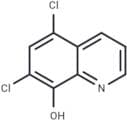
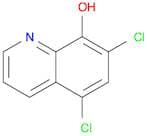
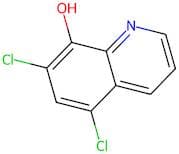
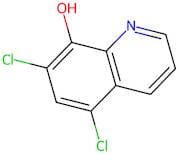
CAS 773-76-2
:Cloroxina
Descrição:
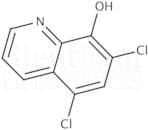
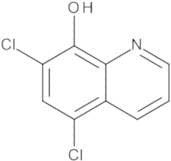
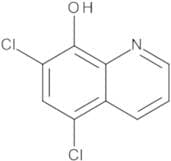
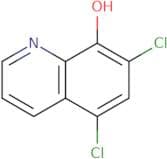
Cloroxina, com o número CAS 773-76-2, é um composto orgânico que pertence à classe dos derivados de quinolina. É reconhecido principalmente por suas propriedades antimicrobianas, tornando-o útil em várias aplicações farmacêuticas, particularmente como agente antifúngico. Cloroxina é tipicamente caracterizado por sua aparência cristalina amarela e é solúvel em solventes orgânicos, enquanto apresenta solubilidade limitada em água. O composto possui uma fórmula molecular que reflete sua estrutura, que inclui um átomo de cloro e um anel de quinolina, contribuindo para sua atividade biológica. Cloroxina tem sido utilizado em formulações tópicas para tratar infecções cutâneas e condições causadas por fungos e bactérias. Além disso, é importante manusear esta substância com cuidado, pois pode representar riscos à saúde se ingerida ou gerida de forma inadequada. No geral, Cloroxina serve como um composto significativo na química medicinal, particularmente no desenvolvimento de tratamentos antifúngicos.
Fórmula:C9H5Cl2NO
InChI:InChI=1S/C9H5Cl2NO/c10-6-4-7(11)9(13)8-5(6)2-1-3-12-8/h1-4,13H
Chave InChI:InChIKey=WDFKMLRRRCGAKS-UHFFFAOYSA-N
SMILES:OC=1C2=C(C(Cl)=CC1Cl)C=CC=N2
Sinónimos:- 5,7-Dichlorchinolin-8-ol
- 5,7-Dichloro-8-hydroxyquinoline
- 5,7-Dichloro-8-oxyquinoline
- 5,7-Dichloro-8-quinolinol
- 5,7-Dichlorooxine
- 5,7-Dichloroquinolein-8-ol
- 5,7-Dichloroquinoleine-8-Ol
- 5,7-Dichloroquinolin-8-Ol
- 5,7-Dichloroxine
- 5,7-Dicloroquinolin-8-Ol
- CHQ
- Capitrol
- Chlofucid
- Chloroxine
- Chloroxyquinoline
- Clofuzid
- Dichlorohydroxyquinoline
- Dichloroquinolinol
- Dichloroxin
- Endiaron
- Nsc 3904
- Quesyl
- Quinolor
- Quixalin
- 8-Quinolinol, 5,7-dichloro-
- 5,7-Dichloro-8-hydroxy-quinoline
- 5,7-Dichloro-8-hydroxy
- Ver mais sinónimos
Ordenar por
Pureza (%)
0
100
|
0
|
50
|
90
|
95
|
100
12 produtos.
Clioquinol Related Compound B (5,7-Dichloroquinolin-8-ol)
CAS:Drugs containing a quinoline or isoquinoline ring-system (whether or not hydrogenated) not further fusedFórmula:C9H5Cl2NOCor e Forma:White Off-White PowderPeso molecular:212.97482Chloroxine
CAS:Chloroxine (Capitrol) is a quinoline derivative with antibacterial activity. Topical administration of chloroxine diminishes mitotic activity in the epidermis.Fórmula:C9H5Cl2NOPureza:99.75%Cor e Forma:SolidPeso molecular:214.05Clioquinol EP Impurity B (Clioquinol USP Related Compound B)
CAS:Fórmula:C9H5Cl2NOCor e Forma:Pale Yellow SolidPeso molecular:214.055,7-Dichloro-8-Hydroxyquinoline
CAS:5,7-Dichloro-8-HydroxyquinolinePureza:97%Peso molecular:214.05g/mol5,7-Dichloro-8-quinolinol
CAS:Fórmula:C9H5Cl2NOPureza:≥ 98.0%Cor e Forma:White to grey or beige crystalline powderPeso molecular:214.055,7-Dichloroquinolin-8-ol
CAS:Produto ControladoFórmula:C9H5Cl2NOCor e Forma:NeatPeso molecular:214.05Chloroxine
CAS:Applications Chloroxine, is an impurity of Cioquinol, which is an antifungal and antiprotozoal drug.
References Hongchao, J., et al.: Cancer Lett., 312, 11 (2011); LeVine, H., et al.: Neuroscience Lett., 465, 99 (2009);Fórmula:C9H5Cl2NOCor e Forma:Off-WhitePeso molecular:214.055,7-Dichloro-8-hydroxyquinoline
CAS:5,7-Dichloro-8-hydroxyquinoline (5,7-DC8HQ) is a mitochondrial drug that inhibits mitochondrial functions by binding to the ATP synthase. It has been shown to be effective against bacteria resistant to antimicrobial agents in vivo and also showed genotoxic activity in vitro. 5,7-DC8HQ binds to the magnesium site of the ATP synthase protein and prevents the formation of an intramolecular hydrogen bond, which leads to inhibition of ATP synthesis. This drug has also been shown to cause membrane potential depolarization in mitochondria.Fórmula:C9H5Cl2NOPureza:Min. 98.5 Area-%Cor e Forma:White PowderPeso molecular:214.05 g/mol