CAS 778-82-5
:Acetato de etilo 1H-indol-3
Descrição:
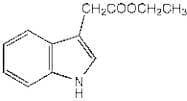
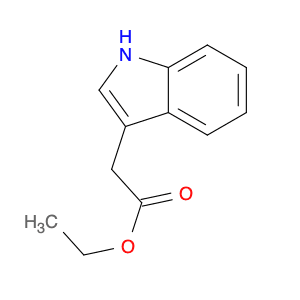
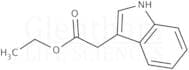
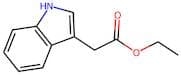
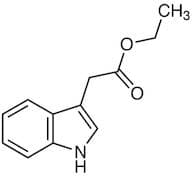
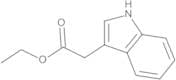
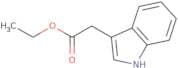
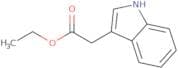
Acetato de etilo 1H-indol-3, com o número CAS 778-82-5, é um composto orgânico que pertence à classe dos derivados do indol. Apresenta um anel de indol, que é uma estrutura bicíclica composta por um anel de benzeno fundido a um anel de pirrol, e um grupo funcional acetato ligado ao átomo de nitrogênio do indol. Este composto é tipicamente um líquido incolor a amarelo pálido com um odor característico. Acetato de etilo 1H-indol-3 é conhecido por suas aplicações na síntese de vários fármacos e agroquímicos, bem como por seu uso potencial em perfumaria devido à sua fragrância agradável. É moderadamente solúvel em solventes orgânicos e apresenta baixa solubilidade em água. O composto é estável em condições normais, mas deve ser manuseado com cuidado, pois pode representar riscos à saúde se ingerido ou inalado. Sua reatividade pode ser influenciada pela presença de outros grupos funcionais e condições ambientais, tornando-o um assunto de interesse na síntese orgânica e na química medicinal.
Fórmula:C12H13NO2
InChI:InChI=1S/C12H13NO2/c1-2-15-12(14)7-9-8-13-11-6-4-3-5-10(9)11/h3-6,8,13H,2,7H2,1H3
Chave InChI:InChIKey=HUDBDWIQSIGUDI-UHFFFAOYSA-N
SMILES:C(C(OCC)=O)C=1C=2C(NC1)=CC=CC2
Sinónimos:- (1H-Indol-3-yl)acetic acid ethyl ester
- 1H-indole-3-acetic acid, ethyl ester
- 3-[(Ethoxycarbonyl)methyl]indole
- Ethyl (1H-indol-3-yl)acetate
- Ethyl 1H-indol-3-ylacetate
- Ethyl 1H-indole-3-acetate
- Ethyl 2-(1H-indol-3-yl)acetate
- Ethyl 2-(indol-3-yl)acetate
- Ethyl indole-3-acetate
- Ethyl β-indolylacetate
- IAA ethyl ester
- Indole-3-acetic acid, ethyl ester
- Ver mais sinónimos
Ordenar por
Pureza (%)
0
100
|
0
|
50
|
90
|
95
|
100
9 produtos.
Ethyl indole-3-acetate, 98+%
CAS:This Thermo Scientific Chemicals brand product was originally part of the Alfa Aesar product portfolio. Some documentation and label information may refer to the legacy brand. The original Alfa Aesar product / item code or SKU reference has not changed as a part of the brand transition to Thermo SciFórmula:C12H13NO2Pureza:98+%Cor e Forma:White to cream to pale brown or pale yellow, PowderPeso molecular:203.24Ethyl 2-(1H-indol-3-yl)acetate
CAS:Fórmula:C12H13NO2Pureza:98%Cor e Forma:SolidPeso molecular:203.2371Indole-3-acetic acid ethyl ester
CAS:Fórmula:C12H13NO2Pureza:≥ 98.0%Cor e Forma:White to light yellow or pale-brown powder to crystalsPeso molecular:203.24Ethyl 2-(1H-indol-3-yl)acetate
CAS:Ethyl 2-(1H-indol-3-yl)acetatePureza:98%Peso molecular:203.24g/molEthyl 3-Indoleacetate
CAS:Fórmula:C12H13NO2Pureza:>98.0%(GC)Cor e Forma:White to Light yellow to Light orange powder to crystalPeso molecular:203.24Ethyl Indole-3-acetate
CAS:Produto ControladoApplications Ethyl Indole-3-acetate is a compound used in the synthesis of 9H-Pyrrolo[1,2-α]Indoles via Michael Addition-Condensation with α,β-Unsaturated Ketimines.
References Zhang, M., et al.: J. Heterocyclic Chem. (2016)Fórmula:C12H13NO2Cor e Forma:NeatPeso molecular:203.24Indole-3-acetic acid ethyl ester
CAS:Indole-3-acetic acid ethyl ester is a fine chemical that is used as a building block for synthesis of more complex compounds. It is a versatile building block that can be used in reactions to produce useful intermediates and scaffolds. Indole-3-acetic acid ethyl ester has been used to synthesize indole derivatives, which are useful in the research of cancer and Alzheimer's disease. Indole-3-acetic acid ethyl ester can also be used to produce indoles as well as other heterocyclic compounds, such as benzoxazines. The compound has CAS number 778-82-5.Fórmula:C12H13NO2Pureza:Min. 99.0 Area-%Peso molecular:203.24 g/molEthyl indole-3-acetate
CAS:Ethyl indole-3-acetate (EIA) is a compound that inhibits the growth of certain cancer cells. It belongs to the group of acyl halides. EIA inhibits the synthesis of nucleic acids, proteins and other macromolecules by the cancer cells. It has been shown to be effective in reducing the size of tumors in mice with prostate and breast cancer. This compound also inhibits enzymes such as abscisic acid oxidase, which is responsible for converting abscisic acid into reactive oxygen species. EIA has been shown to have hemolytic activity in human lung tissue, but not ovules or human erythrocytes. This may be due to its ability to inhibit hormone production and cause an increase in progesterone levels.Fórmula:C12H13NO2Pureza:Min. 95%Cor e Forma:PowderPeso molecular:203.24 g/molEthyl 3-indoleacetate
CAS:Fórmula:C12H13NO2Pureza:98%Cor e Forma:Solid, CrystallinePeso molecular:203.241