CAS 781652-57-1
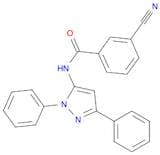
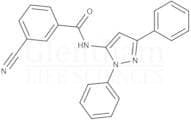
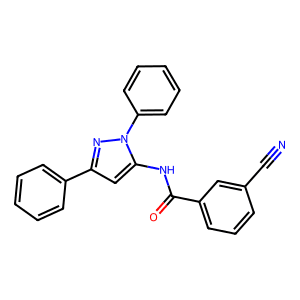
:3-Ciano-N-(1,3-difenil-1H-pirazol-5-il)benzamida
- 3-Cyano-N-(2,5-diphenyl-2H-pyrazol-3-yl)-benzamide
- 3-Cyano-N-(2,5-diphenylpyrazol-3-yl)benzamide
- Benzamide, 3-cyano-N-(1,3-diphenyl-1H-pyrazol-5-yl)-
- Cdppb
- 3-Cyano-N-(1,3-diphenyl-1H-pyrazol-5-yl)benzamide
3-Cyano-N-(1,3-diphenyl-1H-pyrazol-5-yl)benzamide
CAS:Fórmula:C23H16N4OPureza:97%Cor e Forma:SolidPeso molecular:364.39933-Cyano-N-(1,3-Diphenyl-1H-Pyrazol-5-Yl)Benzamide
CAS:3-Cyano-N-(1,3-Diphenyl-1H-Pyrazol-5-Yl)BenzamidePureza:97%Peso molecular:364.40g/molCDPPB
CAS:CDPPB is a modulator of mGluR5 positive allosteric(with an EC50 of 27 nM in Chinese hamster ovary cells expressing human mGluR5).
Fórmula:C23H16N4OPureza:99.16%Cor e Forma:SolidPeso molecular:364.4mGluR5 Ligand, CDPPB
CAS:CDPPB is a potent, selective, and orally active mGluR5 ligand. It has been shown to inhibit the activation of cell signaling pathways that are involved in dopamine release and glutamate-mediated synaptic transmission. CDPPB is characterized by allosteric activity, which means that it binds to the metabotropic glutamate receptor (mGluR) and alters its function. This drug also inhibits protein synthesis and increases locomotor activity in mice. CDPPB has been studied as a possible treatment for skin cancer and may have therapeutic potential for other diseases of the central nervous system such as Parkinson's disease.
Fórmula:C23H16N4OPureza:Min. 95%Peso molecular:364.4 g/molRef: 3D-GGB65257
Produto descontinuado