CAS 80-05-7
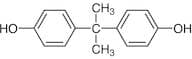
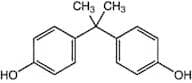
:2,2-Bis(4-hidroxifenil)propano
Descrição:
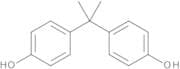
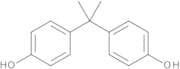
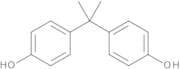
2,2-Bis(4-hidroxifenil)propano, comumente conhecido como bisfenol A (BPA), é um composto orgânico caracterizado por sua estrutura, que apresenta dois grupos hidroxilo fenólicos ligados a uma cadeia de propano. Este composto é um sólido incolor a temperatura ambiente e é solúvel em solventes orgânicos, mas tem solubilidade limitada em água. O BPA é utilizado principalmente na produção de plásticos de policarbonato e resinas epóxi, que são utilizados em uma ampla gama de aplicações, incluindo recipientes para alimentos, garrafas de água e revestimentos. Apresenta estabilidade térmica e resistência à degradação química, tornando-o adequado para materiais de alto desempenho. No entanto, o BPA também é conhecido por suas propriedades disruptoras endócrinas, levantando preocupações sobre seus potenciais efeitos na saúde humana e no meio ambiente. Agências reguladoras têm examinado seu uso, levando a restrições em certas aplicações, particularmente aquelas que envolvem contato com alimentos. No geral, embora o BPA seja um valioso produto químico industrial, seu perfil de segurança continua a ser um tema de pesquisa e debate significativo.
Fórmula:C15H16O2
InChI:InChI=1S/C15H16O2/c1-15(2,11-3-7-13(16)8-4-11)12-5-9-14(17)10-6-12/h3-10,16-17H,1-2H3
Chave InChI:InChIKey=IISBACLAFKSPIT-UHFFFAOYSA-N
SMILES:C(C)(C)(C1=CC=C(O)C=C1)C2=CC=C(O)C=C2
Sinónimos:- (4,4'-Dihydroxydiphenyl)dimethylmethane
- 2,2-Bis(4-hydroxyphenyl)propane
- 2,2-Bis(p-hydroxyphenyl)propane
- 2,2-Bis-(4-Hydroxy-Phenyl)-Propane
- 2,2-Di(4-Hydroxyphenyl) Propane
- 2,2-Di(4-phenylol)propane
- 4,4'-(1-Methylethylidene)bisphenol
- 4,4'-Bisphenol A
- 4,4'-Dihydroxyphenyl-2,2-Propane
- 4,4'-Isopropilidendifenol
- 4,4'-Isopropylidendiphenol
- 4,4'-Isopropylidene bisphenol
- 4,4'-Isopropylidenebis[phenol]
- 4,4'-Methylethylidenebisphenol
- 4,4-Isopropylidene Diphenyl
- 4,4′-(1-Methylethylidene)bis[phenol]
- 4,4′-(Propane-2,2-diyl)diphenol
- B 0494
- BPA
- Bis(4-hydroxyphenyl)dimethylmethane
- Bis(p-hydroxyphenyl)propane
- Bis[Phenol], 4,4'-(1-Methylethylidene)-
- Bisphenol A
- Bisphenol, 4,4'-(1-Methylethylidene)-
- Bpa 154
- Bpa 157
- Bpa-M
- Dian
- Diano
- Diphenol methylethylidene
- Diphenylolpropane
- Hg 3876
- Hidorin F 285
- Hidorin F 568
- Ht 3082
- Ipognox 88
- Isopropylidenebis(4-hydroxybenzene)
- Nsc 1767
- Nsc 17959
- Nupole BPE-60
- P,P'-Isopropylidene Diphenol
- Parabis
- Parabis A
- Phenol, 4,4'-(1-methylethylidene)bis-
- Phenol, 4,4'-isopropylidenedi-
- Pluracol 245
- Rikabanol
- Tetrabromobisphenol A Allyl Ether
- p,p'-Bisphenol A
- p,p'-Dihydroxydiphenylpropane
- p,p'-Isopropylidenebisphenol
- p,p'-Isopropylidenediphenol
- Ver mais sinónimos
Ordenar por
Pureza (%)
0
100
|
0
|
50
|
90
|
95
|
100
16 produtos.
2,2-Bis(4-hydroxyphenyl)propane
CAS:Fórmula:C15H16O2Pureza:>99.0%(GC)Cor e Forma:White powder to lumpPeso molecular:228.29Bisphenol A, 97+%
CAS:Bisphenol A is an important monomer used in the production of polycarbonate plastics which is utilized to make various consumer goods like water bottles, sports equipment, medical devices, eyeglass lenses, house hold electronics, compact discs (CDs) and digital versatile discs (DVDs). Bisphenol A cFórmula:C15H16O2Pureza:97+%Cor e Forma:Powder or fused solid or granules or prills, WhitePeso molecular:228.29Bisphenol A
CAS:Bisphenol a, diphenylolpropane (4,4'-isopropylidenediphenol) and its saltsFórmula:C15H16O2Cor e Forma:PowderPeso molecular:228.11503Bisphenol A
CAS:Fórmula:C15H16O2Pureza:(GC) ≥ 97.0%Cor e Forma:White powder, granules, prills or solidPeso molecular:228.29Bisphenol A 100 µg/mL in Acetonitrile
CAS:Fórmula:C15H16O2Cor e Forma:Single SolutionPeso molecular:228.29GB 31660.2-2019 Antibiotics Mixture 168 30-100 µg/mL in Methanol
CAS:Produto ControladoCor e Forma:MixtureBisphenol A
CAS:Bisphenol A: used in making polycarbonates/epoxy resins, has estrogen-like effects.Fórmula:C15H16O2Pureza:99.93%Cor e Forma:White Solid White Crystals Flakes PrillsPeso molecular:228.29Bisphenol A
CAS:Produto ControladoApplications Bisphenol A is a monomer used for policarbonate and epoxy resins; exhibits estrogenic activity. BPA is also used as a building block in polycarbonate bottles and in the epoxy-resin liners of metal cans. This compound is a contaminant of emerging concern (CECs)
Not a dangerous good if item is equal to or less than 1g/ml and there is less than 100g/ml in the package
References Krishnan, A.V., et al.: Endocrinology, 132, 2279 (1993); Steinmetz, R., et al.: Trends Endocrinol. Metab., 9, 124 (1998); Petersen, H., et al.: Eur. Food Res. Technol., 216, 355 (2003);Fórmula:C15H16O2Cor e Forma:NeatPeso molecular:228.29Bisphenol A pure, 97%
CAS:Fórmula:C15H16O2Pureza:min. 97%Cor e Forma:White, Crystalline powder/ compound/ granules/ flakes/ chips, Clear, ColourlessPeso molecular:228.29Bisphenol A
CAS:Bisphenol A is a chemical compound used to make polycarbonate plastics and epoxy resins. It is also used in the production of some dental sealants and composites. Bisphenol A has been shown to have an adverse effect on human health, as it has been linked to various diseases such as coronary heart disease, type 2 diabetes, and breast cancer. The most sensitive route of exposure is through the maternal blood during pregnancy. This chemical can be found in some common food containers, including baby bottles and food cans. Bisphenol A binds to estrogen receptors and alters their activity levels by mimicking the natural hormone estradiol. The optimum concentration for binding varies depending on the cell type and receptor present. Bisphenol A can also increase or decrease certain enzyme activities in vitro depending on the concentrations used. Bisphenol A is also an analytical reagent that can be used for polymerase chain reactions (PCR) to identify genes from specificFórmula:C15H16O2Pureza:Min. 95%Cor e Forma:PowderPeso molecular:228.29 g/mol