CAS 813-77-4
:clorofosfato de dimetilo
Descrição:
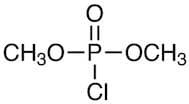
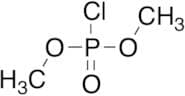
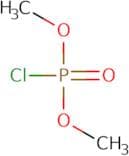
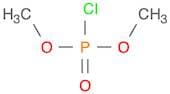
clorofosfato de dimetilo, com o número CAS 813-77-4, é um composto organofosforado caracterizado por sua estrutura química, que inclui dois grupos metila e um grupo funcional clorofosfato. É um líquido incolor a amarelo pálido com um odor pungente, e é conhecido por sua alta reatividade, particularmente devido à presença do grupo clorofosfato. Este composto é utilizado principalmente como intermediário na síntese de vários produtos químicos, incluindo pesticidas e produtos farmacêuticos. Também é reconhecido por seu potencial como agente de guerra química, o que levanta preocupações sobre sua toxicidade e impacto ambiental. clorofosfato de dimetilo é solúvel em solventes orgânicos, mas tem solubilidade limitada em água. Precauções de segurança são essenciais ao manusear esta substância, pois pode ser prejudicial se inalada, ingerida ou absorvida pela pele. Métodos adequados de armazenamento e descarte são cruciais para mitigar os riscos associados ao seu uso.
Fórmula:C2H6ClO3P
InChI:InChI=1/C2H6ClO3P/c1-5-7(3,4)6-2/h1-2H3
SMILES:COP(=O)(Cl)OC
Sinónimos:- Phosphorochloridic acid, dimethyl ester
- Methyl phosphorochloridate
- Dimethyl Phosphorochloridate
Ordenar por
Pureza (%)
0
100
|
0
|
50
|
90
|
95
|
100
4 produtos.
Dimethyl Chlorophosphate
CAS:Fórmula:C2H6ClO3PPureza:>98.0%(GC)(T)Cor e Forma:Colorless to Almost colorless clear liquidPeso molecular:144.49Dimethyl Phosphorochloridate (90%)
CAS:Produto ControladoStability Moisture Sensitive
Applications A phosphorylating agent.
Not a dangerous good if item is equal to or less than 1g/ml and there is less than 100g/ml in the package
References Sartori, et al.: Chem. Rev., 48, (1951), Nachmansohn, et al.: Adv. Enzymology, 12, 259 (1951)Fórmula:C2H6ClO3PPureza:90%Cor e Forma:NeatPeso molecular:144.494Dimethyl phosphorochloridate
CAS:Dimethyl phosphorochloridate is an organophosphorus compound that inhibits the growth of bacteria by binding to the 50S ribosomal subunit. The drug binds to the 3'-terminal adenosine residue in 16S ribosomal RNA and prevents protein synthesis, leading to cell death. Dimethyl phosphorochloridate has been shown to be effective against autoimmune diseases such as rheumatoid arthritis and Crohn's disease. This drug also increases the production of growth factors, which may be due to its ability to inhibit prostaglandin synthesis. The mechanism by which this drug inhibits bacterial growth remains unclear. Dimethyl phosphorochloridate has been shown to act as a nucleophile in cationic polymerization reactions with amides and malonic acid. It reacts with trimethyl copper chloride (TMC) under basic conditions in a model system, producing a signal pathway that leads to hydrogen bond formation between the hydroxyl group and TMC.Fórmula:C2H6ClO3PPureza:Min. 95%Cor e Forma:Colourless To Pale Yellow Clear LiquidPeso molecular:144.49 g/molDimethyl phosphorochloridate
CAS:Fórmula:C2H6ClO3PPureza:97%Cor e Forma:LiquidPeso molecular:144.4940