CAS 818-61-1
:Acrilato de 2-hidroxietilo
Descrição:
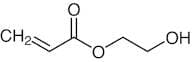
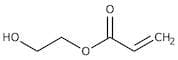
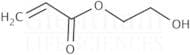
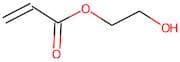
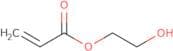
Acrilato de 2-hidroxietilo (CAS 818-61-1) é um composto orgânico caracterizado por seu grupo funcional acrilato e um grupo hidroxila. Aparece como um líquido incolor a amarelo pálido com um odor característico de acrilato. Este composto é solúvel em água e em solventes orgânicos, tornando-o versátil para várias aplicações. Possui baixa viscosidade, o que facilita seu uso em revestimentos, adesivos e como monômero em processos de polimerização. A presença do grupo hidroxila aumenta sua reatividade, permitindo que participe de reações de entrelaçamento, o que é benéfico na produção de hidrogéis e outros materiais poliméricos. Acrilato de 2-hidroxietilo é conhecido por sua capacidade de melhorar as propriedades mecânicas e a adesão de sistemas poliméricos. No entanto, é importante manusear esta substância com cuidado, pois pode ser irritante para a pele e os olhos, e medidas de segurança adequadas devem ser tomadas durante seu uso. No geral, sua estrutura química única e propriedades o tornam um componente valioso em várias aplicações industriais.
Fórmula:C5H8O3
InChI:InChI=1S/C5H8O3/c1-2-5(7)8-4-3-6/h2,6H,1,3-4H2
Chave InChI:InChIKey=OMIGHNLMNHATMP-UHFFFAOYSA-N
SMILES:C(OCCO)(C=C)=O
Sinónimos:- 1-Hydroxyethyl Prop-2-Enoate
- 2-(Acryloyloxy)ethanol
- 2-Hydroxyethyl 2-propenoate
- 2-Hydroxyethyl Prop-2-Enoate
- 2-Hydroxyethyl ester propenoic acid
- 2-Hydroxyethylacrylat
- 2-Hydroxyethylester kyseliny akrylove
- 2-Hydroxyethylesterkyselinyakrylove
- 2-Propanoic Acid, 2-Hydroxyethyl Ester
- 2-Propenoic acid, 2-hydroxyethyl ester
- 2-Propenoicacid,2-hydroxyethylester
- Acrilato De 2-Hidroxietilo
- Acryics HEA
- Acrylate de 2-hydroxyethyle
- Acrylic acid, 2-hydroxyethyl ester
- Acrylsaeure-(2-Hydroxyaethyl)-Ester
- Ahec-T
- Beta-Hydroxyethylacrylate
- Bisomer 2HEA
- Bisomer2Hea
- Ethylene glycol monoacrylate
- HEA
- Hydroxyethyl acrylate
- Light Acrylate HOA
- Light Ester HOA
- Light Ester HOA-N
- Light Ester OA
- Perm A
- Perm A (monomer)
- Prop-2-Enoate, 2-Hydroxyethyl
- Rocryl 420
- Viscoat 220
- beta-Hydroxyethyl acrylate
- β-Hydroxyethyl acrylate
- 2-Hydroxyethyl acrylate
- ETHYLENE GLYCOL ACRYLATE
- hydroxyethylacrylate
- 2-HYDROXYETHYL ACRYLATE, STAB.
- 2-Hydroxy Ethyl Acrylate (HEA)
- 2-Hydroxyethyl acrylate, stabilized, 97%
- ACRYLICACID,HYDROXYETHYLESTER
- Ver mais sinónimos
Ordenar por
Pureza (%)
0
100
|
0
|
50
|
90
|
95
|
100
7 produtos.
2-Hydroxyethyl Acrylate (stabilized with MEHQ)
CAS:Fórmula:C5H8O3Pureza:>95.0%(GC)Cor e Forma:Colorless to Almost colorless clear liquidPeso molecular:116.122-Hydroxyethyl acrylate, 97%, stab. with 200-300ppm 4-methoxyphenol
CAS:As a reactive monomer2-Hydroxyethyl acrylate is used as a crosslinking agent for resins, plastics and rubber modifiers. Further, it is used in the synthesis of amphilic block copolymers by nitroxide mediated living radical polymerization. In addition to this, it is used to prepare tuned poly(hydroxyFórmula:C5H8O3Pureza:97%Cor e Forma:Clear colorless, LiquidPeso molecular:116.122-Hydroxyethyl acrylate
CAS:Fórmula:C5H8O3Pureza:(GC) ≥ 95.0%Cor e Forma:Clear, colourless liquidPeso molecular:116.122-Hydroxyethyl acrylate
CAS:2-Hydroxyethyl acrylatePureza:95%Cor e Forma:Colourless LiquidPeso molecular:116.12g/mol2-Hydroxyethyl acrylate (stabilized with MEHQ)
CAS:Fórmula:C5H8O3Pureza:96% (stabilized with MEHQ)Cor e Forma:Liquid, Clear LiquidPeso molecular:116.1162-Hydroxyethylacrylate
CAS:2-Hydroxyethylacrylate is a monomer that belongs to the class of acrylates. It is used in the synthesis of polymers, such as glycol ethers and polyacrylates. 2-Hydroxyethylacrylate has a high molecular weight and low reactivity, which makes it an excellent candidate for use in medical devices. 2-Hydroxyethylacrylate has been shown to have anti-bacterial activity against methicillin resistant Staphylococcus aureus (MRSA) and Clostridium perfringens. The antimicrobial activity may be due to its ability to bind with bacterial membranes, leading to cell death by lysis. 2-Hydroxyethylacrylate can also form hydrogen bonds with other molecules, which may contribute to its antimicrobial properties.
Fórmula:C5H8O3Pureza:Min. 95 Area-%Cor e Forma:PowderPeso molecular:116.12 g/mol