CAS 83857-96-9
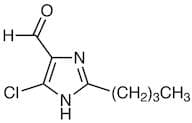
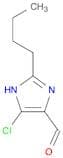
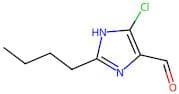
:2-butil-4-cloro-5-formilimidazol
Descrição:
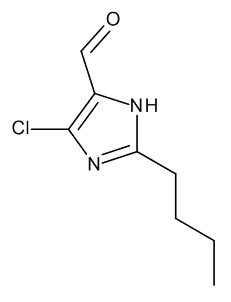
2-butil-4-cloro-5-formilimidazol é um composto orgânico caracterizado por seu anel de imidazol, que é uma estrutura heterocíclica de cinco membros contendo dois átomos de nitrogênio. A presença de um grupo butila contribui para suas características hidrofóbicas, enquanto os substituintes cloro e formilo introduzem grupos funcionais polares que podem participar de várias reações químicas. Este composto é tipicamente utilizado na síntese orgânica e pode servir como um intermediário na produção de produtos farmacêuticos ou agroquímicos. Sua reatividade é influenciada pela natureza atrativa de elétrons dos grupos cloro e formilo, que podem aumentar o ataque eletrofílico no anel de imidazol. Além disso, a solubilidade e estabilidade do composto podem variar dependendo do solvente e das condições ambientais. Os dados de segurança devem ser consultados, pois compostos halogenados podem representar riscos à saúde, e procedimentos adequados de manuseio devem ser seguidos. No geral, 2-butil-4-cloro-5-formilimidazol é um composto versátil com aplicações potenciais em vários campos da química.
Fórmula:C8H11ClN2O
InChI:InChI=1S/C8H11ClN2O/c1-2-3-4-7-10-6(5-12)8(9)11-7/h5H,2-4H2,1H3,(H,10,11)
Chave InChI:InChIKey=JLVIHQCWASNXCK-UHFFFAOYSA-N
SMILES:C(CCC)C=1NC(C=O)=C(Cl)N1
Sinónimos:- (2-n-Butyl-5-Chloro-imidazole-4-yl)-Carboxaldehyde
- 1H-Imidazole-4-carboxaldehyde, 2-butyl-5-chloro-
- 2-Butyl-4-Chloro-1H-Imidazole-5-Carbaldehyde
- 2-Butyl-4-Chloro-1H-Imidazole-5-Carboxaldehyde
- 2-Butyl-4-Chloro-1H-imidazo-5-Carboxaldehyde
- 2-Butyl-4-Chloro-5-Imidazole Carboxaldehyde
- 2-Butyl-4-Chloro-5-Imidazolecarboxaldehyde
- 2-Butyl-4-Chloro-5-formyl imidazole
- 2-Butyl-4-Chloro-5-formylimidazloe
- 2-Butyl-4-Chloro-5-formylimidazole
- 2-Butyl-4-Chloro-Imidazole-5-Carbaldehyde
- 2-Butyl-4-chloro-1-H-imidazole-5-carboxaldehyde
- 2-Butyl-4-chloro-1H-imidazolyl-5-carboxaldehyde
- 2-Butyl-4-chloro-5-formylimidazole(BCFI)
- 2-Butyl-4-chloroimidazole-5-carbaldehyde
- 2-Butyl-4-chloroimidazole-5-carboxaldehyde
- 2-Butyl-5-Chloro-1H-Imidazole-4-Carbaldehyde
- 2-Butyl-5-Chloroimidazole-4-Carboxaldehyde
- 2-Butyl-5-chloro-3H-imidazole-4-carboxaldehyde
- 2-Butyl-5-chloro-4-formylimidazole
- 2-Butyl-5-chloroimidazole-4-carbaldehyde
- 2-Butyl-5-formyl-4-chloroimidazole
- 2-n-Butyl-4-Chloro-1H-Imidazole-5-Carboxaldehyde
- 2-n-Butyl-4-chloro-5-imidazolecarboxaldehyde
- 2-n-Butyl-5-chlorimidazole-4-carbaldehyde
- 4-Chloro-2-n-butylimidazole-5-carboxaldehyde
- Bcfi
- Ver mais sinónimos
Ordenar por
Pureza (%)
0
100
|
0
|
50
|
90
|
95
|
100
11 produtos.
2-Butyl-5-chloro-1H-imidazole-4-carboxaldehyde
CAS:Fórmula:C8H11ClN2OPureza:>98.0%(GC)Cor e Forma:Light yellow to Yellow to Orange powder to crystalPeso molecular:186.64Losartan Related Compound A (2-Butyl-4-chloro-1H-imidazole-5-carbaldehyde)
CAS:Compounds containing an unfused imidazole ring (whether or not hydrogenated) in the structure nesoiFórmula:C8H11ClN2OCor e Forma:PowderPeso molecular:186.055992-Butyl-4-chloro-5-formylimidazole
CAS:Fórmula:C8H11ClN2OPureza:95%Cor e Forma:SolidPeso molecular:186.63872-(But-1-yl)-5-chloro-1H-imidazole-4-carboxaldehyde
CAS:2-(But-1-yl)-5-chloro-1H-imidazole-4-carboxaldehydeFórmula:C8H11ClN2OPureza:97%Cor e Forma: pale yellow solidPeso molecular:186.64g/mol2-Butyl-4-chloro-1H-imidazole-5-carbaldehyde
CAS:Produto ControladoFórmula:C8H11ClN2OCor e Forma:NeatPeso molecular:186.642-Butyl-4-chloro-1H-imidazole-5-carboxaldehyde
CAS:Fórmula:C8H11ClN2OCor e Forma:Light Yellow To BrownPeso molecular:186.642-Butyl-5-chloro-4-formylimidazole
CAS:Fórmula:C8H11ClN2OPureza:95%Cor e Forma:SolidPeso molecular:186.642-Butyl-4-chloro-1H-imidazole-5-carboxaldehyde
CAS:Glyoxal is a chemical compound that has shown to have bactericidal activity against human pathogens such as Mycobacterium tuberculosis, Helicobacter pylori, and Staphylococcus aureus. It is used in the synthesis of heterocyclic amines and can be found as an impurity in imidazole derivatives. Glyoxal is a broad-spectrum antimicrobial that has been shown to inhibit the growth of fungi and bacteria by reacting with functional groups on the microorganisms' cell walls. It reacts with bacterial cell walls by forming an intermediate molecule, which reacts with other molecules present in the microorganism's environment to form carbon dioxide, water, and glyoxal. The reaction time for glyoxal depends on temperature; higher temperatures will result in faster reactions. Techniques used to synthesize glyoxal include dehydration of oximes or by reaction with phosphorus oxychloride.Fórmula:C8H11ClN2OPureza:Min. 95%Cor e Forma:PowderPeso molecular:186.64 g/mol