CAS 84-66-2
:Dietil ftalato
Descrição:
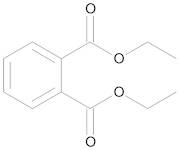
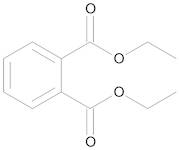
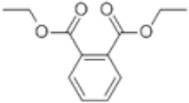
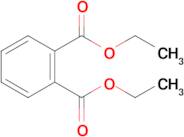
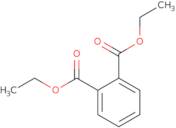
Dietil ftalato (DEP) é um composto orgânico pertencente à família dos ftalatos, caracterizado por seus grupos funcionais de éster. É um líquido incolor e inodoro que é solúvel em solventes orgânicos, mas tem solubilidade limitada em água. O DEP é usado principalmente como plastificante, melhorando a flexibilidade e durabilidade dos plásticos, particularmente o cloreto de polivinila (PVC). Além disso, serve como solvente em várias aplicações, incluindo cosméticos, fragrâncias e produtos farmacêuticos. A estrutura química de Dietil ftalato consiste em dois grupos etila ligados a uma parte de ftalato, o que contribui para suas propriedades como plastificante. Embora o DEP seja geralmente considerado de baixa toxicidade, preocupações foram levantadas sobre seus potenciais efeitos disruptores endócrinos e persistência ambiental. Agências reguladoras estabeleceram diretrizes para seu uso, particularmente em produtos de consumo. No geral, Dietil ftalato é um importante produto químico industrial com diversas aplicações, mas sua segurança e impacto ambiental continuam sendo temas de pesquisa e regulação em andamento.
Fórmula:C12H14O4
InChI:InChI=1S/C12H14O4/c1-3-15-11(13)9-7-5-6-8-10(9)12(14)16-4-2/h5-8H,3-4H2,1-2H3
Chave InChI:InChIKey=FLKPEMZONWLCSK-UHFFFAOYSA-N
SMILES:C(OCC)(=O)C1=C(C(OCC)=O)C=CC=C1
Sinónimos:- 1,2-Benzenedicarboxylic acid diethyl ester
- 1,2-Benzenedicarboxylic acid, 1,2-diethyl ester
- 1,2-Benzodioic acid diethyl ester
- 1,2-Diethyl benzene-1,2-dicarboxylate
- Anozol
- Benzene-1,2-dicarboxylic acid diethyl ester
- DEP
- Diethyl phthalate, (Phthalic acid diethyl ester)
- Diethyl 1,2-benzenedicarboxylate
- Diethyl Benzene-1,2-Dicarboxylate
- Diethylphtalate
- Diethylphthalat
- Ethyl phthalate
- Ftalato De Dietilo
- Neantine
- Nsc 8905
- Palatinol A
- Phtalate de diethyle
- Phthalate, Diethyl
- Phthalic Acid Diethyl Ester
- Phthalol
- Phthalsaeure-Diaethylester
- Placidol E
- Solvanol
- Unimoll DA
- o-Benzenedicarboxylic acid diethyl ester
- o-Bis(ethoxycarbonyl)benzene
- Diethyl phthalate (DEP)
- PHTHALIC ACID, BIS-ETHYL ESTER
- -Benzenedicarboxylic acid diethyl ester
- 1,2-diethyl phthalate
- RARECHEM AL BI 0044
- diethyl1,2-benzenedioate
- PHTHALIC ACID DIETHYL
- diethyl1,2-benzenedicarboxylate
- DIETHYL PHTHALATE
- Diethyl ester of 1,2-Benzenedicarboxylic acid
- 'LGC' (2000)
- Diethyl-o-phthalate
- 1,2-benzenedioicacid,diethylester
- Ver mais sinónimos
Ordenar por
Pureza (%)
0
100
|
0
|
50
|
90
|
95
|
100
Base/Neutral Extractables Mixture 999 2000 µg/mL in Benzene:MeCl2:ACN (2:2:1)
CAS:Produto Controlado- 101-55-3
- 103-33-3
- 106-46-7
- 108-60-1
- 111-44-4
- 111-91-1
- 117-81-7
- 117-84-0
- 118-74-1
- 120-12-7
- 120-82-1
- 121-14-2
- 129-00-0
- 131-11-3
- 191-24-2
- 193-39-5
- 205-99-2
- 206-44-0
- 207-08-9
- 208-96-8
- 218-01-9
- 50-32-8
- 53-70-3
- 541-73-1
- 56-55-3
- 606-20-2
- 62-75-9
- 621-64-7
- 67-72-1
- 7005-72-3
- 77-47-4
- 78-59-1
- 83-32-9
- 84-66-2
- 84-74-2
- 85-01-8
- 85-68-7
- 86-30-6
- 86-73-7
- 87-68-3
- 91-20-3
- 91-58-7
- 95-50-1
- 98-95-3
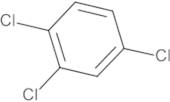
Fórmula:C6H3Cl3Cor e Forma:MixturePeso molecular:181.45Phthalate esters Mixture for GB/T 21294-2014 2000 µg/mL in Hexane
CAS:Produto ControladoCor e Forma:MixturePhthalic acid, bis-ethyl ester
CAS:Produto ControladoFórmula:C12H14O4Cor e Forma:NeatPeso molecular:222.24Diethyl phthalate
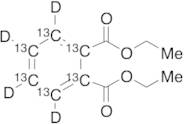
CAS:Produto ControladoDiethyl phthalateFórmula:C12H14O4Pureza:99%Peso molecular:222.24Diethyl Phthalate (Phenyl-13C6, D4)
CAS:Produto ControladoFórmula:C17H13ClN4O·CH4·H2OCor e Forma:NeatPeso molecular:358.822Diethyl Phthalate
CAS:Produto ControladoApplications A phthalate metabolite with genotoxic effect. This compound is a contaminant of emerging concern (CECs).
References Reyes, F., et al.: J. Clin. Endocrinol. Metab., 37, 74 (1973), Engel, S., et al.: Neurotoxicology, 30, 522 (2009),Fórmula:C12H14O4Cor e Forma:NeatPeso molecular:222.24Diethyl Phthalate pure, 99%
CAS:Produto ControladoFórmula:C12H14O4Pureza:min. 99%Cor e Forma:Clear, Colourless, LiquidPeso molecular:222.24Diethyl phthalate
CAS:Produto ControladoFórmula:C12H14O4Pureza:99%Cor e Forma:LiquidPeso molecular:222.24Diethyl phthalate
CAS:Produto ControladoDiethyl phthalate is an organic compound that is used in wastewater treatment. It has been shown to have a matrix effect on analytical methods, such as gas chromatography and liquid chromatography. Diethyl phthalate is not commonly found in the environment because it does not hydrolyze readily in water. However, it can be detected in maternal blood and breast milk due to its ability to cross the placenta and mammary gland barrier. Diethyl phthalate has a reactive nature and may be carcinogenic. It has been shown to cause DNA damage in vitro assays with human cells, but not with rat cells or bacteria. Diethyl phthalate may also cause cell lysis when exposed to water, which may lead to death of aquatic organisms.Fórmula:C12H14O4Pureza:Min. 95%Cor e Forma:Clear LiquidPeso molecular:222.24 g/mol