CAS 89481-98-1
:Piridina, 2-cloro-6-(1-metiletoxil)-
Descrição:
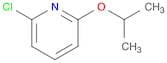
A 2-cloro-6-(1-metiletoxilo)piridina, também conhecida pelo seu número CAS 89481-98-1, é um composto orgânico heterocíclico caracterizado por um anel de piridina substituído por um átomo de cloro e um grupo etóxi. A presença do átomo de cloro na posição 2 e do grupo 1-metiletoxilo na posição 6 contribui para suas propriedades químicas únicas. Este composto é tipicamente um líquido incolor a amarelo pálido com um odor distinto, e é solúvel em solventes orgânicos. Os derivados de piridina são conhecidos por suas aplicações em farmacêuticos, agroquímicos e como intermediários na síntese orgânica. A presença do átomo de cloro pode aumentar a reatividade, tornando-o útil em várias reações químicas, incluindo substituições nucleofílicas. Além disso, o grupo etóxi pode influenciar a polaridade e solubilidade do composto, afetando seu comportamento em diferentes ambientes químicos. Precauções de segurança devem ser tomadas ao manusear este composto, pois pode representar riscos à saúde se inalado ou ingerido.
Fórmula:C8H10ClNO
Ordenar por
Pureza (%)
0
100
|
0
|
50
|
90
|
95
|
100
4 produtos.
Pyridine,2-chloro-6-(1-methylethoxy)-
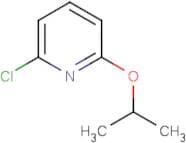
CAS:Fórmula:C8H10ClNOPureza:98%Cor e Forma:LiquidPeso molecular:171.62412-Chloro-6-isopropoxypyridine
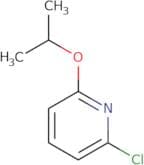
CAS:2-Chloro-6-isopropoxypyridine is a reactive organometallic compound that has the ability to form stable, structurally diverse, and often useful compounds. It can be used as an intermediate in the synthesis of substituted pyridines, furans, and other heterocycles. The synthesis of these compounds is usually achieved through cycloaddition reactions with suitably substituted arenes. 2-Chloro-6-isopropoxypyridine can be synthesized by the lithium chloride induced elimination reaction between chloroacetone and isopropyl alcohol at low temperatures. This method is regioselective, in that it gives a mixture of 2-chloro-6-isopropoxypyridine and its diastereoisomer. 2CIP produces a mixture of products with different substitution patterns because it undergoes a cycloaddition reaction with substituents on the aromatic ring. The lithiationFórmula:C8H10NOClPureza:Min. 95%Peso molecular:171.62 g/mol