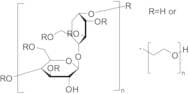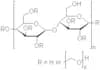
CAS 9004-62-0
:Celulose, éter 2-hidroxietílico
Descrição:
Celulose, éter 2-hidroxietílico, comumente conhecido como celulose hidroxietílica (HEC), é um polímero não iônico, solúvel em água, derivado da celulose. É caracterizado pela substituição de grupos hidroxietila na cadeia de celulose, o que melhora sua solubilidade em água e modifica suas propriedades reológicas. O HEC é tipicamente utilizado como agente espessante, estabilizador e formador de filmes em várias aplicações, incluindo produtos farmacêuticos, cosméticos e alimentícios. É conhecido por sua capacidade de formar géis e melhorar a textura e a viscosidade das formulações. O HEC também é biocompatível e biodegradável, tornando-o adequado para aplicações ambientalmente amigáveis. Suas propriedades podem ser ajustadas alterando o grau de substituição e o peso molecular, permitindo uma ampla gama de usos funcionais. Além disso, o HEC é estável sob uma variedade de condições de pH e pode suportar temperaturas moderadas, tornando-o versátil em sistemas aquosos e não aquosos. No geral, a celulose hidroxietílica é um ingrediente valioso em muitos produtos industriais e de consumo devido às suas características multifuncionais.
Fórmula:C2H6O2·xUnspecified
Sinónimos:- 100000Yp2
- 2500Hec
- 250Hbr
- 250Hhbr
- 250Hr
- 250Lr
- 250Mbr
- 30000S
- 30000Yp2
- 3000M
- 3089Fs
- Aldiamed
- Cellosize
- Cf-G
- Cf-W
- HEC
- HEC-Unicel
- Hec-Cf-G
- Hydroxyaethylcellulose
- Hyetellose
- Liporamnosan
- Natrasol
- Natrosol
- OETs
- PF-VMTs
- Sanhec
- Sulfatsell
- Telhec
- Natrosol 250HR
- Cellulose, 2-hydroxyethyl ether
- Natrosol 250 M
- hydroxyl ethyl cellulose
- Cellulose hydroxyethylate
- Hydroxyethyl Cellulose
- Hydroxyethyl cellulose ether
- Cellosize WP 4400
- Natrosol 250 H
- Hydroxy Ethyl Cellulose
- Hydroxyethyl ether cellulose
- Natrosol LR
- Natrosol 240JR
- Natrosol L 250
- Natrosol 250 HHR
- ah15
- cellosizeqp3
- aw15[polysaccharide]
- CELLULOSE, HYDROXYETHYL ETHER
- cellosizeqp30000
- 2-hydroxyethylcelluloseether
- 2-HYDROXYETHYL CELLULOSE
- CELLOSIZE WP-40
- HYDROXYETHYL-CELLULOSE DYED WITH OSTAZIN BRILLIANT RED H-3B
- cellosizeqp
- cellosize4400h16
- HYDROXYETHYL-CELLULOSE 140'000-160'000
- cellosizeqp1500
- bl15
- Ver mais sinónimos
Ordenar por
Pureza (%)
0
100
|
0
|
50
|
90
|
95
|
100
2-Hydroxyethyl Cellulose
CAS:Produto ControladoApplications 2-Hydroxyethyl Cellulose is used in preparation of waterborne coating compound.Also, used in preparation method of high-temperature resistant stealth material.
References Zhang, J., et al.: Faming Zhuanli Shenqing, (2020); You, S., et al.: Faming Zhuanli Shenqing, (2020);Fórmula:C6H4ClNO3S2Cor e Forma:NeatPeso molecular:0.00Hydroxyethyl cellulose - Viscocity 4500-6500mPa·s
CAS:Water thickener; rheological control additive; has industrial appplicationsPureza:Min. 95%Hydroxyethyl cellulose, Mw about 250'000
CAS:Hydroxyethyl cellulose (HEC) is a polysaccharide that is used as a thickener and emulsifier in the pharmaceutical industry. It has been shown to be effective in treating human serum with detrusor muscle contractions. HEC is also used as a negative control for experiments involving the effect of drugs on HIV infection. When mixed with isoxsuprine hydrochloride, HEC can be used to measure the concentration of basic proteins in human serum. The fluorescence probe can bind to specific regions of the protein, which will cause an increase in fluorescence when exposed to a wavelength of light. The optimum concentration of HEC for binding fluorescence probes was found using Langmuir adsorption isotherm measurements and fluorescence detector experiments. HEC has been shown to be an effective antimicrobial agent against bacteria and fungi, such as Staphylococcus aureus and Candida albicans. The benzalkonium chloride in HEC mayHydroxyethyl cellulose - Viscosity 2400 to 2800(1% aqueous solution)
CAS:Water thickener; rheological control additive; has industrial appplications
Pureza:Min. 95%