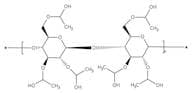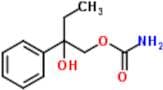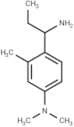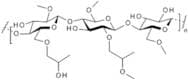
CAS 9004-64-2
:Celulose, éter 2-hidroxipropílico
Descrição:
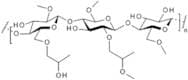
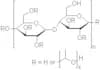
Celulose, éter 2-hidroxipropílico, comumente referido como celulose hidroxipropílica (HPC), é um derivado não iônico e solúvel em água da celulose. É produzido pela eterificação da celulose com óxido de propileno, resultando na introdução de grupos hidroxipropílicos na estrutura da celulose. Essa modificação melhora sua solubilidade em água e solventes orgânicos, tornando-o útil em várias aplicações. HPC é caracterizado por sua capacidade de formar soluções claras e viscosas, o que o torna valioso como agente espessante, agente formador de filmes e estabilizador em produtos farmacêuticos, cosméticos e alimentares. Também é conhecido por sua biocompatibilidade e baixa toxicidade, o que amplia ainda mais sua aplicabilidade em campos biomédicos. Além disso, a celulose hidroxipropílica exibe propriedades termoplásticas, permitindo que seja processada em várias formas. Sua estabilidade química e resistência à degradação em condições normais contribuem para sua longevidade em formulações. No geral, HPC é um polímero versátil com utilidade significativa em várias indústrias devido às suas propriedades únicas.
Fórmula:C3H7O
InChI:InChI=1/C36H70O19/c1-19(37)9-45-17-27-29(47-11-21(3)39)31(48-12-22(4)40)34(51-15-25(7)43)36(54-27)55-30-28(18-46-10-20(2)38)53-35(52-16-26(8)44)33(50-14-24(6)42)32(30)49-13-23(5)41/h19-44H,9-18H2,1-8H3/t19?,20?,21?,22?,23?,24?,25?,26?,27?,28?,29?,30-,31?,32?,33?,34?,35?,36+/m1/s1
Sinónimos:- AeroWhip
- HPC
- Hpc-E
- Hpc-Ef
- Hpc-Ef-G
- Hpc-H
- Hpc-Hf
- Hpc-L
- Hpc-L-Fp
- Hpc-Le-G
- Hpc-Lg
- Hpc-Ll
- Hpc-Lr
- Hpc-M
- Hpc-Mf
- Hpc-Mg
- Hpc-S
- Hpc-Sfp
- Hpc-Sl
- Hpc-Ssl
- Hpc-Ssl-Sfp
- Hydroxypropylcellulose
- Hyprolose
- Klucel
- L-Hpc
- Lacrisert
- Leogard
- O-(2-Hydroxypropyl)cellulose
- O-(Hydroxypropyl)cellulose
- Hydroxypropyl cellulose
- Cellulose hydroxypropyl ether
- Oxypropylated cellulose
- Hydroxypropyl ether of cellulose
- 1-[(5R)-3,4-bis(2-hydroxypropoxy)-6-(2-hydroxypropoxymethyl)-5-[(2S)-3,4,5-tris(2-hydroxypropoxy)-6-(2-hydroxypropoxymethyl)tetrahydropyran-2-yl]oxy-tetrahydropyran-2-yl]oxypropan-2-ol
- Hydroxypropyl cellulose, Average M.W. 100.000
- Cellulose, 2-hydroxypropyl ether
- Hydroxypropyl Cellulose (6-10mPa.s, 2% in Water at 20deg C)
- (HYDROXYPROPYL)CELLULOSE STANDARD 15'000
- HYDROXYPROPYLCELLULOSE,150-400CPS,NF
- Hydroxypropyl cellulose USP
- HYDROXYPROPYL CELLULOSE LOW-SUBSTITUTED
- syntheticvegetablegums
- low substituted hydroxypropyl cellulose(LH21)
- Hydroxypropyl Cellulose (500 mg)
- HYDROXYPROPYL CELLULOSE 6-10.0
- HYDROXYPROPYL CELLULOSE, 1000-4000 MPAS
- Hydroxypropyl Cellulose (1,000-4,000mPa.s, 2% in Water at 20deg C)
- cellulosehydroxypropylether
- HYDROXYPROPYL CELLULOSE, 150-400 MPAS
- HYDROXYPROPYL CELLULOSE, M.W. 1,000,000
- HYDROXYPROPYL CELLULOSE, AVERAGE MW. CA. 80,000
- hydroxypropyletherofcellulose
- Hydroxypropyl cellulose average Mw ~80,000, average Mn ~10,000, powder, 20 Mesh particle size (99% through)
- Hydroxypropyl Cellulose (200 mg)
- HPC, hydroxypropyl cellulose
- pm50(polymer)
- HYDROXYPROPYL CELLULOSE, 3-6CPS
- (HYDROXYPROPYL)CELLULOSE STANDARD 50'000
- HYDROXYPROPYL CELLULOSE, 3-6CPS: (2% IN WATER AT 20C)
- oxypropylatedcellulose
- HYDROXYPROPYLCELLULOSE,4,000-6,500CPS,NF
- HYDROXYPROPYL CELLULOSE, M.W. 370,000
- HYDROXYPROPYL CELLULOSE 2-2.9
- synthetic
- Hydroxypropyl cellulose, Average M.W. 100.000 250GR
- HYDROXYPROPYLCELLULOSE,75-100CPS,NF
- (HYDROXYPROPYL)CELLULOSE STANDARD 35'000
- HYDROXYPROPYL CELLULOSE, 6-10 MPAS
- Hydroxypropyl Cellulose (3-6mPa.s, 2% in Water at 20deg C)
- HYDROXYPROPYLCELLULOSE, M.W.60,000
- (HYDROXYPROPYL)CELLULOSE STANDARD 25'000
- (2% IN WATER AT 20)
- (HYDROXYPROPYL)CELLULOSE STANDARD 30'000
- Hydroxypropyl cellulose, Average M.W. 100.000 100GR
- Hydroxypropyl cellulose average Mw ~370,000, powder, 20 Mesh particle size (99% through)
- 2-Hydroxypropyl cellulose
- (HYDROXYPROPYL)CELLULOSE STANDARD 10'000
- Hydroxypropyl cellulose average Mw ~100,000, powder, 20 Mesh particle size (99% through)
- pm50
- L-Hydroxypropylcellulose
- HYDROXYPROPYL CELLULOSE, M.W. 100,000
- Hydroxypropyl Cellulose (150-400mPa.s, 2% in Water at 20deg C)
- Low-Substituted Hydroxypropyl cellulose
- Hydroxypropyl cellulose average Mw ~1,000,000, powder, 20 mesh particle size (99% through)
- (HYDROXYPROPYL)CELLULOSE STANDARD 20'000
- Ve(VitaminEAcetateOil
- hydroxypropyl
- HYDROXYPROPYL CELLULOSE 3-5.9
- HYDROXYPROPYL CELLULOSE, 3-5.9 MPAS
- Ver mais sinónimos
Ordenar por
Pureza (%)
0
100
|
0
|
50
|
90
|
95
|
100
Hydroxypropyl Cellulose (1000-4000mPa·s, 2% in Water at 20°C)
CAS:Cor e Forma:White to Almost white powder to crystalHydroxypropyl Cellulose (150-400mPa·s, 2% in Water at 20°C)
CAS:Cor e Forma:White to Almost white powder to crystalHydroxypropyl Cellulose (6-10mPa·s, 2% in Water at 20°C)
CAS:Cor e Forma:White to Almost white powder to crystalHydroxypropyl Cellulose (3-6mPa·s, 2% in Water at 20°C)
CAS:Cor e Forma:White to Almost white powder to crystalHydroxypropyl cellulose, M.W. 100,000
CAS:Thickener, binder, and emulsifierCor e Forma:Powder, White to off-whiteLow-substituted Hydroxypropyl Cellulose
CAS:Cellulose ethers,nesoiFórmula:C11H15NO3Cor e Forma:White Off-White PowderPeso molecular:209.2417Hydroxypropyl Cellulose
CAS:Cellulose ethers,nesoiFórmula:C3H8O2·xUnspecifiedCor e Forma:White Cream Powder GranularPeso molecular:209.2417Hydroxypropyl Cellulose
CAS:Hydroxypropyl cellulose (HPC), soluble in water and organics, serves as a food additive and DNA separation aid.Fórmula:C12H20N2Pureza:98%Cor e Forma:SolidPeso molecular:192.306Hydroxypropyl Cellulose
CAS:Produto ControladoApplications Hydroxypropyl Cellulose is used in the synthesis of nanoparticle carriers for drug delivery.
References Watanabe, Y. et al.: Biol. Pharm. Bull., 18, 1308 (1995); Ober, C. et al.: J. Polym. Sci., 23, 103 (1985); Lok, K. et al.: Can. J. Chem., 63, 209 (1985);Fórmula:C6H8N2O5Cor e Forma:NeatPeso molecular:0.00Hydroxypropyl cellulose - Average MW 50,000 - 1250,000
CAS:In water, hydroxypropyl cellulose forms liquid crystals with many mesophases depending on concentration. These mesophases include isotropic, anisotropic, nematic and cholesteric, the latter resulting in many colors such as violet, green and red. Pharmaceutical applications include treatments for medical conditions such as dry eye syndrome (keratoconjunctivitis sicca), recurrent corneal erosions, decreased corneal sensitivity, exposure and neuroparalytic keratitis. It is also used as a binder in tablets. Hydroxypropylcellulose is also used as a thickener, a binder and emulsion stabiliser in foods with E number E463. HPC is used as a support matrix for DNA separations by capillary and microchip electrophoresis.Pureza:Min. 95%Cor e Forma:Clear LiquidHydroxypropyl cellulose - Average MW 370,000
CAS:In water, hydroxypropyl cellulose forms liquid crystals with many mesophases depending on concentration. These mesophases include isotropic, anisotropic, nematic and cholesteric, the latter resulting in many colors such as violet, green and red. Pharmaceutical applications include treatments for medical conditions such as dry eye syndrome (keratoconjunctivitis sicca), recurrent corneal erosions, decreased corneal sensitivity, exposure and neuroparalytic keratitis. It is also used as a binder in tablets. Hydroxypropylcellulose is also used as a thickener, a binder and emulsion stabiliser in foods with E number E463. HPC is used as a support matrix for DNA separations by capillary and microchip electrophoresis.Pureza:Min. 95%Cor e Forma:Powder