CAS 9005-25-8
:Amido
Descrição:
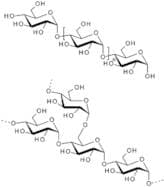
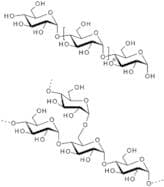
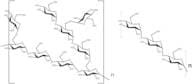
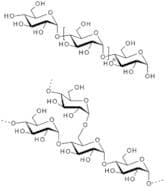
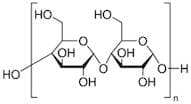
Amido, com o número CAS 9005-25-8, é um polissacarídeo composto por numerosas unidades de glicose ligadas por ligações glicosídicas. É produzido principalmente por plantas como um meio de armazenamento de energia e é encontrado abundantemente em fontes como batatas, milho e trigo. Amido existe em duas formas principais: amiloza, que é tipicamente linear e helicoidal, e amilopectina, que é ramificada. Essa variação estrutural influencia suas propriedades físicas, como solubilidade e comportamento de gelificação. Amido é um pó branco e inodoro que é insolúvel em água fria, mas pode formar um gel quando aquecido em água, tornando-o útil na culinária e no processamento de alimentos. Serve como agente espessante, estabilizador e texturizador em vários produtos alimentícios. Além disso, Amido é utilizado na produção de biocombustíveis, plásticos biodegradáveis e produtos farmacêuticos. Sua digestibilidade varia, com algumas formas sendo rapidamente decompostas por enzimas, enquanto outras são resistentes, contribuindo para a fibra dietética. No geral, Amido é um carboidrato versátil e essencial em aplicações alimentares e industriais.
Fórmula:Unspecified
Sinónimos:- 1401B
- 75A
- AccuGel
- Almidon
- Alpha-Starch
- Amaizow13
- Amicoa
- Amidon
- Amidulin
- Amigel
- Amilofaks
- Amylogel
- Amylogum
- Amylomaizevii
- Amylum
- Amyral
- Aquapel(Polysaccharide)
- Argobrandcornstarch
- Asagao
- Atomyl
- C*Gel
- C<sup>*</sup>Gel
- Claro5591
- Clearjel
- Collamil
- Cornstarch
- Cpc3005
- Creamgel
- Crystalean
- Dexyace
- Dunamyl
- Eco-Maize
- Emes-Ef
- Envirofil
- Era-Tab
- Eurylon
- Excelsior
- F-Smash
- Filter-Check
- Finesnow
- HaemoCer
- HiMaize
- Hitex
- Hwangmi
- Hylon
- Impermex
- J-Spd
- Jpcs-W
- Kiyou
- Kuroba
- Luremild
- MSPrebiotic
- Maizena
- Maranta
- Matsunorin
- Melogel
- Melojel
- Meluna
- Merigel
- MiraQuick
- Miyabinori
- Mogul
- Momiji
- Mxpp
- Mxppj
- Nabond
- Nkl-L
- Novation
- Novelose
- Octie
- Oilcure
- Optagrade
- PCS
- Permalose
- Pince-Ace
- Pinebrand
- Remyline
- Renatur
- Rheotack
- Roadster
- Ruuamairudo
- SDU
- SF-α
- Sago
- Sakura
- Sepistab
- Soft-Set
- Solonace
- St-C
- Staerken
- Starch
- Starches
- Starke
- Supergell
- TPS
- Tanpopo
- Tapioca
- Tapon
- Trogum
- Ultra-sperse
- W-Gum
- Waxylis
- Yamato-nori
- Yoki
- Zam-X
- α-Starch
- Maize Starch
- Arrowroot starch
- Pregelatine starch
- Ver mais sinónimos
Ordenar por
Pureza (%)
0
100
|
0
|
50
|
90
|
95
|
100
8 produtos.
Starch, powder, from potato
CAS:Fórmula:(C6H10O5)nCor e Forma:White or off-white powderPeso molecular:-Starch (Smithies); for electrophoresis
CAS:Fórmula:(C6H10O5)nCor e Forma:White powderPeso molecular:(162.14)nCorn starch
CAS:Starch is a two component polysaccharide mixture of amylose and amylopectin. Amylose is a linear polysaccharide of α (1,4)-linked glucose residues and averages 20 to 30% of the total in most native starches. Amylopectin is a highly branced glucan containing both a (1,4) and a (1,6) linkages. The number of glucose residues in a single starch molecule can vary from five hundred to several hundred thousand, depending on the type of starch. Starch is the major storage form of energy in plants, just as glycogen is the storage form of energy for animals. The plant directs the starch molecules to the amyloplasts, where they are deposited to form granules. Thus, both in plants and in the extracted concentrate, starch exists as granules varying in diameter from 2 to 130 μm.Pureza:Min. 95%Cor e Forma:PowderPregelatinized starch
CAS:Starch is a two component polysaccharide mixture of amylose and amylopectin. Amylose is a linear polysaccharide of α (1,4)-linked glucose residues and averages 20 to 30% of the total in most native starches. Amylopectin is a highly branced glucan containing both a (1,4) and a (1,6) linkages. The number of glucose residues in a single starch molecule can vary from five hundred to several hundred thousand, depending on the type of starch. Starch is the major storage form of energy in plants, just as glycogen is the storage form of energy for animals. The plant directs the starch molecules to the amyloplasts, where they are deposited to form granules. Thus, both in plants and in the extracted concentrate, starch exists as granules varying in diameter from 2 to 130 μm.Pureza:Min. 95%Cor e Forma:PowderStarch from potato
CAS:Starch is an energy storing polysaccharide produced by higher plants and some algae. Pure starch is a white, tasteless and odorless powder that is insoluble in cold water or alcohol. It consists of two types of polysaccharide: the linear and helical amylose (α-1,4-linked glucose) and the branched amylopectin (α-1,4 and α-1,6-linked glucose). Depending on the plant, starch generally contains 20 to 25% amylose and 75 to 80% amylopectin by weight.Cor e Forma:White PowderWheat starch
CAS:Starch is an energy storing polysaccharide produced by higher plants and some algae. Pure starch is a white, tasteless and odorless powder that is insoluble in cold water or alcohol. It consists of two types of polysaccharide: the linear and helical amylose (α-1,4-linked glucose) and the branched amylopectin (α-1,4 and α-1,6-linked glucose). Depending on the plant, starch generally contains 20 to 25% amylose and 75 to 80% amylopectin by weight.Pureza:Min. 95%Cor e Forma:Powder