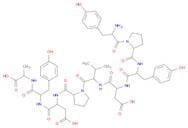
CAS 92000-76-5
:peptídeo de hemaglutinina da influenza (ha)
Descrição:
peptídeo de hemaglutinina da influenza (ha), associado ao número CAS 92000-76-5, é um componente crucial do vírus da influenza, especificamente envolvido na capacidade do vírus de infectar células hospedeiras. A hemaglutinina é uma glicoproteína encontrada na superfície do vírus da influenza, desempenhando um papel chave na ligação do vírus aos receptores de ácido siálico na membrana da célula hospedeira. O peptídeo HA é tipicamente caracterizado por sua capacidade de induzir uma resposta imune, tornando-se um alvo para o desenvolvimento de vacinas. É conhecido por suas propriedades estruturais, que incluem uma cabeça globular e uma região de haste, facilitando a fusão das membranas virais e celulares durante o processo de infecção. A sequência do peptídeo pode variar entre diferentes cepas do vírus da influenza, contribuindo para a variação antigênica e desafios na eficácia da vacina. Além disso, os peptídeos HA são frequentemente estudados no contexto da virologia e imunologia, fornecendo insights sobre a patogênese viral e possíveis intervenções terapêuticas.
Fórmula:C53H67N9O17
Sinónimos:- Ha Peptide
Ordenar por
Pureza (%)
0
100
|
0
|
50
|
90
|
95
|
100
5 produtos.
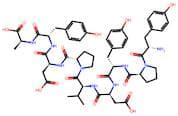
L-ALANINE,L-TYROSYL-L-PROLYL-L-TYROSYL-L-A-ASPARTYL-L-VALYL-L-PROLYL-L-A-ASPARTYL-L-TYROSYL-
CAS:Fórmula:C55H68F3N9O19Pureza:97%Peso molecular:1216.1725Influenza Hemagglutinin (Ha) Peptide
CAS:Influenza Hemagglutinin (Ha) PeptidePureza:98%Peso molecular:1102.15g/molHA Peptide
CAS:Influenza Hemagglutinin (HA) Peptide is a tag peptide derived from an epitope of the influenza hemagglutinin protein.Fórmula:C53H67N9O17Pureza:>99.99%Cor e Forma:SolidPeso molecular:1102.15HA peptide
CAS:Haptens are small-molecule drugs that bind to the toll-like receptor. Haptens can be used as a vaccine adjuvant and have been shown to be effective in the prevention of pandemic influenza. Haptens also inhibit viral replication by binding to surface glycoproteins, which prevents them from attaching to host cells. This process triggers the production of reactive oxygen species (ROS) and other inflammatory cytokines, which ultimately result in significant cytotoxicity. Haptens are capable of transferring immune responses from one animal to another, but this transfer is not always successful due to the basic protein structure of haptens.Fórmula:C53H67N9O17Pureza:Min. 95%Peso molecular:1,102.18 g/mol