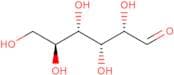
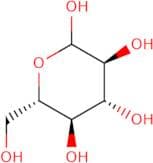
CAS 921-60-8
:L-Glicose
Descrição:
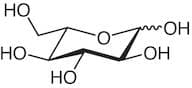
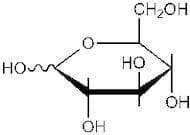
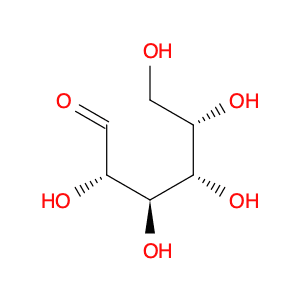
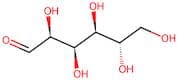
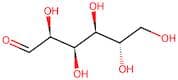
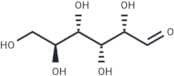
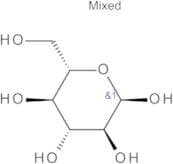
L-Glicose, com o número CAS 921-60-8, é um isômero da glicose, especificamente o enantiômero L, que é um tipo de açúcar. É um monossacarídeo e um carboidrato simples, caracterizado por sua estrutura de seis carbonos (C6H12O6) e a presença de grupos hidroxila (-OH). L-Glicose é encontrado com menos frequência na natureza em comparação com sua contraparte D-glicose, que é a forma utilizada pelos organismos vivos para energia. Este composto é tipicamente um sólido cristalino branco que é solúvel em água, exibindo propriedades de sabor doce, embora seja menos doce que a D-glicose. L-Glicose não participa das mesmas vias metabólicas que a D-glicose, tornando-o de interesse na pesquisa relacionada ao diabetes e distúrbios metabólicos. Sua atividade óptica é notável, pois rotaciona a luz polarizada para a esquerda (levorrotatória). Devido às suas propriedades únicas, L-Glicose é estudado para aplicações potenciais em farmacêuticos e como um adoçante não calórico.
Fórmula:C6H12O6
InChI:InChI=1/C6H12O6/c7-1-2-3(8)4(9)5(10)6(11)12-2/h2-11H,1H2/t2-,3-,4+,5-,6-/m0/s1
Chave InChI:InChIKey=GZCGUPFRVQAUEE-VANKVMQKSA-N
SMILES:[C@@H]([C@H]([C@@H](C=O)O)O)([C@H](CO)O)O
Sinónimos:- <span class="text-smallcaps">L</span>(-)-Glucose
- Brn 1724626
- Fm 602
- Glucose, (L)-isomer
- Levoglucose
- alpha-L-glucopyranose
- beta-L-glucopyranose
- L-Glucose
- L(-)-Glucose
- 4-01-00-04327 (Beilstein Handbook Reference)
- L(-)-Glucose
- L-(-)-Glucoseanhydrous,98%
- L-Glucose anhydrous, 98%
- L-GLUCOSE, 98%, MIXTURE OF ANOMERS
- Hexopyranose
- L-GLUCOPYRANOSE
- GLUCOSE, L-
- L-Glucosemonohydrate
- L-Glucose (6CI, 7CI, 8CI, 9CI)
- Ver mais sinónimos
Ordenar por
Pureza (%)
0
100
|
0
|
50
|
90
|
95
|
100
12 produtos.
L-(-)-Glucose
CAS:Fórmula:C6H12O6Pureza:>98.0%(GC)Cor e Forma:White to Almost white powder to crystalPeso molecular:180.16L-(-)-Glucose, anhydrous, 98%
CAS:L-(-)-Glucose is an enantiomer of the more common D-glucose a naturally occurring carbohydrate used in an abundance of cellular processes. L-Glucose is a synthetic sugar used in the formation of L-Glucose Pen taacetate, a potential therapeutic agent regarding type II diabetes. In addition, L-glucoseFórmula:C6H12O6Pureza:98%Cor e Forma:Crystals or powder or crystalline powder, WhitePeso molecular:180.16Ref: IN-DA0036X6
50gA consultar250gA consultar500gA consultar100mg30,00€250mg31,00€1g60,00€5g183,00€10g261,00€25g538,00€L-Glucose
CAS:L-GlucoseFórmula:C6H12O6Pureza:98%Cor e Forma: white crystalline powderPeso molecular:180.16g/molL-Glucose
CAS:Fórmula:C6H12O6Pureza:≥ 99.0%Cor e Forma:White to almost white crystalline powderPeso molecular:180.16L-GLUCOSE
CAS:L-Glucose (L-(-)-Glucose) is not bioavailable to cells as an energy source because it cannot be phosphorylated by hexokinase.Fórmula:C6H12O6Pureza:99.78%Cor e Forma:SolidPeso molecular:180.16L-Glucose
CAS:Produto ControladoApplications L-Glucose is the enantiomer of D-Glucose (G595000), a naturally occurring carbohydrate used in an abundance of cellular processes. L-Glucose is a synthetic sugar used in the formation of L-Glucose Pentaacetate (G596510), a potential therapeutic agent regarding type II diabetes. In addition, L-glucose can be used as a colon cleansing agent for before a colonoscopy procedure.
References Malaisse, W. et al.: Int. J. Mol. Med., 2, 383 (1998); Raymer, G. et al.: Gastrointest. Endosc., 58, 30 (2003); Wang, R., et al.: J. Mol. Catal. B. Enz., 56, 131 (2009),Fórmula:C6H12O6Cor e Forma:WhitePeso molecular:180.156L-Glucose
CAS:L-glucose is a monosaccharide that is an important source of energy for the human body. The glucose molecule consists of 6 carbon atoms, 12 hydrogen atoms and 6 oxygen atoms. Glucose enters cells with the help of insulin and ATP-sensitive potassium channels. It has been shown that L-glucose can inhibit viral replication in vitro, such as HIV and herpes simplex virus type 1 (HSV-1). L-Glucose may be used to treat squamous carcinoma by reducing the redox potential in cancer cells. L-Glucose inhibits the growth of c. glabrata by inhibiting transcription activators and enzymes involved in glycolysis. L-Glucose also has hypoglycemic effects on humans by reducing cortisol concentrations in human serum.Fórmula:C6H12O6Pureza:Min. 98 Area-%Cor e Forma:White Clear LiquidPeso molecular:180.16 g/molL-Glucose
CAS:L-Glucose is a monosaccharide that belongs to the group of carbohydrates. L-Glucose is an important energy source for living organisms and plays a role in many metabolic pathways, including glycolysis and gluconeogenesis, as well as cell signaling. It is also an essential component of DNA and RNA. L-Glucose has been shown to have effects on brain functions such as memory and learning ability, which may be due to its ability to signal neurons. L-Glucose can be used in model systems to study the effects of diabetes on cells and has been shown to have pluripotent effects on cells. In addition, this molecule has been shown to inhibit the growth of bacteria by binding to the enzyme polysaccharide kinase and reducing its activity. This inhibition leads to decreased synthesis of polysaccharides (e.g., glycogen) that are necessary for cell division.Fórmula:C6H12O6Pureza:Min. 99.5 Area-%Peso molecular:180.16 g/mol