Substratos fluorogénicos
Nesta categoria, você encontrará uma seleção abrangente de substratos fluorogênicos projetados para catálise enzimática. Esses substratos são usados com vários tipos de enzimas e são capazes de produzir cor e fluorescência ao reagir. Os substratos fluorogênicos são ferramentas essenciais na pesquisa bioquímica e biologia molecular, permitindo a detecção e quantificação da atividade enzimática com alta sensibilidade e especificidade. Eles são amplamente utilizados em ensaios para estudar a cinética enzimática, triagem de inibidores de enzimas e monitoramento de processos celulares. Na CymitQuimica, oferecemos substratos fluorogênicos de alta qualidade para apoiar sua pesquisa, garantindo resultados confiáveis e precisos em seus ensaios enzimáticos.
Foram encontrados 297 produtos de "Substratos fluorogénicos"
Ordenar por
Pureza (%)
0
100
|
0
|
50
|
90
|
95
|
100
4-Methylumbelliferyl 2-O-(2,3,4-tri-O-benzoyl-a-L-fucopyranosyl)-b-D-galactopyranoside
<p>4-Methylumbelliferyl 2-O-(2,3,4-tri-O-benzoyl-a-L-fucopyranosyl)-b-D-galactopyranoside is a fluorescent substrate for β–galactosidase. It is used to detect the enzyme in biological samples and as a diagnostic agent. This substrate can be used to develop chemiluminescent, chromogenic, and fluorogenic substrates for use in diagnostics. 4MUF 2OBG can also be conjugated to various ligands for use in bioluminescence assays or as a marker in immunoassays.</p>Pureza:Min. 95%Peso molecular:796.77 g/mol4-Methylumbelliferyl 3,4,6-tri-O-acetyl-2-deoxy-2-trifluoroacetamido-a-D-glucopyranoside
CAS:<p>4-Methylumbelliferyl 3,4,6-tri-O-acetyl-2-deoxy-2-trifluoroacetamido-a-D-glucopyranoside (4MUAA) is a fluorescent dye that is used for the detection of envelopment in cells. This dye binds to cell membranes and can be detected with a fluorescence microscope. 4MUAA can be used to determine the efficiency of an experimental methodology or algorithm by measuring the change in fluorescence intensity as a result of experimental treatment. The use of 4MUAA has been shown to be effective in determining whether or not there is an association between nationwide environmental pollution and cancer rates in Japan.</p>Pureza:Min. 95%Peso molecular:559.44 g/molβ-Alanine 7-amido-4-methylcoumarin trifluoroacetate
CAS:<p>Beta-alanine 7-amido-4-methylcoumarin, trifluoroacetate salt is a high purity, ligand, and conjugate. It can be used in the food testing and environmental testing fields. This product has been shown to be a good substrate for enzyme activity and can also function as a fluorescent dye in chemiluminescence assays. Beta-alanine 7-amido-4-methylcoumarin, trifluoroacetate salt is soluble in water and has a CAS number of 201847-54-3.</p>Fórmula:C15H15F3N2O5Peso molecular:360.29 g/molRef: 3D-A-4501
1gA consultar100mgA consultar250mgA consultar500mgA consultar2500mgA consultar-Unit-ggA consultar4-Trifluoromethylumbelliferyl Tetra-O-acetylated α-D-N-Acetylneuraminate Methyl Ester
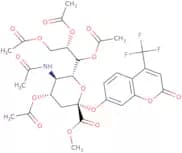
CAS:<p>4-Trifluoromethylumbelliferyl Tetra-O-acetylated alpha-D-N-Acetylneuraminate Methyl Ester is a chemiluminescent substrate that is often used in enzyme and immunoassays. It is a high purity, high quality chemical with a CAS number of 195210-09-4. The 4-Trifluoromethylumbelliferyl Tetra-O-acetylated alpha-D-N-Acetylneuraminate Methyl Ester is used in the detection of bacterial infections and can be used to measure the activity of enzymes such as lysozyme and peroxidase. This product has been tested for its ability to induce bioluminescence in bacteria grown in culture media, as well as for its ability to cause fluorescence or staining in cells or tissues. The 4TUMBTM Tetra O Acetylated</p>Fórmula:C30H32F3NO15Pureza:Min. 95%Peso molecular:703.57 g/mol6-Chloro-4-methylumbelliferyl b-xylobioside
CAS:<p>6-Chloro-4-methylumbelliferyl b-xylobioside is a fluorogenic substrate that can be used for food testing, environmental testing and diagnostics. It is a chromogenic substrate that can be used in enzyme substrates. 6-Chloro-4-methylumbelliferyl b-xylobioside is also a conjugate and has high purity. This product has chemiluminescent properties and can be used for bioluminescence. It is an excellent ligand for fluorescence labeling and has been shown to have high quality. This product can be used in culture media as well as to detect the presence of bacteria.</p>Pureza:Min. 95%Peso molecular:474.84 g/molResorufin phosphate disodium
<p>Resorufin phosphate disodium is a fluorogenic substrate for phosphatase exhibiting a red color after cleavage that can be measured at ~ 585nm.</p>Fórmula:C12H6NNa2O6PPureza:Max. 75 Area-%Cor e Forma:Brown PowderPeso molecular:337.14 g/molRhodamine 110 bis-(N-CBZ-L-aspartyl-L-glutamyl-L-valyl-L-aspartic acid amide
<p>For fluorogenic detection of caspase 3</p>Pureza:Min. 95%Peso molecular:974.96 g/mol4-Chloromethyl-6,8-difluoroumbelliferyl b-D-galactopyranoside
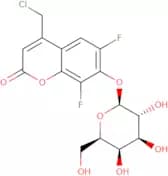
CAS:<p>4-Chloromethyl-6,8-difluoroumbelliferyl b-D-galactopyranoside is a compound commonly used in biochemical research as a fluorescent substrate for the detection of sugar hydrolase enzymes. This compound can be cleaved by enzymes such as β-galactosidase, releasing a fluorescent molecule that can be easily detected using fluorescence spectroscopy. The compound is a member of the family of umbelliferyl glycosides, which have been widely used in the study of various biochemical pathways for many years. The advantage of using this particular substrate is that the fluorescent product has a high quantum yield, which means it produces a strong signal for detection. This substrate has been used in a wide variety of applications, including the study of microbial physiology and in the development of diagnostic assays for detecting bacterial and fungal infections.</p>Pureza:Min. 95%Peso molecular:408.74 g/mol6-Chloro-7-hydroxy-4-(trifluoromethyl)coumarin
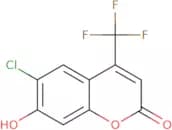
CAS:<p>6-Chloro-7-hydroxy-4-(trifluoromethyl)coumarin is a fungicide that inhibits the growth of fungi by interfering with their DNA synthesis. It does this by inhibiting the activity of two enzymes: the fungal enzyme oxime and the enzyme cinerea, which is found in many fungi. 6-Chloro-7-hydroxy-4-(trifluoromethyl)coumarin has been shown to be effective against Alternaria and Botrytis cinerea. The compound also has an antifungal effect against other types of fungi, such as Penicillium roqueforti, when used in combination with a solvent such as ether.</p>Pureza:Min. 95%Peso molecular:264.58 g/molResorufin ethyl ether
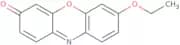
CAS:<p>Resorufin ethyl ether is a fluorescent substrate that is used to measure the activity of cytochrome P450 enzymes. It can be used in vitro to study the effects of drugs on enzyme activities and in vivo to study liver lesions. Resorufin ethyl ether is also used as a model system for studying synchronous fluorescence, which is the emission of light by two or more substances at the same time. The nitrogen atoms in resorufin ethyl ether can be substituted with other atoms such as magnesium or zinc, which will affect its activity and fluorescence properties. Resorufin ethyl ether binds to cytochrome P450 enzymes and therefore inhibits their activity. This inhibition is reversible, and it can be reversed by adding a substance that competes with the substrate for binding sites on the enzyme.</p>Pureza:Min. 95%Peso molecular:241.24 g/mol4-Methylumbelliferyl 3,4,6-tri-O-acetyl-2-O-(2,3,4-tri-O-benzoyl-a-L-fucopyranosyl)-b-D-galactopyranoside
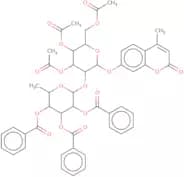
<p>4-Methylumbelliferyl 3,4,6-tri-O-acetyl-2-O-(2,3,4-tri-O-benzoyl-a-L-fucopyranosyl)-b-D-galactopyranoside is a fluorogenic substrate that is used for the detection of β D -galactosidase. β D -Galactosidase is an enzyme that breaks down lactose in milk and is used as a diagnostic tool for identifying lactose intolerance. This substrate can be used as a conjugate in immunoassays to detect antibodies against the enzyme or it can be used to measure the activity of the enzyme in food samples. It also can be used to measure α1,3 galactosyltransferase activity in colorectal cancer cells or bacteria.</p>Pureza:Min. 95%Peso molecular:922.9 g/mol2-Dodecylresorufin
CAS:<p>2-Dodecylresorufin is a fluorescent probe that reacts with the hydroxyl radicals in the cell, which are generated by the enzyme superoxide dismutase. 2-Dodecylresorufin can be used to measure reactive oxygen species (ROS) and ROS-induced cellular damage. It is also used to study oxidative stress in vitro. The chemical structure of 2-dodecylresorufin contains a linker arm that provides a reversible linkage to the cell surface, allowing for extracellular measurements of reactive oxygen species (ROS). This compound has been shown to have high reactivity, making it useful for studying population dynamics and fluorescent techniques.</p>Pureza:Min. 95%Peso molecular:381.51 g/molD-Alanine 7-amido-4-methylcoumarin free base
CAS:<p>D-Alanine 7-amido-4-methylcoumarin free base is a chromogenic substrate that is used in diagnostic testing. It is used to identify the presence of beta-lactamase, which catalyzes the hydrolysis of penicillin and cephalosporin antibiotics, by turning the substrate into a bright blue color. D-Alanine 7-amido-4-methylcoumarin free base can also be used as a fluorescent substrate for bioluminescence or chemiluminescence reactions. This product is high quality and has CAS number 201847-51-0.</p>Fórmula:C13H14N2O3Pureza:Min. 95%Peso molecular:246.26 g/molMaltotetraose 2-aminobenzamide
<p>Maltotetraose 2-aminobenzamide is a chemiluminescent substrate that emits light in the presence of certain oxidizing agents. It provides high quality and environmental testing, as well as staining and ligand capability. Maltotetraose 2-aminobenzamide is used in diagnostics to identify bacteria and other microorganisms. Maltotetraose 2-aminobenzamide can be used for the detection of bacterial colonies on agar plates using a fluorogenic substrate, or for the detection of fungi using a chromogenic substrate. Maltotetraose 2-aminobenzamide is also used as an enzyme substrate in food testing or conjugate with enzymes for bioluminescence.</p>Pureza:Min. 95%4-(Trifluoromethyl)umbelliferyl-b-D-cellotetraoside
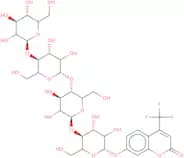
CAS:<p>4-(Trifluoromethyl)umbelliferyl-b-D-cellotetraoside is a chemiluminescent substrate that can be used in the detection of peroxidase, horseradish peroxidase, and other enzymes. It is a fluorescent product that emits light upon reaction with hydrogen peroxide. This product has been tested for purity and quality and has shown to have no detectable levels of heavy metals or other contaminants. 4-(Trifluoromethyl)umbelliferyl-b-D-cellotetraoside is not cytotoxic and can be used for the detection of enzyme activity in living cells. 4-(Trifluoromethyl)umbelliferyl-b-D-cellotetraoside is also known as TMBECFDA, which stands for Trifluoromethyl)umbelliferone (Cellobiose) (Biot</p>Pureza:Min. 95%Peso molecular:878.7 g/mol4-Methylumbelliferyl phosphate, free acid
CAS:<p>A sensitive fluorogenic substrate for fluorometric and UV-spectrophotometric assays of phosphatases. It is used for the detection of C. perfringens because acid phosphatase is a highly specific indicator for C. perfringens.</p>Fórmula:C10H9O6PPeso molecular:256.15 g/molD-Alanine 7-amido-4-methylcoumarin trifluoroacetate salt
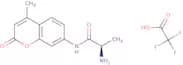
CAS:<p>D-Alanine 7-amido-4-methylcoumarin trifluoroacetate salt is a chromogenic substrate for the enzyme Beta-galactosidase. It is used as a diagnostic tool in the detection of certain bacteria, such as Enterobacteriaceae and Clostridium perfringens. It can also be used to detect the presence of beta galactosidase in food products and environmental samples. D-Alanine 7-amido-4-methylcoumarin trifluoroacetate salt has an applications in chemiluminescence, bioluminescence, and fluorescence. This product is not intended for use as a drug or food additive.</p>Fórmula:C15H15F3N2O5Pureza:Min. 95%Cor e Forma:White/Off-White SolidPeso molecular:360.29 g/mol4-Methylumbelliferyl 2-acetamido-3,4,6-tri-O-acetyl-2-deoxy-b-D-glucopyranoside
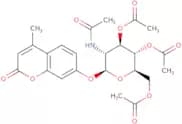
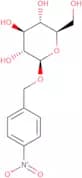
CAS:<p>4-Methylumbelliferyl 2-acetamido-3,4,6-tri-O-acetyl-2-deoxy--bDglucopyranoside is a compound that has been shown to interact with glutamicum and casein kinase. It is also a test compound for corynebacterium glutamicum and interacts with it by functional theory. The compound has been shown to inhibit inflammatory diseases and may be used as a potential treatment for these diseases.</p>Pureza:Min. 95%Peso molecular:505.47 g/mol(4-Nitrophenyl)methyl-b-D-glucopyranoside
CAS:<p>This product is a fluorogenic substrate that is used in the detection of enzymes in biological systems. It is also used as a ligand to study enzyme activity and can be used to quantify enzyme activity. This product is made from high-purity, high-quality reagents and is often used as an enzyme substrate in diagnostic kits for food testing, environmental testing, and detection of bacteria with the help of chemiluminescence. The CAS number for this product is 700368-52-1. This product can be used for fluorescence staining and bioluminescence.</p>Pureza:Min. 95%Peso molecular:315.28 g/mol