Substratos Fluorescentes
Foram encontrados 369 produtos de "Substratos Fluorescentes"
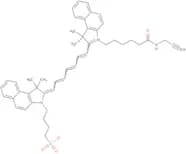
ICG-alkyne
CAS:The non-invasive near-infrared fluorescence imaging dye ICG is used in ophthalmologic angiography to determine cardiac output and liver blood flow and function. The ICG alkyne can be used to label azido functionalised biomolecules eg glycans, lipids and peptides via click chemistry protocols.Fórmula:C48H53N3O4SPureza:Min. 95%Cor e Forma:PowderPeso molecular:768 g/molIndocyanine green
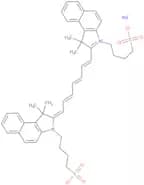
CAS:Indocyanine green is a fluorescent dye with a variety of applications in medical imaging. It has been used to diagnose and evaluate the activity of cancer cells and brain functions. Indocyanine green has also been used as an angiographic agent for diagnosis of solid tumours. In addition, it can be used to evaluate liver function and the blood flow in the brain. The biological properties of indocyanine green have not yet been fully elucidated, but it is known that it binds to hepatocyte-like cells in culture and is found at high levels in human serum. This dye shows fluorescence when bound to DNA or RNA, which indicates its possible use as a molecular probe for detecting carcinoma cells.
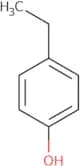
Indocyanine green is a STT3B inhibitor and has been shown to prevent α-amanitin toxicity in mice (Wang et al, 2023). This means it could be a possible antidote to poisoning by Amanita, such as death cap mushroom Amanita phalloides, which is the cause of over 90% of fatal mushroom poisoning.Fórmula:C43H47N2O6S2·NaPureza:(%) Min. 95%Cor e Forma:Green PowderPeso molecular:774.96 g/mol4-Ethylphenol
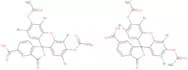
CAS:Produces a fluorogenic signal in the presence of peroxidaseFórmula:C8H10OPureza:Min. 95%Cor e Forma:PowderPeso molecular:122.16 g/mol5(6)-Carboxyeosin diacetate
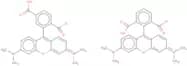
CAS:Brominated analog of carboxyfluorescein; singlet oxygen generatorFórmula:C25H12Br4O9Pureza:Min. 95%Cor e Forma:PowderPeso molecular:775.97 g/mol5-(6)-Carboxytetramethylrhodamine
CAS:5-(6)-Carboxytetramethylrhodamine (TAMRA) is a fluorescent dye that is used as a probe for DNA-based analysis. It binds to the 5' end of dsDNA, forming an intrastrand duplex. The fluorescence of TAMRA increases when it binds to dsDNA and can be used as a measure of the amount of DNA in a sample. TAMRA has been shown to be useful in the diagnosis of bowel disease and in the investigation of gene expression during body formation. This dye is also used as a marker for covalent linkages and high molecular weight proteins such as cyclin D2.Fórmula:C25H22N2O5Pureza:Min. 95 Area-%Cor e Forma:Red PowderPeso molecular:430.45 g/mol9,10-Bis[2-(4-methoxyphenyl)ethynyl]anthracene
CAS:9,10-Bis[2-(4-methoxyphenyl)ethynyl]anthracene is a reagent for chemiluminescence research.Fórmula:C32H22O2Pureza:Min. 98.0 Area-%Peso molecular:438.52 g/molBenzo[k]fluoranthene
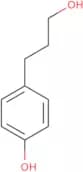
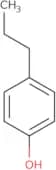
CAS:Produto ControladoBenzo[k]fluoranthene is a polycyclic aromatic hydrocarbon that is used as an optical sensor for transcriptional regulation. It has been shown to activate the transcription factor NF-κB, which induces expression of inflammatory genes in cells. Benzo[k]fluoranthene can be used to measure changes in gene expression and protein levels. The antibody response to benzo[k]fluoranthene was studied using a kinetic data analysis method. Benzo[k]fluoranthene has also been shown to induce genotoxic effects in liver cells and human hepatoma cell line HepG2. This compound also causes light emission when it is excited with light, which can be measured with synchronous fluorescence.Fórmula:C20H12Pureza:Min. 95%Cor e Forma:SolidPeso molecular:252.31 g/mol3-(4-Hydroxyphenyl)-1-propanol
CAS:Produces a fluorogenic signal in the presence of peroxidase
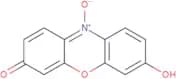
Fórmula:C9H12O2Pureza:Min. 95%Peso molecular:152.19 g/molResazurin
CAS:Weakly fluorescent blue dye; indicator of mitochondrial activity. The reduction of resazurin has been ascribed to a putative reductase or diaphorase-type enzymes from the mitochondria and cytosol but also it might play a role as an intermediate electron acceptor in the electron transport chain between the final reduction of oxygen and cytochrome oxidase.Fórmula:C12H7NO4Pureza:Min. 95%Peso molecular:229.19 g/mol1,9-Dimethyl-methylene blue zinc chloride
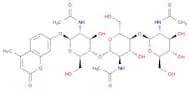
CAS:1,9-Dimethyl-methylene blue zinc chloride double salt is a fluorescent dye that has been used in the study of hyaluronic acid and mesenchymal stem cells. The compound absorbs light at a wavelength of 580 nm, which is the same as the absorption wavelength for hyaluronic acid and mesenchymal stem cells. 1,9-Dimethyl-methylene blue zinc chloride double salt can be used to measure the amount of these compounds in tissues. This dye also shows sensitivity to artifacts such as hemolysis and lipemia, making it useful for research purposes.Fórmula:(C18H22ClN3S)2•ZnCl2Pureza:Min. 95%Cor e Forma:PowderPeso molecular:832.11 g/mol4-METHYLUMBELLIFERYL-N,N',N''-TRIACETYL-β-CHITOTRIOSIDE
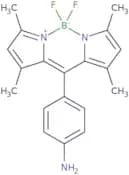
CAS:Fórmula:C34H47N3O18Cor e Forma:SolidPeso molecular:785.74638-(4-Anilino) bodipy
CAS:Fluorescent probe
Fórmula:C19H20BF2N3Pureza:Min. 90 Area-%Cor e Forma:PowderPeso molecular:339.19 g/molRef: 3D-FA17933
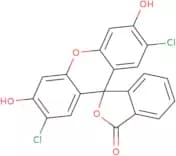
Produto descontinuado2,7-Dichlorofluorescein
CAS:Fluorophore used in biological assays and for labeling cells and tissues
Fórmula:C20H10Cl2O5Pureza:Min. 95%Cor e Forma:PowderPeso molecular:401.2 g/molRef: 3D-FD52655
Produto descontinuadoAf488-alkyne
CAS:Please enquire for more information about Af488-alkyne including the price, delivery time and more detailed product information at the technical inquiry form on this page
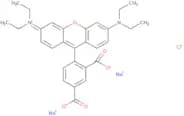
Fórmula:C24H17N3O10S2Pureza:Min. 95%Peso molecular:571.5 g/molRhodamine WT, 20% aqueous solution
CAS:Rhodamine is a fluorescent compound that, in a 20% aqueous solution, serves as an effective fluorescent probe for detecting nitrite ions (NO2). When exposed to ultraviolet light, it undergoes a remarkable color change in response to nitrite presence. Beyond nitrite detection, rhodamine also interacts with various chemical substances, including organic solvents commonly found in wastewater treatment systems, which shows its potential, especially in environmental monitoring and analytical chemistry applications. This 20% solution is 20% w/w. Our sales mass in g is the final mass of the solution.
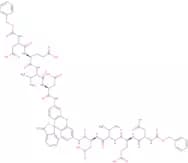
Fórmula:C29H29N2O5·Cl·2NaPureza:Min. 95%Cor e Forma:Clear LiquidPeso molecular:567 g/mol(Z-Asp-Glu-Val-Asp)2-Rhodamine 110
CAS:Fluorogenic dye targeting caspase 3
Fórmula:C72H78N10O27Pureza:Min. 95%Peso molecular:1,515.44 g/molRef: 3D-FA110985
Produto descontinuadoBP Fluor 488 hydrazide
CAS:Green fluorescent dye used for labelling aldehydes or ketones in polysaccharides or glycoproteins with an excitation peak at 499 nm and an emission peak at 520 nm. Frequently employed in microscopy and flow cytometry.
Fórmula:C21H16N4O10S2Peso molecular:548.51 g/molRef: 3D-FB184557
Produto descontinuado

![9,10-Bis[2-(4-methoxyphenyl)ethynyl]anthracene](/_next/image/?url=https%3A%2Fstatic.cymitquimica.com%2Fproducts%2F3D%2Fthumb-webp%2FJ-650272.webp&w=3840&q=75)
![Benzo[k]fluoranthene](/_next/image/?url=https%3A%2Fstatic.cymitquimica.com%2Fproducts%2F3D%2Fthumb-webp%2FFB157375.webp&w=3840&q=75)