Derivados de Aminoácidos
Os derivados de aminoácidos são compostos estruturalmente relacionados aos aminoácidos, mas que foram quimicamente modificados para introduzir novos grupos funcionais ou alterar suas propriedades. Esses derivados são amplamente utilizados na síntese de peptídeos, desenvolvimento de medicamentos e pesquisa bioquímica. Na CymitQuimica, oferecemos uma ampla gama de derivados de aminoácidos de alta qualidade para apoiar suas pesquisas e aplicações industriais, garantindo resultados precisos e eficazes em seus experimentos e projetos de síntese.
Foram encontrados 3990 produtos de "Derivados de Aminoácidos"
Ordenar por
Pureza (%)
0
100
|
0
|
50
|
90
|
95
|
100
Fmoc-NH-PEG6-alcohol
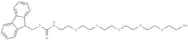
CAS:Fmoc-NH-PEG6-alcohol, a cleavable ADC linker, is employed in the synthesis of antibody-drug conjugates (ADCs) [1].Fórmula:C27H37NO8Cor e Forma:SolidPeso molecular:503.58(R)-2-formamido-4-methylpentanoic acid
CAS:(R)-2-formamido-4-methylpentanoic acid is a derivative of leucine.Fórmula:C7H13NO3Cor e Forma:SolidPeso molecular:159.18L-Phenylalanyl-L-threonine
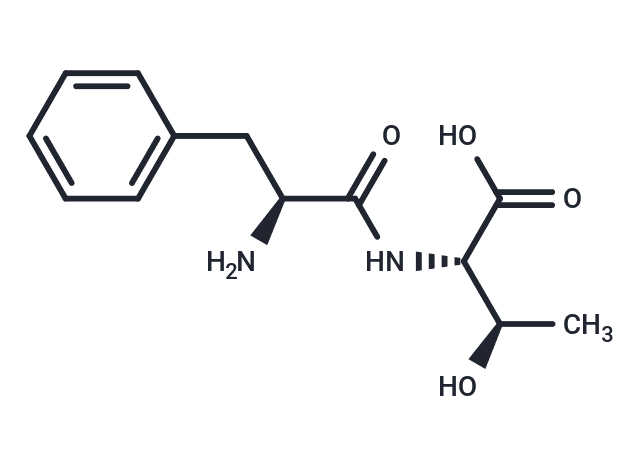
CAS:L-Phenylalanyl-L-threonine is a dipeptide composed of phenylalanine and threonine, which can be utilized in the synthesis of the cyclic hexapeptide [Banyascyclamide A].Fórmula:C13H18N2O4Cor e Forma:SolidPeso molecular:266.29Erizepine
CAS:Erizepine, an octopamine receptor 3 (OAR3) antagonist, exhibits a Ki value of 474 nM. This compound is utilized in insect research.Fórmula:C20H22N2Cor e Forma:SolidPeso molecular:290.4D-allo-Threoninol
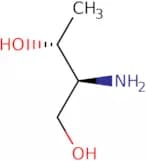
CAS:D-allo-Threoninol is a conformational analogue of threonine. It has been shown to inhibit the growth of Escherichia coli, Bacillus subtilis, and Staphylococcus aureus in vitro. D-allo-Threoninol binds to the enzyme methionine adenosyltransferase (MAT) by forming hydrogen bonds with its amino acid side chains. This binding prevents the formation of the MAT-coenzyme A complex, inhibiting protein synthesis and cell division.Fórmula:C4H11NO2Pureza:Min. 95%Cor e Forma:PowderPeso molecular:105.14 g/molD-2-Phenylglycine
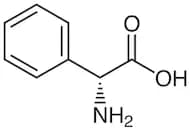
CAS:Fórmula:C8H9NO2Pureza:>99.0%(T)Cor e Forma:White to Almost white powder to crystalPeso molecular:151.17H-Arg-Val-Leu-psi(CH₂NH)Phe-Glu-Ala-Nle-NH₂
CAS:<p>The peptide RVL-psi[CH2NH]FEA-Nle-amide containing a reduced peptide bond was found to be a competitive inhibitor of the HIV-1 protease (Ki = 50 nM).</p>Fórmula:C40H69N11O8Pureza:> 96%Cor e Forma:WhitePeso molecular:832.06Pancreatic Polypeptide (bovine)
CAS:<p>Bachem ID: 4012218.</p>Fórmula:C186H287N53O56S2Pureza:99.2%Cor e Forma:White PowderPeso molecular:4225.78Cyclolinopeptide B
CAS:<p>Cyclolinopeptide B has been isolated from the seeds of Linum usitatissimum. It showed potent immunosuppressive activity comparable with that of cyclosporin A.</p>Fórmula:C56H83N9O9SPureza:98.6%Cor e Forma:White PowderPeso molecular:1058.4HIV-1 gag Protein p24 (194-210)
CAS:<p>Bachem ID: 4030725.</p>Fórmula:C73H126N20O23SPureza:> 97%Cor e Forma:White PowderPeso molecular:1683.99Myelin Oligodendrocyte Glycoprotein (35-55) amide (rat, mouse)
CAS:<p>Bachem ID: 4041119.</p>Fórmula:C118H178N36O28SPureza:92.4%Cor e Forma:White PowderPeso molecular:2581.0(Lys(Me)₃⁹)-Histone H3 (1-21)-Gly-Gly-Lys(biotinyl) amide
CAS:<p>Bachem ID: 4097932.</p>Fórmula:C117H212N43O32SPureza:97.1%Cor e Forma:White PowderPeso molecular:2765.31Procathepsin B (26-50) (rat)
CAS:<p>This 25 residue peptide was completely resistant to proteolysis by cathepsin B even after incubation overnight. It inhibited human cathepsin B with Ki = 2.8 µM and rat cathepsin B with Ki = 2 µM.</p>Fórmula:C123H198N34O33SPureza:94.0%Peso molecular:2713.2Neuropeptide Y (3-36) (human, rat)
CAS:<p>Main degradation product of NPY in serum and Y2/Y5 receptor agonist.</p>Fórmula:C175H269N53O54SPureza:> 99%Cor e Forma:White PowderPeso molecular:4011.45(Lys(Me)₂²⁷)-Histone H3 (21-44)-Gly-Lys(biotinyl)
CAS:<p>Bachem ID: 4099858.</p>Fórmula:C129H218N44O33SPureza:97.2%Peso molecular:2945.49β-Endorphin (bovine, camel, mouse)
CAS:<p>Bachem ID: 4007396.</p>Fórmula:C155H250N42O44SPureza:90.8%Cor e Forma:White PowderPeso molecular:3438.01FSL-1-DYKDDDDK
CAS:<p>The lipopeptide FSL-1, synthesized on the basis of the N-terminal structure of a M. salivarium lipoprotein, is capable of inducing the cell surface expression of ICAM-1 in human gingival fibroblasts. It furthermore revealed an activity to induce production of monocyte chemoattractant protein 1, interleukin-6 (IL-6), and IL-8. FSL-1 also activated macrophages to produce tumor necrosis factor alpha. Overall, results by Okusawa and coworkers suggest that the diacylglyceryl and the peptide portions of FSL-1 are indispensable for the expression of biological activities and for the recognition by Toll-like receptors 2 and 6. Furthermore, the same authors conclude that the recognition of FSL-1 by Toll-like receptors 2 and 6 apparently is hydrophobic.</p>Fórmula:C125H198N24O37SPureza:97.0%Cor e Forma:White PowderPeso molecular:2661.15(Lys(Ac)⁵·⁸·¹²·¹⁶)-Histone H4 (1-25)-Gly-Ser-Gly-Ser-Lys(biotinyl)
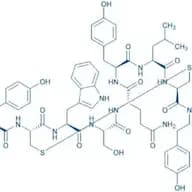
CAS:<p>Bachem ID: 4097460.</p>Fórmula:C141H243N53O43SCor e Forma:White PowderPeso molecular:3400.88H-Tyr-Cys-Trp-Ser-Gln-Tyr-Leu-Cys-Tyr-OH
CAS:<p>The TNF-α antagonist WP9QY inhibited TNF-α mediated apoptosis and exhibited an IC₅₀ of 5 µM in the binding assay. YCWSQYLCY is the smallest peptidomimetic developed to date that might be used as a lead compound for the next generation of non-peptidic inhibitors. The name WP9QY arises from the binding to the site observed in the TNF-β/TNF-receptor(I) complex designated WP9 and the introduction of the amino acids Gln and Tyr.</p>Fórmula:C58H71N11O15S2Pureza:97.9%Peso molecular:1226.4H-Phe-chloromethylketone · HCl
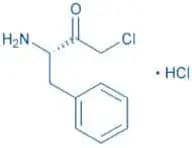
CAS:<p>Phe-CMK, inhibitor of gramicidin S synthetase 2.</p>Fórmula:C10H12ClNO·HClPeso molecular:234.13