Autofagia
Os inibidores da autofagia têm como alvo o processo celular de autofagia, que envolve a degradação e reciclagem de componentes celulares através dos lisossomas. A autofagia é um mecanismo crítico para a manutenção da homeostase celular, mas sua desregulação está implicada em várias doenças, incluindo câncer, neurodegeneração e infecções. Os inibidores da autofagia podem bloquear este processo, tornando-os ferramentas valiosas para estudar o papel da autofagia nas doenças e desenvolver estratégias terapêuticas. Na CymitQuimica, oferecemos inibidores da autofagia para apoiar sua pesquisa em biologia celular, oncologia e doenças neurodegenerativas.
Foram encontrados 1495 produtos de "Autofagia"
Ordenar por
Pureza (%)
0
100
|
0
|
50
|
90
|
95
|
100
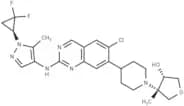
LRRK2-IN-4
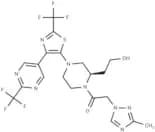
CAS:LRRK2-IN-4: Potent, selective LRRK2 inhibitor, oral, BBB-penetrating, IC50=2.6 nM, potential for Parkinson's.Fórmula:C25H29ClF2N6O2Cor e Forma:SolidPeso molecular:518.99CXCR4 antagonist 3
CXCR4 antagonist 3, aka compound 12a, has 11 nM IC50, shares TIQ15 traits, and is promising in HIV research.Fórmula:C22H31N5Cor e Forma:SolidPeso molecular:365.52BRD5631
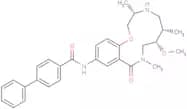
CAS:BRD5631 is an autophagy enhancer, enhances autophagy through an mTOR-independent pathway.Fórmula:C30H35N3O4Pureza:98%Cor e Forma:SolidPeso molecular:501.62LC3B recruiter 1
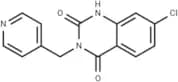
CAS:LC3B recruiter 1 (compound 33R) is an LC3B recruiting fragment. It directly interacts with LC3B, exhibiting a Kd value of 2.87 µM.Fórmula:C14H10ClN3O2Cor e Forma:SolidPeso molecular:287.701LRRK2-IN-5
LRRK2-IN-5 is an oral, BBB-penetrating selective inhibitor for LRRK2 with IC50s: 1.2μM (GS) and 16μM (WT); halts LRRK2 autophosphorylation.Fórmula:C24H26F2N4O2SCor e Forma:SolidPeso molecular:472.55DQ661
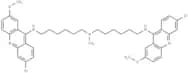
CAS:DQ661 is a potent inhibitor of PPT1 and a dimeric quinacrine autophagy (autophagy) inhibitor. It effectively suppresses the activity of mTORC1 and reduces protein expression levels of pS6K T389 and pS6 S240-244. Additionally, DQ661 exhibits anticancer properties.Fórmula:C41H47Cl2N5O2Cor e Forma:SolidPeso molecular:712.75ST-539
CAS:ST-539 is an inhibitor of the deubiquitinating enzyme USP30, with an IC50 of 0.37 μM. It enhances the ubiquitination of mitochondrial proteins and induces mitophagy (autophagy), thereby regulating mitochondrial homeostasis. ST-539 is applicable for research in neurodegenerative diseases.Fórmula:C30H31N3O4SCor e Forma:SolidPeso molecular:529.65Rosiglitazone sodium
CAS:Rosiglitazone sodium is an effective and selective PPARγ activator, with EC50 values of 30 nM for PPARγ1, 100 nM for PPARγ2, and 60 nM for PPARγ. It also has an approximate Kd of 40 nM for PPARγ. Additionally, Rosiglitazone sodium acts as a regulator of TRP channels, inhibiting the activities of TRPM2 and TRPM3, while activating TRPC5.Fórmula:C18H18N3NaO3SCor e Forma:SolidPeso molecular:379.41ACT-672125
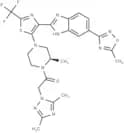
CAS:ACT-672125: Potent CXCR3 blocker, may treat autoimmunity, safe with dose-dependent efficacy in lung inflammation.Fórmula:C25H25F3N10O2SCor e Forma:SolidPeso molecular:586.59SRI-31255
CAS:SRI-31255 is an orally active LRRK2 inhibitor, with IC50 values of 520 nM for human wild-type (WT) and 427 nM for the G2019S mutant. It inhibits kinase activity by binding to the ATP-binding pocket of LRRK2, providing neuroprotective effects. SRI-31255 serves as a lead compound for developing LRRK2-targeted therapies for Parkinson’s disease research.Fórmula:C15H14N4Cor e Forma:SolidPeso molecular:250.30CCX662
CAS:CCX662 is a CXCR7 antagonist. It inhibits the binding of 125I-CXCL12 to CXCR7 with an IC50 of 9 nM. This compound is suitable for use in cancer research.Fórmula:C28H37N5O4SCor e Forma:SolidPeso molecular:539.69PARL-IN-1
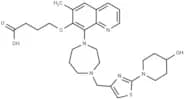
PARL-IN-1: Strong PARL blocker, IC50 28 nM, boosts PINK1/Parkin mitophagy.Fórmula:C40H58N6O7Cor e Forma:SolidPeso molecular:734.92CXCR2 antagonist 4
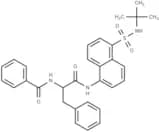
CXCR2 antagonist 4 inhibits CXCR2 (IC50: 0.13 μM) and CXCL8-induced calcium rise (IC50: 27 μM), promising for cancer research.Fórmula:C15H14F2N4OS2Cor e Forma:SolidPeso molecular:368.424-FPBUA
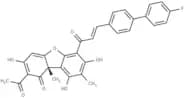
CAS:4-FPBUA, a semi-synthetic analog of lichen acid, enhances the functionality of cell-based blood-brain barriers (BBB) and increases the transport of β-amyloid (Aβ) in monolayer cells. Additionally, it acts as an inhibitor of mTOR, enhancing cellular autophagy (Autophagy) which can reverse BBB disruption in vivo, making it relevant for research in Alzheimer's disease.Fórmula:C31H23FO7Cor e Forma:SolidPeso molecular:526.51ACT-777991
CAS:ACT-777991: oral CXCR3 blocker, stable in microsomes/hepatocytes, inhibits T-cell migration to CXCL11.Fórmula:C20H20F6N8O2SCor e Forma:SolidPeso molecular:550.48(R)-SCH 546738
CAS:(R)-SCH 546738, the R-isomer of SCH 546738, is a non-competitive, orally active antagonist targeting the CXCR3 receptor, exhibiting a K_i of 0.4 nM for the human CXCR3 receptor.Fórmula:C23H31Cl2N7OCor e Forma:SolidPeso molecular:492.45LRRK2-IN-2
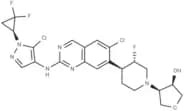
CAS:LRRK2-IN-2: selective, potent LRRK2 inhibitor, IC50 of 0.6 nM, oral, crosses blood-brain barrier, for Parkinson's research.Fórmula:C23H23Cl2F3N6O2Cor e Forma:SolidPeso molecular:543.37HDAC10-IN-1
HDAC10-IN-1 is a potent, selective HDAC10 inhibitor (IC50=58 nM) affecting autophagy in FLT3-ITD+ acute myeloid leukemia cells.Fórmula:C18H23N3O2Cor e Forma:SolidPeso molecular:313.39CXCR7 antagonist-1 hydrochloride
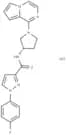
CAS:CXCR7 antagonist-1 hydrochloride, Inhibits SDF-1 (CXCL12) or I-TAC binding to CXCR7, used for tumor and inflammation research.Fórmula:C21H20ClFN6OPureza:99.84%Cor e Forma:SolidPeso molecular:426.87Stauprimide
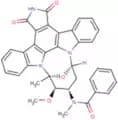
CAS:Stauprimide inhibits MYC by blocking NME2, reducing MYC transcription in ESCs.Fórmula:C35H28N4O5Pureza:98%Cor e Forma:SolidPeso molecular:584.62