Oligossacarídeos
Subcategorias de "Oligossacarídeos"
- Glicosídeos Aminoetil , Glicosídeos de aminopropil(14 produtos)
- Glicanos de ligação Asn(33 produtos)
- Oligossacarídeos de biotinados(13 produtos)
- Grupos sanguíneos e antígenos de Lewis(11 produtos)
- Oligossacarídeos do tipo sanguíneo(13 produtos)
- Celooligossacarídeo(1 produtos)
- Ciclodextrinas(183 produtos)
- Dissacarídeos(190 produtos)
- Epítopos Oligossacarídeos(19 produtos)
- Frutooligossacarídeos(2 produtos)
- Oligossacarídeos funcionais(556 produtos)
- Oligossacarídeos funcionalizados(1 produtos)
- Galactosamina(41 produtos)
- Galactoses(261 produtos)
- Galb (1-3) GalNAc(21 produtos)
- Gânglio - série(11 produtos)
- Globo-/isoglobo-séries(17 produtos)
- Glucosamina(128 produtos)
- Ácidos Glucurónicos(52 produtos)
- Glicoproteínas, Glicopeptídeos(59 produtos)
- Glicosaminoglicanos(26 produtos)
- Oligossacarídeos do leite humano(22 produtos)
- O-Glicanos marcados(9 produtos)
- Oligossacarídeos etiquetados(36 produtos)
- LacNAc(53 produtos)
- Lacto- e Neolacto-séries(14 produtos)
- Lacto-N-biose(10 produtos)
- Lactooligossacarídeos(7 produtos)
- Oligosaccharides anexados Linker(19 produtos)
- Maltooligossacarídeos(6 produtos)
- Oligossacarídeos de leite(31 produtos)
- N-Glicanos(149 produtos)
- Glicósidos naturais(177 produtos)
- Oligossacarídeos naturais(103 produtos)
- O-Glicano(18 produtos)
- Building Blocks de Oligossacarídeos(7 produtos)
- Substituição de oligossacarídeo(2 produtos)
- Oligossacarídeos por Componente de Açúcar(225 produtos)
- Oligoses(24 produtos)
- Outros Oligossacarídeos(14 produtos)
- Oligómeros de PEG(33 produtos)
- Açúcares Fosfatados(17 produtos)
- Açúcares Protegidos(526 produtos)
- Reagentes para Síntese de Oligossacarídeos(254 produtos)
- Ser, Glicanos de ligação Thr(9 produtos)
- Oligossacarídeos sialilados(3 produtos)
- Esfingoglicolipides(42 produtos)
- Aminoácidos de açúcar, Peptídeos de açúcar(20 produtos)
- Antígenos de açúcar(31 produtos)
- Building Blocks de Açúcares por Oligossacarídeos-Alvo(225 produtos)
- Conjugados de açúcar(100 produtos)
- Açúcares sulfatados(16 produtos)
- Tetrassacarídeos(34 produtos)
- Trissacarídeos e Acima(95 produtos)
- Xilooligossacarídeos(5 produtos)
Foram encontrados 2296 produtos de "Oligossacarídeos"
Glycyl-sialyllacto-N-tetraose b
Glycyl-sialyllacto-N-tetraose b is a custom synthesis of an oligosaccharide consisting of four monosaccharides. The monosaccharides are glycyl, sialyllactose and two tetrasaccharides with the configuration of (1,4)-alpha-D-mannopyranosyl-(1,2)-alpha-D-mannopyranosyl-(1,6)-beta-D-glucopyranosyl-(1,4)-alpha-D-mannopyranosyl. Glycyl-sialyllacto-N-tetraose b is a high purity product that can be modified to contain fluorine atoms. This product has been shown to have methylation activity in Methylation reactions.Fórmula:C39H66N4O29Pureza:Min. 95%Peso molecular:1,054.95 g/molGalacto-N-biose
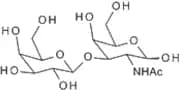
CAS:2-Acetamido-2-deoxy-3-O-(b-D-galactopyranosyl)-D-galactopyranose (also known as galacto-N-biose, GNB and T antigen) is a β 1-3’ linked disaccharide which is found in the gastrointestinal tract as a core component of mucin. GNB has been shown to have potential to protect against glutamate excitotoxicity, a process in which nerve cells can be damaged or destroyed. GNB, along with lactose-N-biose, are found in human milk but are not metabolised by gut enzymes and are instead broken down to a digestible form by bifidobacteria found in the intestinal systems of infants in a symbiotic process.
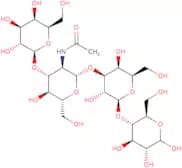
Fórmula:C14H25NO11Pureza:Min. 95%Cor e Forma:White Off-White PowderPeso molecular:383.35 g/mol4'-O-(2-Acetamido-2-deoxy-3-O-(b-D-galactopyranosyl)-b-D-galactopyanosyl)-b-D-lactose
4'-O-(2-Acetamido-2-deoxy-3-O-(b-D-galactopyranosyl)-b-D-galactopyanosyl) -b-D-lactose is a modified saccharide that belongs to the group of polysaccharides. It has a CAS number and can be custom synthesized by our company. This product is classified as a carbohydrate, sugar, or synthetic. It can be used in click modification, modification, or glycosylation reactions. 4'-O-(2-Acetamido-2-deoxy-3-O-(b-D-galactopyranosyl)-b -D -galactopyanosyl) -b -D -lactose is also fluorinated with trifluoromethanesulfonic acid and can be used for complex carbohydrate synthesis.Fórmula:C26H45NO21Pureza:Min. 95%Cor e Forma:White PowderPeso molecular:707.63 g/molD-Cellobiose octaacetate
CAS:Fully acetylated cellohexoses, part of a polymer homologous series of oligosaccharides isolated from cellulose by acetolysis followed by chromatography.Fórmula:C28H38O19Pureza:Min. 98 Area-%Cor e Forma:White PowderPeso molecular:678.59 g/mola,a-D-Trehalose anhydrous
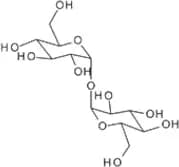
CAS:Trehalose is a sugar that is found in many organisms, including humans. It is a disaccharide composed of two glucose units. Trehalose has been shown to be effective against infectious diseases such as HIV and malaria. Trehalose may have anti-inflammatory effects by inhibiting the production of pro-inflammatory cytokines such as tumor necrosis factor alpha (TNF-α) and interleukin 6 (IL-6). The water vapor pressure of trehalose dihydrate is higher than that of trehalose anhydrous, which may account for its greater stability under high humidity conditions.Fórmula:C12H22O11Pureza:Min. 98 Area-%Cor e Forma:PowderPeso molecular:342.3 g/mol3-O-(a-D-Mannopyranosyl)-D-mannopyranose 1-O-propylamine acetate salt
3-O-(a-D-Mannopyranosyl)-D-mannopyranose 1-O-propylamine acetate salt is a methylated saccharide. It is an oligosaccharide that can be synthesized from D-mannose and pyruvic acid, with the addition of a proton donor. This product is used in the synthesis of polysaccharides due to its high purity and low cost. The methyl group on this molecule reacts with the carbonyl group on the sugar to form an ester, which makes it resistant to hydrolysis by enzymes. 3-O-(a-D-Mannopyranosyl)-D-mannopyranose 1-O-propylamine acetate salt is also fluorinated and can be used as a click modification in proteins or carbohydrates.Fórmula:C17H33O13NPureza:Min. 95%Cor e Forma:Colourless To White SolidPeso molecular:459.44 g/molLacto-N-tetraose - 90%
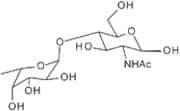
CAS:Core human milk oligosaccharideFórmula:C26H45NO21Pureza:Min. 90 Area-%Cor e Forma:White PowderPeso molecular:707.63 g/mol2-Acetamido-2-deoxy-4-O-(a-L-fucopyranosyl)-D-glucopyranose
CAS:2-Acetamido-2-deoxy-4-O-(a-L-fucopyranosyl)-D-glucopyranose is a methylated, custom synthesized oligosaccharide. It has been modified to include a fluorine atom at the C4 position on the glucose residue. The product is highly pure and in crystalline form, with a CAS number of 76211-71-7.Fórmula:C14H25NO10Pureza:90%Cor e Forma:White PowderPeso molecular:367.35 g/mol3'-Sulfated Lewis X sodium salt
CAS:3'-Sulfated Lewis X sodium salt is a synthetic carbohydrate with a sulfate group on the 3' position of the sugar. It is a selective blocker of E-selectin, a type of selectin that plays an important role in inflammation and tissue injury. The binding site for 3'-sulfated Lewis X sodium salt is the cavity at the end of the selectin molecule, which has a hydrophobic region. This cavity can be blocked by hydrophobic moieties such as sulfates, fatty acids, or steroids. 3'-Sulfated Lewis X sodium salt has been shown to be effective in treating inflammatory conditions such as asthma and arthritis.Fórmula:C20H34NSO18NaPureza:Min. 95%Cor e Forma:White PowderPeso molecular:631.55 g/molBlood group A-BSA
A-BSA is an antibody that competes with the blood group antigen for binding to erythrocytes. The A-BSA is immobilized on a microtitre plate and incubated with the blood group antigen and human blood group antiserum. The concentration of A-BSA in the solution is determined by measuring the enzyme-linked immunosorbent assay (ELISA) signal using a spectrophotometer. This measurement is used to determine the concentration of blood group antigen in the sample.Pureza:Min. 95%Cor e Forma:PowderBlood Group A trisaccharide-BSA
Core antigen ABO trisaccharide conjugated to BSA
Pureza:Min. 95%Cor e Forma:SolidVinyl a-D-lactose
Vinyl a-D-lactose is a custom synthesis, fluorinated, modified monosaccharide that can be used to modify proteins and polysaccharides. It has been shown to react with proteins through the click chemistry reaction and methylation. Vinyl a-D-lactose can be used for glycosylation of saccharides and complex carbohydrates in order to synthesize oligosaccharides.Pureza:Min. 95%p-Lacto-N-neohexaose
CAS:Neutral hexasasaccharide naturally present in human breast milk
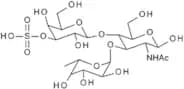
Fórmula:C40H68N2O31Pureza:(%) Min. 90%Cor e Forma:PowderPeso molecular:1,072.96 g/mol6'-O-Sulfated Lewis X
6'-O-Sulfated Lewis X is a synthetic, sulfated, monosaccharide that is modified with fluorine and methyl groups. It is used in the synthesis of oligosaccharides and polysaccharides. 6'-O-Sulfated Lewis X has been found to be effective in the prevention of glycosylation and sugar formation. This compound can also be used for click modification, as well as for modifying proteins or DNA. The CAS number is 59037-07-4.
Fórmula:C20H35NO18SPureza:Min. 95%Cor e Forma:PowderPeso molecular:609.55 g/mol4-O-(2,3,4,6-Tetra-O-acetyl-b-D-glucopyranosyl)-1,2,3,6-tetra-O-acetyl-b-D-thioglucopyranose
CAS:4-O-(2,3,4,6-Tetra-O-acetyl-b-D-glucopyranosyl)-1,2,3,6-tetra-O-acetyl-b-D-thioglucopyranose is a glycosylated saccharide that belongs to the group of complex carbohydrates. The glycosylation of 4-O-(2,3,4,6,-Tetra-O-acetyl b -D -glucopyranosyl)-1,2,3,6,-tetra -O -acetyl b -D -thioglucopyranose is achieved by the enzymatic reaction of an acetate donor and an acceptor molecule in the presence of glucose 1 phosphate (G1P) and UDP sugar pyrophosphorylase. It has been modified by methylation with dimethyl sulphate in the presence ofFórmula:C28H38O18SPureza:Min. 95%Peso molecular:694.66 g/mola1-3-Galactobiose-biotin
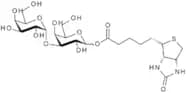
a1-3-Galactobiose-biotin is a synthetic, fluorinated oligosaccharide that has been modified with 3 biotin molecules. It is synthesized by the glycosylation of 1,3-galactobiose and is used as an intermediate in the synthesis of carbohydrates. The sugar moiety can be modified with different chemical groups and reactions such as methylation or click modification to change its properties.Fórmula:C22H36N2O13SPureza:Min. 95%Cor e Forma:PowderPeso molecular:568.59 g/molβ-Lactopyranosyl phenylisothiocyanate
CAS:b-Lactopyranosyl phenylisothiocyanate is a synthetic carbohydrate that has been modified with fluorine, methylation, glycosylation, and click chemistry. It is used in the synthesis of saccharides and oligosaccharides. This compound can also be used to modify saccharides or oligosaccharides with fluorine, methylation, glycosylations, or click chemistry.Fórmula:C19H25NO11SPureza:Min. 95%Cor e Forma:SolidPeso molecular:475.47 g/mol4'-Sulfated Lewis X methyl glycoside sodium
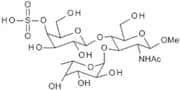
CAS:4'-Sulfated Lewis X methyl glycoside sodium is a synthetic monosaccharide. It is used in the synthesis of oligosaccharides and polysaccharides. This compound can be fluorinated to produce 4'-fluoro-4'-sulfated Lewis X methyl glycoside sodium. The sulfate group on this compound can be replaced with other groups such as carboxyl, cyano, nitro, and acetyl.Fórmula:C21H36NO18SNaPureza:Min. 95%Cor e Forma:PowderPeso molecular:645.58 g/molGD1b-ganglioside sodium
CAS:GD1b (shown as sodium salt) is one of the major gangliosides in neuronal and glial membranes. It has a core tetrasaccharide structure (Galβ1,3GalNAcβ1,4Galβ1,4Glc) with itâs two sialic acids linked α2,3/α2,8 to the inner galactose residue and ceramide linked β to position 1 on the reducing terminal glucose residue (Ledeen, 2009). GD1b acts as a receptor for BK virus as well as for heat-labile LTII-a toxin, produced by enteropathogenicâ¯E. coli. GD1b ganglioside also interacts with tetanus neurotoxin (TeNT) and is crucial for its entry into cells (Kolter, 2012).Pureza:Min. 95%Cor e Forma:PowderHexa-guluronic acid sodium
CAS:Hexa-guluronic acid sodium salt (1,4-linked α-L-sodium guluronohexaose) is one of a number of oligosaccharides obtained from alginate which is a polysaccharide in brown seaweeds containing: blocks of repeating mannuronic acid sequences (M-M-M-M etc), repeating guluronic acid sequences (G-G-G-G etc), and alternating M-G-M-G sequences. This oligosaccharide can be released by acid hydrolysis (Shimokawa, 1996) and a number of biological activities have been discussed in a recent review (Xing, 2020).
Fórmula:C36H44O37Na6Pureza:Min. 95%Cor e Forma:White PowderPeso molecular:1,206.65 g/mol