Oligossacarídeos
Subcategorias de "Oligossacarídeos"
- Glicosídeos Aminoetil , Glicosídeos de aminopropil(14 produtos)
- Glicanos de ligação Asn(33 produtos)
- Oligossacarídeos de biotinados(13 produtos)
- Grupos sanguíneos e antígenos de Lewis(11 produtos)
- Oligossacarídeos do tipo sanguíneo(13 produtos)
- Celooligossacarídeo(1 produtos)
- Ciclodextrinas(183 produtos)
- Dissacarídeos(190 produtos)
- Epítopos Oligossacarídeos(19 produtos)
- Frutooligossacarídeos(2 produtos)
- Oligossacarídeos funcionais(556 produtos)
- Oligossacarídeos funcionalizados(1 produtos)
- Galactosamina(41 produtos)
- Galactoses(261 produtos)
- Galb (1-3) GalNAc(21 produtos)
- Gânglio - série(11 produtos)
- Globo-/isoglobo-séries(17 produtos)
- Glucosamina(128 produtos)
- Ácidos Glucurónicos(52 produtos)
- Glicoproteínas, Glicopeptídeos(59 produtos)
- Glicosaminoglicanos(26 produtos)
- Oligossacarídeos do leite humano(22 produtos)
- O-Glicanos marcados(9 produtos)
- Oligossacarídeos etiquetados(36 produtos)
- LacNAc(53 produtos)
- Lacto- e Neolacto-séries(14 produtos)
- Lacto-N-biose(10 produtos)
- Lactooligossacarídeos(7 produtos)
- Oligosaccharides anexados Linker(19 produtos)
- Maltooligossacarídeos(6 produtos)
- Oligossacarídeos de leite(31 produtos)
- N-Glicanos(149 produtos)
- Glicósidos naturais(177 produtos)
- Oligossacarídeos naturais(103 produtos)
- O-Glicano(18 produtos)
- Building Blocks de Oligossacarídeos(7 produtos)
- Substituição de oligossacarídeo(2 produtos)
- Oligossacarídeos por Componente de Açúcar(225 produtos)
- Oligoses(24 produtos)
- Outros Oligossacarídeos(14 produtos)
- Oligómeros de PEG(33 produtos)
- Açúcares Fosfatados(17 produtos)
- Açúcares Protegidos(526 produtos)
- Reagentes para Síntese de Oligossacarídeos(254 produtos)
- Ser, Glicanos de ligação Thr(9 produtos)
- Oligossacarídeos sialilados(3 produtos)
- Esfingoglicolipides(42 produtos)
- Aminoácidos de açúcar, Peptídeos de açúcar(20 produtos)
- Antígenos de açúcar(31 produtos)
- Building Blocks de Açúcares por Oligossacarídeos-Alvo(225 produtos)
- Conjugados de açúcar(100 produtos)
- Açúcares sulfatados(16 produtos)
- Tetrassacarídeos(34 produtos)
- Trissacarídeos e Acima(95 produtos)
- Xilooligossacarídeos(5 produtos)
Foram encontrados 2310 produtos de "Oligossacarídeos"
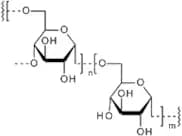
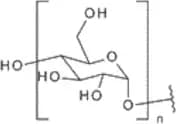
Dextran 150 - MW: 135,000 to 165,000
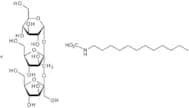
CAS:Complex glucan (a 1-6) from Leuconostoc spp.; extender in blood transfusionsCor e Forma:PowderInulin lauryl carbamate - 25% in glycerol
CAS:Emulsifier used in the cosmetic industryCor e Forma:PowderLividamine
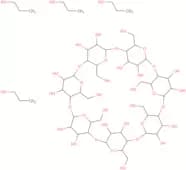
CAS:Lividamine is a protein synthesis inhibitor that has biphasic responses in animal studies. Lividamine inhibits the enzyme catalysis of aminoglycosides, which are used for the treatment of bacterial infections. It also blocks the biosynthesis of polypeptides, which are essential for cell growth and division. Lividamine binds to the hydroxyl group or carboxylate group on an amino acid, cleaving it from the peptide chain and stopping protein synthesis. Lividamine has been shown to be effective against bacteria in vitro assays. Further research is required to determine its clinical properties.Fórmula:C12H25N3O6Pureza:Min. 95%Peso molecular:307.34 g/mol2-Hydroxypropyl-b-cyclodextrin - Endotoxin level below 20 EU/g
CAS:2-Hydroxypropyl-b-cyclodextrin is a water-soluble drug that is chemically stable in aqueous media. It has been shown to be safe for use in the eye, with no significant side effects. 2-Hydroxypropyl-b-cyclodextrin has been shown to have anti-inflammatory properties and will not cause hemolytic activity. 2-Hydroxypropyl-b-cyclodextrin binds to retinoic acid receptors, which are found on cells of the corneal surface and in human spermatozoa. The binding of retinoic acid inhibits the production of enzymes that break down retinoids and prevents cell proliferation. This agent also interacts with other cellular components such as proteins, lipids, carbohydrates, nucleic acids, and hormones.
Fórmula:C42•(H)70n•O35•(C3H7)nPureza:Min. 95%D-Maltitol
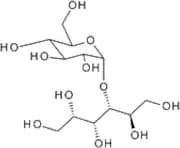
CAS:Bulk sweetener; viscosity/bodying agent; humectant; cryoprotectantFórmula:C12H24O11Pureza:Min. 95%Cor e Forma:White PowderPeso molecular:344.31 g/molb-Lactose - min 70% b-anomer
CAS:70% β-D-Lactose is used in the pharmaceutical industry to produce tablets. It acts as a nutrient and as a filler in pills. It is also utilized in the dilution of heroin and to sweeten some beers.Fórmula:C12H22O11Cor e Forma:White PowderPeso molecular:342.3 g/molIsomaltohexaose
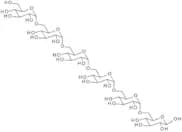
CAS:Produced from high maltose syrup by treatment with transglucosidaseFórmula:C36H62O31Pureza:Min. 90 Area-%Cor e Forma:White PowderPeso molecular:990.9 g/molGlycosaminoglycans
CAS:Glycosaminoglycans (GAGs) are polysaccharides that are found in the extracellular matrix and on the surface of cells. GAGs consist of a linear chain of repeating disaccharide units, with one or more sugar molecules linked by a glycosidic bond. They have been shown to be important for the function and structure of tissues, including those in the gastrointestinal tract. GAGs have been shown to stimulate cellular growth, regulate inflammatory responses, and promote wound healing. They have also been shown to inhibit activity of polymorphonuclear leucocytes (PMN), which play an important role in inflammation. One type of GAG is dextran sulfate, which has been used as a biological scaffold for tissue engineering applications. Glycosaminoglycans may also play a role in regulating immune responses through interaction with toll-like receptor 4 (TLR4).Pureza:Min. 95%Maltodextrin - dextrose equivalent 4.0-7.0
CAS:Ex starch-partial hydrolysis,food ingredient, moderatly sweet, easily digestedPureza:Min. 95%Cor e Forma:White PowderIsomaltulose
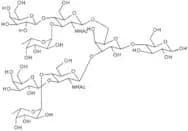
CAS:Occurs by epimerisation of maltose and transglucosylationFórmula:C12H22O11Pureza:Min. 95%Cor e Forma:White PowderPeso molecular:342.3 g/molDifucosyllacto-N-hexaose (a)
CAS:Neutral octasasaccharide naturally present in human breast milk
Fórmula:C52H88N2O39Pureza:Min. 95%Cor e Forma:PowderPeso molecular:1,365.25 g/molLewis Y tetrasaccharide
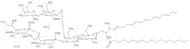
CAS:Lewis Y tetrasaccharide is a type of antigen that is used as a pharmacological agent. It has been shown to be effective in treating carcinoma cell lines and primary sclerosing cholangitis. Lewis Y tetrasaccharide has also been shown to be an antigen for the mouse monoclonal antibody, which is used in cancer research. The Lewis Y tetrasaccharide stimulates the immune system by interacting with certain cells called dendritic cells and macrophages, which are responsible for activating T-cells. This interaction promotes the production of chemoattractant proteins, which are proteins that attract white blood cells to fight infection and promote healing. Lewis Y tetrasaccharide has also been shown to cause cancer cell death by lysing cells through apoptosis or necrosis depending on the tissue type.Fórmula:C26H45NO19Pureza:(%) Min. 95%Cor e Forma:PowderPeso molecular:675.64 g/molMonophosphoryl 3- deacyl lipid A ammonium
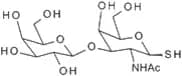
CAS:Synthetic MPLA analog equivalent derived from bacterial LPSFórmula:C82H155N2O20P•NH3Pureza:Min. 95%Cor e Forma:PowderPeso molecular:1,537.11 g/mol2-Acetamido-3-O-(b-D-galactopyranosyl)-2-deoxy-D-thiogalactopyranose
2-Acetamido-3-O-(b-D-galactopyranosyl)-2-deoxy-D-thiogalactopyranose is a synthetic disaccharide analog designed for research in glycoscience and biochemistry, particularly for applications in glycosylation-related studies. This compound is synthesized in the laboratory and is not derived from natural sources, allowing for precise structural modifications that facilitate detailed analyses of glycan interactions.The mode of action of this compound involves its role as a mimic of natural glycans, enabling the examination of carbohydrate-protein interactions, enzymatic activity, and glycan recognition processes with high specificity. It can be leveraged as a probe in structural biology to elucidate the mechanisms underlying biological recognition and signaling events mediated by carbohydrate molecules.This compound finds applications in the study of enzymatic hydrolysis, as an inhibitor of glycosidases, and in the synthesis of glycan-based drugs. It is of particular interest in the field of glycobiology for developing therapeutic agents and probing molecular pathways. The high specificity and structural fidelity of 2-Acetamido-3-O-(b-D-galactopyranosyl)-2-deoxy-D-thiogalactopyranose make it an invaluable tool for advancing our understanding of the intricate roles glycans play in biology.Fórmula:C14H25NO10SPureza:Min. 95%Peso molecular:399.42 g/molMonofucosyl-para-lacto-N-hexaose IV
CAS:Monofucosyl-para-lacto-N-hexaose IV is a trisaccharide that belongs to the group of blood group antigens. It is found in human milk and can be used as an indicator for infant nutrition. Monofucosyl-para-lacto-N-hexaose IV is found in the cells of streptococcus, lactobacillus, and clostridium. It has been shown to be a potential biomarker for inflammatory bowel disease (IBD). This molecule has been used as an antigen in immunological assays. The sequences of monofucosyl-para-lacto-N-hexaose IV have been determined using chromatograms and profiles.Fórmula:C46H78N2O35Pureza:Min. 95%Cor e Forma:PowderPeso molecular:1,219.11 g/molDifucosyllacto-N-hexaose (b)
CAS:Neutral octasasaccharide naturally present in human breast milk.Fórmula:C52H88N2O39Pureza:Min. 90 Area-%Cor e Forma:PowderPeso molecular:1,365.25 g/molGD1b-Ganglioside ammonium
CAS:GD1b ganglioside (shown as ammonium salt) is one of the major gangliosides in neuronal and glial membranes. It has a core tetrasaccharide structure (Galβ1,3GalNAcβ1,4Galβ1,4Glc) with its two sialic acids linked α2,3/α2,8 to the inner galactose residue, and ceramide linked β to position 1 on the reducing terminal glucose residue (Ledeen, 2009). GD1b ganglioside acts as a receptor for BK virus, as well as for heat-labile LTII-a toxin, produced by enteropathogenicâ¯E. coli. GD1b ganglioside also interacts with tetanus neurotoxin (TeNT) and is crucial for its entry into cells (Kolter, 2012). The functional significance of ammonia in the brain is not yet fully understood: see (Modi 1994).
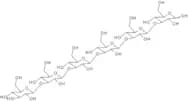
Pureza:Min. 95%Laminarihexaose
CAS:Ex algal/bacterial polysaccharides-value in b1-3 glucanase assays & diagnosticsFórmula:C36H62O31Pureza:Min. 90 Area-%Cor e Forma:White Off-White PowderPeso molecular:990.86 g/molTri-guluronic acid sodium salt
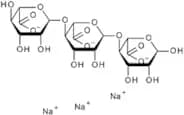
CAS:Tri-guluronic acid sodium salt (1,4-linked α-L-sodium guluronotriose) is one of a number of oligosaccharides obtained from alginate which is a polysaccharide in brown seaweeds containing: blocks of repeating mannuronic acid sequences (M-M-M-M etc), repeating guluronic acid sequences (G-G-G-G etc), and alternating M-G-M-G sequences. This oligosaccharide can be released by acid hydrolysis (Shimokawa, 1996) and a number of biological activities have been discussed in a recent review (Xing, 2020).
Fórmula:C18H23O19Na3Pureza:Min. 98 Area-%Cor e Forma:White PowderPeso molecular:612.33 g/mol1,3-α-1,6-α-D-Mannotriose 1-O-propylamine acetate
1,3-a-1,6-a-D-Mannotriose 1-O-propylamine acetate salt is a modified oligosaccharide. It has been synthesized by the reaction of 1,3-a-1,6-a-D-mannopyranosyl bromide with proline amine acetate. This product is 98% pure and can be used as a complex carbohydrate in research or as a food additive. The CAS number for this product is 712092-14-8.Fórmula:C23H43O18NPureza:Min. 95%Cor e Forma:PowderPeso molecular:621.58 g/mol