Corantes, Pigmentos, Tinturas, Imagens Fluorescentes
Corantes, colorações e tinturas são ferramentas essenciais na biologia molecular, cruciais para visualizar e estudar o DNA, cromossomos e núcleos celulares. Esses compostos permitem que os pesquisadores destaquem componentes celulares específicos, facilitando a observação e análise detalhadas ao microscópio. Nesta categoria, você encontrará uma ampla gama de corantes e colorações de alta qualidade usados em várias técnicas de coloração, incluindo corantes fluorescentes para análise de DNA e cromossomos, colorações histológicas para amostras de tecido e corantes específicos para estruturas celulares. Essas ferramentas são indispensáveis em pesquisas genéticas, citologia, histologia e diagnósticos, proporcionando clareza e contraste em amostras biológicas. Na CymitQuimica, oferecemos uma seleção abrangente de corantes, colorações e tinturas para apoiar sua pesquisa em biologia molecular e garantir resultados precisos e confiáveis em seus estudos.
Subcategorias de "Corantes, Pigmentos, Tinturas, Imagens Fluorescentes"
- Corantes Ácidos(49 produtos)
- Azobenzenos(270 produtos)
- Corantes azóicos(7 produtos)
- Corantes básicos(27 produtos)
- Corantes de Cumarina(71 produtos)
- Corantes de cianina, corantes de Squarylium(53 produtos)
- Corantes de DCM(4 produtos)
- Diariletenos(12 produtos)
- Corantes de Dipirrometeno(26 produtos)
- Corantes directos(17 produtos)
- Corantes dispersos(2 produtos)
- Sensibilizadores de corantes(12 produtos)
- Corantes(416 produtos)
- Corantes e pigmentos(911 produtos)
- Geração de corantes insolúveis(14 produtos)
- Geração de corantes solúveis(11 produtos)
- Hexaarilbiimidazol(4 produtos)
- Indicadores(575 produtos)
- Corantes Mordente(10 produtos)
- Corantes de Infravermelhos-próximo (NIR)(28 produtos)
- Corantes a óleo(15 produtos)
- Outros Pigmentos e Corantes(2 produtos)
- Corantes de Perileno(17 produtos)
- Corantes fotocrómicos(40 produtos)
- Corantes de Ftalocianina, Corantes de Porfirina(101 produtos)
- Corantes de Quinacridona(8 produtos)
- Espiropirano(16 produtos)
- Pigmentos e Corantes(243 produtos)
- Pigmentos e Corantes para Microscopia(5 produtos)
- Corantes Vat(5 produtos)
- Corante Xanteno(65 produtos)
Exibir 23 mais subcategorias
Foram encontrados 755 produtos de "Corantes, Pigmentos, Tinturas, Imagens Fluorescentes"
Ordenar por
Pureza (%)
0
100
|
0
|
50
|
90
|
95
|
100
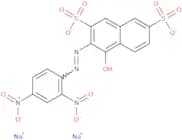
C.I.Reactive Orange 20
CAS:<p>Please enquire for more information about C.I.Reactive Orange 20 including the price, delivery time and more detailed product information at the technical inquiry form on this page</p>Pureza:Min. 95%Alcian blue 8GX
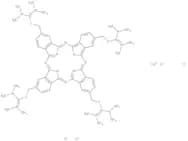
CAS:<p>Alcian blue 8GX is a water-soluble dye that has been used for many years to stain the cell cytoplasm and other cellular structures. It binds to proteins, carbohydrates, lipids, and nucleic acids. Alcian blue 8GX is typically used as a histochemical staining agent in conjunction with phosphotungstic acid or hematoxylin. The binding of Alcian blue 8GX to cells is dependent on the presence of hydroxyl groups and it is transported by a passive process that is inhibited by lanthanum ions. This dye binds to glucosylceramide in the cerebellar purkinje neurons, which can be detected using electron microscopy. Alcian blue 8GX has been shown to enhance protein synthesis in human serum, but does not affect this process at low energy levels such as those found in diabetic patients.</p>Fórmula:C56H68N16S4Cl4CuCor e Forma:PowderPeso molecular:1,298.87 g/molC.I.Direct Orange 102
CAS:<p>C.I.Direct Orange 102 is a dye that can be used in the diagnosis of viral infections, such as hepatitis and herpes zoster. C.I.Direct Orange 102 has been shown to have antiviral activity against a number of viruses, including human pathogen and virus. It binds to viral RNA polymerase and prevents transcription of viral RNA into DNA by binding to the enzyme's active site and blocking access to the DNA template strand</p>Fórmula:C34H21N6Na3O11S2Cor e Forma:PowderPeso molecular:822.67 g/molAcid Red 374
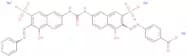
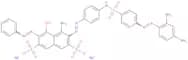
CAS:<p>Acid Red 374 is a non-selective cation dye that can be used in various diagnostic applications, such as DNA microarray analysis, flow cytometry, and immunohistochemistry. Acid Red 374 has been shown to inhibit the growth of cancer cells by selectively binding to the nucleic acids in these cells. It also inhibits the growth of prostate cancer cells and hematopoietic cells. Acid Red 374 has antimicrobial activity against methicillin-resistant Staphylococcus aureus (MRSA) and herpes simplex virus.</p>Fórmula:C38H32N4O11S3•Na3Pureza:Min. 95%Peso molecular:885.85 g/mol4-Acetoxycinnamic acid
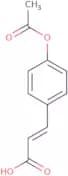
CAS:<p>4-Acetoxycinnamic acid is a staphylococcal bactericide that inhibits bacterial growth and is active against many gram-positive bacteria, including Staphylococcus aureus. It is also active against many gram-negative bacteria, such as Escherichia coli and Pseudomonas aeruginosa. 4-Acetoxycinnamic acid has been shown to inhibit the growth of Staphylococcus aureus in an in vitro experiment by interfering with membrane permeability and inhibiting lipid synthesis. 4-Acetoxycinnamic acid has been shown to have antimicrobial activity against gram-positive and gram-negative bacteria, including methicillin resistant S. aureus (MRSA).</p>Fórmula:C11H10O4Pureza:Min. 97 Area-%Cor e Forma:PowderPeso molecular:206.19 g/molBasic fuchsin
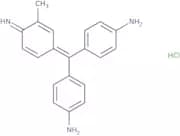
CAS:<p>Basic fuchsin is a basic dye that has been used in wastewater treatment. It is a red-violet color and is used to stain cell nuclei and other biological structures. Basic fuchsin can be adsorbed on particles, which are then removed from the water by filtration. The adsorption of basic fuchsin on particles is reversible and depends on the pH of the solution. This property makes it suitable for use as a surface methodology for staining DNA in nuclear dna preparations.</p>Fórmula:C20H20N3ClCor e Forma:Green PowderPeso molecular:337.85 g/molReactive red 66
CAS:<p>Reactive red 66 is a reactive dye that is used for wastewater treatment. The high resistance to hydrochloric acid, photo-oxidation, and protease activity make it an ideal candidate for this application. Reactive red 66 has been shown to have the ability to react with proteins and other compounds in the water to form covalent bonds. These bonds are then broken down by reductive mechanisms such as photocatalytic activity, which results in the formation of radicals. Functional groups on the molecule are responsible for its color, while transfer mechanisms between molecules allow it to be soluble in water at low concentrations.</p>Fórmula:C20H15BrN4Na2O8S2Pureza:Min. 95%Peso molecular:629.37 g/molC.I.Direct Black 155
CAS:<p>Please enquire for more information about C.I.Direct Black 155 including the price, delivery time and more detailed product information at the technical inquiry form on this page</p>Pureza:Min. 95%C.I.Solvent Orange 3
CAS:<p>C.I. Solvent Orange 3 is a fluorescent dye that is used as a tracer in analytical chemistry to measure the water permeability of a sample by measuring the rate of diffusion of the dye. It is also used for sample preparation and kinetic studies when performing dispersive solid-phase extraction or surface methodology. The results show that C.I. Solvent Orange 3 has high water solubility and good stability, but can be decomposed by radiation, such as ultraviolet light and gamma rays, with an activation energy of around 100-150 kJ/mol and an induction time of 5-10 minutes. The compound has been detected in oroxylum indicum and curcuma aromatica plants, as well as angelicae dahuricae, titration calorimetry, and human serum samples from China. The compound is able to form hydrogen bonding interactions with other molecules such as glycol ethers, which are commonly found in Chinese herbs such as Angelica Dah</p>Fórmula:C12H12N4Pureza:Min. 95%Cor e Forma:PowderPeso molecular:212.25 g/molAcid Red 361
CAS:<p>Acid Red 361 is a red dyestuff that is used as a cross-linking agent in the production of laminates. It is also used in the production of dyebaths and can be used as an introducing agent for plant cells. Acid Red 361 has been shown to form lamellar structures at a concentration of 0.05% in the dyebath, and to have a molecular weight of about 600 Da. This dye has been found to polymerize with other dyes, and can be identified by mass spectrometry. Acid Red 361 also consists of c1-6 alkyl groups, which are hydroxyl groups that are attached to benzene rings.</p>Pureza:Min. 95%Pigment Red 174
CAS:<p>Pigment Red 174 is a red pigment with a strong red color that is used as an ingredient in paints, coatings and inks. Pigment Red 174 is used as an ejecting or dispersing agent for liquid systems such as paint, coatings and inks. It also has a high viscosity and binding ability. Pigment Red 174 is insoluble in water but soluble in formic acid and can be dissolved by irradiation with thermal energy. Pigment Red 174 has functional groups that are capable of forming hydrogen bonds with other molecules. This pigment has the same properties as many other pigments, including being newtonian and radiation-sensitive.</p>Pureza:Min. 95%C.I.Sulphur green 14
CAS:<p>Please enquire for more information about C.I.Sulphur green 14 including the price, delivery time and more detailed product information at the technical inquiry form on this page</p>Pureza:Min. 95%C.I.Disperse Orange 70
CAS:<p>Please enquire for more information about C.I.Disperse Orange 70 including the price, delivery time and more detailed product information at the technical inquiry form on this page</p>Pureza:Min. 95%Solvent Orange 14, Technical grade Dye content
CAS:<p>Please enquire for more information about Solvent Orange 14, Technical grade Dye content including the price, delivery time and more detailed product information at the technical inquiry form on this page</p>Fórmula:C22H17N5Pureza:Min. 95%Peso molecular:351.4 g/molC.I.Disperse Yellow 201
CAS:<p>Please enquire for more information about C.I.Disperse Yellow 201 including the price, delivery time and more detailed product information at the technical inquiry form on this page</p>Pureza:Min. 95%New Fuchsin
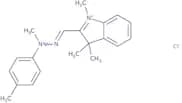
CAS:<p>Please enquire for more information about New Fuchsin including the price, delivery time and more detailed product information at the technical inquiry form on this page</p>Fórmula:C22H24ClN3Peso molecular:365.91 g/molPigment red 166
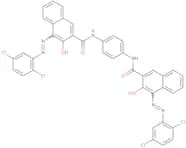
CAS:<p>Pigment Red 166 is a hydroxyl group glycol ester. It is a mixture of red, orange and yellow pigments that are used in paints and coatings. Pigment Red 166 has a particle size of less than 1 micron and a thermal expansion coefficient of about 2.5 x 10⁻⁶ K-1. This pigment has an inorganic acid content of about 0.4%. The shape of the pigment is spherical, with a diameter of about 20 nm. Pigment Red 166 exhibits fluorescence when irradiated with radiation from the ultraviolet to the infrared region of the spectrum, which corresponds to its aliphatic hydrocarbon content.</p>Fórmula:C40H24Cl4N6O4Cor e Forma:PowderPeso molecular:794.47 g/molCI Reactive Blue 203
CAS:<p>CI Reactive Blue 203 is a reactive dye that changes color from blue to purple when heated. It is used in forensics, where it can be used to detect the presence of alkali metal ions. CI Reactive Blue 203 has been shown to react with fungal cells and peroxidase enzymes, yielding a violet color. This dye is also used as a surfactant, thickener, and vinyl stabilizer in textile production. CI Reactive Blue 203 has been shown to bind to antibodies and can be used for staining purposes in histology. This dye binds to methoxy groups on proteins and can be used for detection purposes in ELISA tests.</p>Fórmula:C28H29N5O21S6•Na4Pureza:Min. 95%Cor e Forma:PowderPeso molecular:1,055.91 g/molPigment red 49
CAS:<p>Pigment Red 49 is a diazonium salt that has been used as a dye in many areas of industry. The red color can be obtained by reacting pigment red 49 with sodium salts, hydrochloric acid, and ethylene diamine. Pigment Red 49 is also used in clinical studies to detect the presence of nitrogen atoms. This substance can cause allergic reactions and is classified as a particle. It has also been found to have an effect on radiation and glycol esters. Pigment Red 49 interacts with cationic surfactants, which are compounds that have a cationic charge due to the presence of at least one quaternary ammonium group. Pigment Red 49 is soluble in fatty acids and glycol esters.</p>Fórmula:C20H13N2NaO4SPureza:Min. 98%Cor e Forma:PowderPeso molecular:400.38 g/molC.I.Direct Red 83
CAS:<p>C.I.Direct Red 83 is a complex of copper and polycarboxylic acid that is used in wastewater treatment. It is also used as an indicator dye in biological studies to measure the rate of reaction between carboxylic acids and amino-groups, which are both necessary for the formation of nucleic acids. C.I.Direct Red 83 has been shown to have strong absorptive properties, with a maximum absorption at 546 nm in aqueous solution. This dye has also been shown to bind to receptors on the cell membrane, specifically those receptors that are involved in thermally induced reactions.</p>Pureza:Min. 95%C.I. Pigment Red 48:4
CAS:<p>C.I. Pigment Red 48:4 is a synthetic red pigment with an anhydrous sodium chloride matrix that has been used in analytical methodology, and in the production of polyester and electro-luminescent materials. The pigment is soluble in organic solvents such as acetone, toluene, and ethyl acetate. C.I. Pigment Red 48:4 is stable at temperatures up to 130°C, but decomposes at higher temperatures. This pigment has a redox potential of -0.05 V vs Ag/AgCl (reference electrode). C.I. Pigment Red 48:4 is light resistant and has shown good resistance to fading due to weathering or UV radiation when used in printing ink or colorants for plastics such as polyesters or vinyls.BR><br>COLOR: <br>PURITY: >99%<br>MELTING POINT: >200°C<br>SPECIFIC GRAVITY: 1.</p>Fórmula:C18H11ClMnN2O6SPureza:Min. 95%Cor e Forma:Red PowderPeso molecular:473.75 g/molNitrazine Yellow
CAS:<p>Nitrazine Yellow is a reversible, reusable, imine-based fluorescent dye that absorbs in the near-infrared region of the spectrum. This compound has been shown to be an acceptor and an inorganic amide. Nitrazine Yellow also has transition metal properties and is a heterocyclic ring. It can be used as a hydrogen bond donor or proton acceptor, depending on its environment. Nitrazine Yellow can react with hydroxylamine to form coupler products that are metastable and can be detected by fluorometric analysis.</p>Fórmula:C16H8N4Na2O11S2Pureza:Min. 95%Cor e Forma:PowderPeso molecular:542.37 g/molC.I.Basic Yellow 29
CAS:<p>Please enquire for more information about C.I.Basic Yellow 29 including the price, delivery time and more detailed product information at the technical inquiry form on this page</p>Pureza:Min. 95%Pigment yellow 12, technical grade dye content
CAS:<p>Pigment Yellow 12 is a yellow dye that belongs to the class of copper-complex dyes. It has a particle size of around 20 nm and an intramolecular hydrogen bonding with a hydroxyl group. Pigment Yellow 12 reacts with diazonium salt in the presence of hydrochloric acid, cationic surfactant, and amines to produce a bright yellow color. This dye is used as an indicator for urine samples, as well as in the production of textiles and plastics. Pigment Yellow 12 is not carcinogenic and does not have any known adverse effects on human health.</p>Fórmula:C32H26Cl2N6O4Cor e Forma:PowderPeso molecular:629.49 g/molC.I.Reactive Yellow 107
CAS:<p>Please enquire for more information about C.I.Reactive Yellow 107 including the price, delivery time and more detailed product information at the technical inquiry form on this page</p>Pureza:Min. 95%C.I.Acid Orange 60
CAS:<p>C.I. Acid Orange 60 is a polyolefin that is used as an additive for ophthalmic lenses to reduce the possibility of fogging by absorbing moisture and oxygen. It is also used in the production of ionizable dyes, nucleophilic substances, reactive substances, and surfactants. This product is typically applied using an organic solvent or chemical ionization mass spectrometry.</p>Pureza:Min. 95%Acid Black 234, Technical grade
CAS:<p>Acid Black 234 is a reactive dye that is used in the textile industry. It has a hydroxy group and can be used for wastewater treatment. Acid Black 234 is not soluble in water but can be dissolved in organic solutions. It has high penetrant properties and its chemical stability depends on the pH of the solution. Acid Black 234 undergoes an adsorption mechanism, which involves a reaction with chloride ions to form a complex that binds to the surface of the fabric.</p>Pureza:Min. 95%Acridine orange biological stain
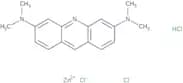
CAS:<p>Acridine orange is a fluorescent dye that is used as a biological stain. It binds to DNA and stains the cells it has bound to, making them more visible under an ultraviolet light. This dye also produces kinetic data on the micronucleus test in mice and rats. Acridine orange can be used to detect genotoxic effects in animals and humans, such as genetic damage or cancer. Kinetic studies have shown statistically significant increases in plasma mass spectrometry, but no significant changes in erythrosine uptake were observed. Acridine orange has been shown to cause genotoxic effects on brain cells and testicular cells.</p>Fórmula:C17H20ClN3ZnCl2Cor e Forma:PowderPeso molecular:369.96 g/molC.I.Acid Yellow 42
CAS:<p>C.I.Acid Yellow 42 is a reactive dye that belongs to the class of chromatic compounds. It is used in photolithography and as a pH indicator, but is also an environmental pollutant. C.I.Acid Yellow 42 is hydrated and has radical mechanism of photodecomposition, which makes it subject to radiation and mineralization. C.I.Acid Yellow 42 can be used in assays for detecting ions such as copper, iron, zinc, or mercury at efficiencies greater than other dyes in the same class. It can also be synthesized from organic materials or biodegradable substances such as dyes from natural sources or phenol-formaldehyde resins with low toxicity to humans and the environment.>>END>></p>Fórmula:C32H26N8O8S2•Na2Pureza:Min. 95%Cor e Forma:PowderPeso molecular:760.71 g/molBromocresol green
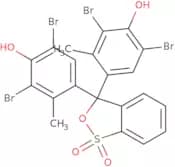
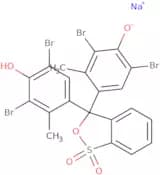
CAS:<p>Bromocresol green is a cationic surfactant that is used as a fluorescent indicator dye. It binds to proteins and can be detected with an optical sensor. Bromocresol green has been shown to react with hydrochloric acid, which may be due to the protonation of the cationic group. This reaction is reversible and depends on pH. The binding of bromocresol green to serum proteins results in a decrease in fluorescence intensity due to quenching by adsorption at the protein-protein interface. The kinetic data for this dye have been found to depend on α1-acid glycoprotein concentration.</p>Fórmula:C21H14Br4O5SCor e Forma:PowderPeso molecular:698.01 g/molDirect Yellow 96, Technical grade
CAS:<p>Direct Yellow 96 is a Direct Fast to Light dye (DFL) also known as diphenyl Brilliant Flavine 7GFF, direct Yellow 7GFF, Solophenyl Flavine 7GFE and Solophenyl Flavine 7GFE 500. Direct Yellow 96 is ideal for application on cellulosic fibres, making it suitable for textile and paper colouring. Solophenyl Flavine 7GFE 500 has been described as useful dye of fungal cell walls. The dye yields fluorescently stained material generally in the blue to green wavelengths and provides an excellent alternative to the more commonly used fluorophore, Calcofluor White M2R.</p>Fórmula:C39H34N10O13S4Cor e Forma:PowderPeso molecular:979.01 g/molDisperse Orange 3
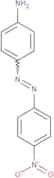
CAS:<p>Disperse Orange 3 is a diazonium salt that has been used in the textile industry as a dye, but has also been used as a reagent for the synthesis of organic compounds. Disperse Orange 3 is synthesized by reacting an azobenzene with a fatty acid, which yields an unstable intermediate. The intermediate undergoes photochemical reactions when exposed to ultraviolet light or moisture. This reaction produces benzalkonium chloride and ft-ir spectroscopy, which confirms the identity of Disperse Orange 3. Disperse Orange 3 is used in biological treatment and binding constants experiments to measure the strength of interactions between molecules. It has clinical relevance in magnetic resonance spectroscopy because it can be used to probe molecular interactions with proteins or nucleic acids. It also has solubility data that can be used to determine its solubility in water and other solvents.<br>Disperse Orange 3 is soluble in supercritical carbon dioxide at high temperatures, but insoluble at room temperature</p>Fórmula:C12H10N4O2Pureza:Min. 65%Cor e Forma:PowderPeso molecular:242.23 g/molOrange G, Technical grade
CAS:<p>Orange G is a quaternary ammonium salt that can be used for the treatment of wastewater. It has been shown to adsorb to the surface of bacterial cells and inhibit their growth by preventing enzyme activity. Orange G has also been shown to have carcinogenic potential in experimental models, although it is less potent than dimethylhydrazine or N-nitrosodiethylamine. Orange G has genotoxic effects on human serum, as seen by increased DNA fragmentation and chromosomal aberrations. The kinetic and redox properties of Orange G are still being investigated.</p>Fórmula:C16H10N2Na2O7S2Pureza:Min. 95 Area-%Cor e Forma:Orange PowderPeso molecular:452.37 g/molIohexol
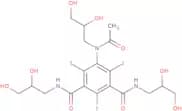
CAS:<p>a contrast agent used in medical imaging such as angiography, CT scans, and MRI.</p>Fórmula:C19H26I3N3O9Pureza:98.0 To 102.0%Cor e Forma:White PowderPeso molecular:821.14 g/molBis(5-bromo-6-chloro-3-indoxyl)pyrophosphoric acid, disodium salt
<p>Bis(5-bromo-6-chloro-3-indoxyl)pyrophosphoric acid, disodium salt is a versatile building block that can be used to synthesize complex compounds. This compound is a reagent for research and also has many uses in the pharmaceutical industry as a useful intermediate and scaffold. Bis(5-bromo-6-chloro-3-indoxyl)pyrophosphoric acid, disodium salt is an excellent high quality product that can be used in many reactions.</p>Fórmula:C16H8Br2Cl2N2Na2O7P2Peso molecular:678.90 g/molRef: 3D-B-3370
1gA consultar5gA consultar10gA consultar500mgA consultar2500mgA consultar-Unit-ggA consultarDisperse blue 60, technical grade dye content
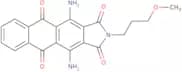
CAS:<p>Disperse Blue 60 is a stilbene-based dye that absorbs ultraviolet light and emits red fluorescent light. It is used in wastewater treatment, biological treatment, and supercritical water oxidation processes. Disperse Blue 60 is activated by fatty acid, alkanoic acid, or polymeric matrix to form an antimicrobial agent that can be used in radiation sterilization of food products. This dye also has the ability to absorb radiation in the range of 200 - 300 nm and emit fluorescence at 590 nm. The oxidation catalyst provides stability for the dye molecule under conditions of high temperature or pressure.</p>Fórmula:C20H17N3O5Pureza:Min. 95%Cor e Forma:PowderPeso molecular:379.37 g/molAcid Red 357
CAS:<p>Acid Red 357 is a basic dye, which is used in the treatment of wastewater. It binds to the surface of particles and reacts with sodium carbonate to form a hydroxide precipitate. This reaction leads to removal of colorants from the water. Acid Red 357 is also reactive, nucleophilic, and has high values for both kinetic data and transfer mechanism.</p>Pureza:Min. 95%Light green SF yellowish
CAS:<p>Sodium salts are colloidal gold particles that are dispersed in aqueous solution and have a light green SF yellowish color. This type of salt is used for plant physiology studies, due to their ability to provide an accurate measurement of the surface area of leaves. Sodium salts can be used as biological samples, such as liver lesions or langmuir adsorption isotherm, to investigate kinetic data. They also have been shown to be useful in the study of human serum and particle interactions. The sodium salts form a thin layer on the surface of the particle, which makes it possible to measure the concentration of fatty acids or basic proteins on its surface. Sodium salts are also commonly used in toxicology studies and histological analyses.</p>Fórmula:C37H34N2O9S3Na2Pureza:(%) Min. 80%Cor e Forma:PowderPeso molecular:792.85 g/molC.I.Solvent Blue 13
CAS:<p>Please enquire for more information about C.I.Solvent Blue 13 including the price, delivery time and more detailed product information at the technical inquiry form on this page</p>Pureza:Min. 95%Acid Black ATT
CAS:<p>Acid Black ATT is a chemical compound that is used to adjust the pH and remove organic matter in wastewater. It is a mixture of trimethyl, collagen, sodium carbonate, calcium carbonate, and sodium chloride. Acid Black ATT can be used as an additive for the treatment of wastewater because it has been shown to inhibit enzymes. This product should be added slowly to water in order to avoid inhaling the vaporized acid. The use of this chemical must be carefully monitored because it can cause corrosion and damage to pipes.</p>Pureza:Min. 95%Pigment Yellow 127
CAS:<p>Please enquire for more information about Pigment Yellow 127 including the price, delivery time and more detailed product information at the technical inquiry form on this page</p>Pureza:Min. 95%Reactive Blue 19, Technical grade
CAS:<p>Reactive Blue 19 is a chemical compound that has been used extensively in biological, biochemical, and clinical research. It is a reactive dye with the chemical formula C20H14N2Na4O8S4. The molecule's structure consists of two benzene rings linked by two amine groups, which are connected to an aromatic ring with four sulfonic acid side chains. Reactive Blue 19 has been shown to inhibit the activity of enzymes such as hydroxylase and nitrite reductase. This compound also reacts with protocatechuic acid to form an intense blue-colored complex that can be detected using electrochemical detection.</p>Fórmula:C22H16N2Na2O11S3Pureza:Min. 95%Cor e Forma:PowderPeso molecular:626.55 g/molFuchsin, for flagella staining, certified
CAS:<p>Please enquire for more information about Fuchsin, for flagella staining, certified including the price, delivery time and more detailed product information at the technical inquiry form on this page</p>Fórmula:C20H20ClN3Pureza:Min. 95%Cor e Forma:PowderPeso molecular:337.8 g/molWeak Acid Yellow 3G
CAS:<p>Weak Acid Yellow 3G is a benzyl ester of an aliphatic polyhydric alcohol. It is a clear, amber liquid with a pH of 6.5-7.5 and can be used in the production of microspheres and monomers for organic solvent extraction and surface treatment. When diluted with water, it has an alkaline reaction system. This product is soluble in aliphatic hydrocarbons, alcohols and ethers, but insoluble in water and most other common solvents. Weak Acid Yellow 3G can be used as a surfactant and surface active agent to simplify reactions systems by removing the need for additional reagents or solvents.</p>Fórmula:C39H26Cl4N8Na2O8S2Pureza:Min. 95%Peso molecular:986.6 g/molSolvent Red 149
CAS:<p>Solvent Red 149 is an organic solvent that is used in the development of photographic emulsions. It has a low average particle diameter, high thermal expansion, and low volatility. Solvent Red 149 has been used as a sensor for environmental pollution. This compound has been shown to inhibit polymerization reactions by acting as an inhibitor of an essential step in the process. The hydroxyl group on the molecule can be used for authenticating purposes because it reacts with sulfuric acid to form a red dye.</p>Fórmula:C23H22N2O2Pureza:Min. 95%Cor e Forma:PowderPeso molecular:358.43 g/molC.I.Disperse Orange 32
CAS:<p>Please enquire for more information about C.I.Disperse Orange 32 including the price, delivery time and more detailed product information at the technical inquiry form on this page</p>Pureza:Min. 95%Bromocresol green, sodium salt
CAS:<p>Bromocresol green is a dye that is used in biological assays to measure the kinetics of fluorescence. It is a type of tryptophan-releasing compound that releases a yellowish-green light when it absorbs light at wavelengths between 350 and 450 nm. Bromocresol green has been quantified by measuring the intensity of the fluorescence emission as a function of time. This can be done visually or using an instrument called a fluorometer, which detects changes in light intensity over time. Bromocresol green can be used to detect the presence of amino acid residues in proteins through protonation reactions with their tryptophan residues and subsequent quenching with acetonitrile. The bromocresol green dye is also used in lithographic printing, where it serves as an acceptor for electrons from an arene (aromatic hydrocarbon). This process generates energy for lithography and also provides contrast between regions with different electron densities.</p>Fórmula:C21H14Br4O5SNaCor e Forma:PowderPeso molecular:721 g/molPigment Blue 10
CAS:<p>Pigment Blue 10 is a cationic dye that belongs to the class of quaternary ammonium compounds. It is often used in textile and leather processing as a cross-linking agent and as an auxiliary agent for pigmenting. Pigment Blue 10 has good light resistance, high solubility in organic solvents, and low toxicity. It is also used in radiation curing processes, such as epoxy resin, acrylate resin, polyester resin, and silicone rubber. Pigment Blue 10 can be used with salt compounds or aliphatic hydrocarbons to form a film on surfaces or objects. It has been shown to have biodegradable properties when mixed with other substances.</p>Pureza:Min. 95%C.I.Acid green 54
CAS:<p>Please enquire for more information about C.I.Acid green 54 including the price, delivery time and more detailed product information at the technical inquiry form on this page</p>Pureza:Min. 95%Disperse Red 9
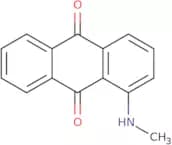
CAS:<p>Disperse Red 9 is a dye that is used in analytical chemistry to measure the amount of hydrogen bonding interactions. It has a linear regression analysis and molecular modeling to determine its molecular structure. Disperse Red 9 is also used for toxicity studies and the determination of various chemical structures. The mechanism of the reaction between Disperse Red 9 and hydrogen is intramolecular hydrogen bonding, which can be seen by nmr spectra. Disperse Red 9 has been shown to have toxic effects on animals, as well as other side-effects such as skin irritation. This dye has an intramolecular hydrogen bond with a cationic surfactant, which makes it soluble in water.</p>Fórmula:C15H11NO2Pureza:Min. 95%Cor e Forma:Red PowderPeso molecular:237.25 g/mol