Compostos Policiclícos
Subcategorias de "Compostos Policiclícos"
- Acridinas(98 produtos)
- Antraquinonas(533 produtos)
- Ácidos antraquinonasulfónicos(16 produtos)
- Azobenzenos(270 produtos)
- Azonaftalenos(98 produtos)
- Azoxibenzenos(12 produtos)
- Azulenos(11 produtos)
- Benzimidazóis(1.476 produtos)
- Benzodioxanos(27 produtos)
- Benzofuranos(928 produtos)
- Benzotiofenos(701 produtos)
- Benzotriazóis(438 produtos)
- Binaftil(133 produtos)
- Carbazóis(464 produtos)
- Cromanos, Cromenos(480 produtos)
- Cumarinas(1.124 produtos)
- Ciclofanos(11 produtos)
- Fluorenos e Fluorenonas(384 produtos)
- Imidazopiridinas(10 produtos)
- Indans(118 produtos)
- Indazóis(2.039 produtos)
- Indenos(22 produtos)
- Indóis(3.986 produtos)
- Indolinas(119 produtos)
- Isatinas(234 produtos)
- Isobenzofuranos(17 produtos)
- Ftalimidas N-Substituída(153 produtos)
- Naftalenos(2.438 produtos)
- Naftiridina(17 produtos)
- Naftoquinona(2 produtos)
- Perilenos(36 produtos)
- Fenazinas(25 produtos)
- Ftalazinas(33 produtos)
- Ftalimida(153 produtos)
- Hidrocarbonetos aromáticos policíclicos (PAHs)(292 produtos)
- Polifenol(269 produtos)
- Pteridinas(52 produtos)
- Pireno(87 produtos)
- Quinuclidina(1 produtos)
- Tetracenos(7 produtos)
Foram encontrados 4575 produtos de "Compostos Policiclícos"
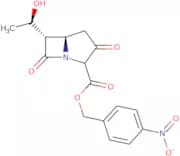
p-Nitrobenzyl 6-(1'-hydroxyethyl)-azabicyclo(3.2.0)heptane-3,7-dione-2-carboxylate
CAS:p-Nitrobenzyl 6-(1'-hydroxyethyl)-azabicyclo(3.2.0)heptane-3,7-dione-2-carboxylate is a drug substance that is used in the manufacture of carbapenem antibiotics. It can be detected by a chloride ion chromatographic method, and the detection limit is 0.5 mg/L in the presence of zinc powder as a modifier. This material is used to prepare carbapenems using an analytical method that includes reaction monitoring by optical rotation, diastereomer chromatography, and transfer.Fórmula:C16H16N2O7Pureza:Min. 95%Cor e Forma:PowderPeso molecular:348.31 g/mol6-Mercaptopurine hydrate
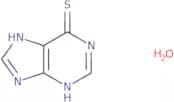
CAS:6-Mercaptopurine is a purine analog that suppresses the production of white blood cells by inhibiting the enzyme thiopurine methyltransferase. It has been used to treat bowel disease and also for long-term suppression of the immune system in patients with autoimmune diseases. 6-Mercaptopurine is metabolized to 6-mercaptopurine, which is then converted to dinucleotide phosphate (dNTP) by group P2 enzymes. This conversion allows 6-mercaptopurine to inhibit dNTP synthesis and cell division. The effects of 6-mercaptopurine are potentiated when given in conjunction with azathioprine, another drug that inhibits purine metabolism. 6-Mercaptopurine is not active against human serum albumin or erythrocytes because it cannot be cleaved into an active form by these proteins. However, it does inhibit enzyme activities such as DNA polymerase, RNA polymerase, and proteinFórmula:C5H4N4S•H2OPureza:Min. 97 Area-%Cor e Forma:Yellow PowderPeso molecular:152.18 g/mol2',6'-Dimethylcarbonylphenyl-10-sulfopropylacridinium-9-carboxylate 4'-NHS ester
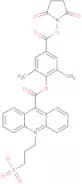
CAS:2',6'-Dimethylcarbonylphenyl-10-sulfopropylacridinium-9-carboxylate 4'-NHS ester is a chemiluminescent acridinium ester label used widely in clinical diagnostics, particularly in automated immunochemistry analysers. Acridinium ester labels are also useful research tools for the investigation of protein-carbohydrate interactions to characterise the binding affinity between specific carbohydrate and its binding protein. An example of those are lectin-acridinium ester conjugates used as chemiluminescent probes.Fórmula:C30H26N2O9SPureza:Min. 95 Area-%Cor e Forma:Yellow PowderPeso molecular:590.6 g/molMonomethyl triazeno imidazole carboxamide
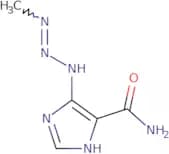
CAS:Monomethyl triazeno imidazole carboxamide (MTIC) is a drug that is used to treat cancer. It has been shown to inhibit the proliferation of tumor cells and induce apoptosis by inhibiting the expression of proteins, such as Bcl-2, which are involved in regulating mitochondrial membrane potential. MTIC has also been shown to inhibit protein synthesis and cell signaling pathways, such as the PI3K/Akt pathway. The use of MTIC for diagnosis purposes can be achieved using electrochemical impedance spectroscopy. A concentration–time curve can be obtained by incubating a biological sample with MTIC and measuring cell response using an impedance spectrophotometer. The clinical properties of MTIC include its ability to be administered orally or intravenously, have low toxicity, and inhibit the growth of tumor cells in vivo and in vitro.Fórmula:C5H8N6OPureza:(¹H-Nmr) Min. 95 Area-%Cor e Forma:White PowderPeso molecular:168.16 g/molFraxin
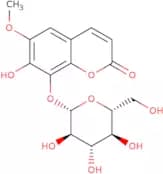
CAS:Fraxin is a naturally occurring anticoagulant, which is derived from the bark of certain species of the Fraxinus tree. It functions by inhibiting thrombin and other key enzymes in the coagulation cascade, thus preventing the formation of blood clots. This mode of action makes it particularly valuable in research settings focused on cardiovascular diseases, as well as in the development of therapeutic agents targeting coagulopathies.Fórmula:C16H18O10Pureza:Min. 95%Cor e Forma:PowderPeso molecular:370.31 g/mol6-Methylmercaptopurine
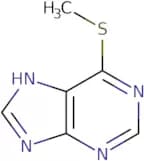
CAS:6-Methylmercaptopurine is an important metabolite of 6-methylmercaptopurine, which is a vital component of the nucleotide synthesis pathway. It is used in analytical methods to determine levels of nucleotides, as well as in biological studies for its effect on autoimmune diseases. 6-Methylmercaptopurine can inhibit replication by inhibiting the methyltransferase enzyme.Fórmula:C6H6N4SPureza:Min. 95%Cor e Forma:Off-White Yellow PowderPeso molecular:166.2 g/mol6-Benzylamino-7-deazapurine
CAS:6-Benzylamino-7-deazapurine is a drug that has been shown to be effective in the treatment of pancreatic cancer. It is a monomer that reacts with nucleophiles such as 6-mercaptopurine, which are present in the human lung. The reaction generates an exergonic molecule that can be used to generate ATP and regenerate NAD+ during irradiation. This process has been observed using kinetic studies on human colon adenocarcinoma cells. 6-Benzylamino-7-deazapurine can also react with triazole compounds to form a linker and increase the rate of polymerization. The optimization of this reaction time could lead to more efficient cancer treatments.Fórmula:C13H12N4Pureza:Min. 95%Cor e Forma:PowderPeso molecular:224.26 g/mol3-(4-Fluorobenzoyl)-6-Methoxy-2-Methyl-1H-Indole-1-Acetic Acid
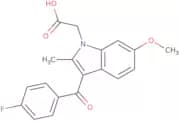
CAS:Produto Controlado3-(4-Fluorobenzoyl)-6-Methoxy-2-Methyl-1H-Indole-1-Acetic Acid is a prodrug that is metabolized to 6-fluoro-3,4 dioxo tamoxifen in the liver. It has been shown to have anticholinergic, cytosolic calcium and c1-4 alkyl properties. 3-(4-Fluorobenzoyl)-6-Methoxy-2-Methylindole Acetic Acid also has a basic group, cyclopentane ring, and pyridine ring.Fórmula:C19H16FNO4Pureza:Min. 95%Peso molecular:341.33 g/mol4-Methylindole-3-carboxaldehyde
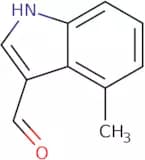
CAS:4-Methylindole-3-carboxaldehyde is a lipophilic extract that inhibits the growth of fungi. It has been shown to be effective against phytopathogenic fungi, and it has been used as an antibiotic in the treatment of bacterial infections. 4-Methylindole-3-carboxaldehyde is an analog of streptochlorin, which inhibits protein synthesis by binding to the ribosome. This leads to cell death by inhibiting the production of proteins vital for cell division. 4-Methylindole-3-carboxaldehyde also has antifungal activity against Candida albicans and Trichophyton mentagrophytes.Fórmula:C10H9NOPureza:Min. 95%Peso molecular:159.18 g/molFuril
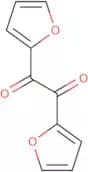
CAS:Furil is a pharmaceutical preparation used for the treatment of metabolic disorders, such as hypertension and diabetes. Furil is an inhibitor of the enzyme acyl coenzyme A: diacylglycerol acyltransferase-2 (DGAT-2) which catalyses the formation of triacylglycerols from diacylglycerol and free fatty acids. Furil has been shown to have potent inhibitory activity against DGAT-2, with an IC50 value of 0.5 μM. Furil also inhibits the enzyme phosphodiesterase 4B (PDE4B), which plays a role in signal transduction and inflammation. Furil can be synthesized by reacting hydrogen chloride with 2-bromoacetophenone in a nonpolar solvent to form 2,4-dichlorobenzoyl chloride, followed by reaction with 3-furancarboxylic acid in methanol to produce furil. FurilFórmula:C10H6O4Pureza:Min. 95%Cor e Forma:Beige PowderPeso molecular:190.15 g/mol2,6-Diaminopurine
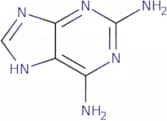
CAS:2,6-Diaminopurine is a nucleotide analogue that is synthesized from guanosine. It inhibits the enzyme ribonucleotide reductase and blocks the synthesis of DNA precursors, which are necessary for viral replication. 2,6-Diaminopurine has been shown to inhibit hiv infection in tissue culture and animal models by decreasing the levels of nucleotides in cells. This drug can be used as an anti-viral agent against HIV and other retroviruses. 2,6-Diaminopurine has also been shown to be effective against murine sarcoma virus. The compound binds to the enzyme ribonucleotide reductase, which is important for DNA synthesis, and prevents its activity by mimicking adenosine triphosphate (ATP). The binding of 2,6-diaminopurine to ATP results in a coordination geometry that causes a long hydrogen bond with one oxygen
Fórmula:C5H6N6Pureza:Min. 95%Cor e Forma:PowderPeso molecular:150.14 g/molIndole-3-carboxaldehyde
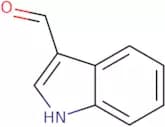
CAS:Indole-3-carboxaldehyde is a chemical compound that is used as an antimicrobial agent. The biological properties of this compound are not well studied, but it has been shown to be effective against bacteria and fungi. Indole-3-carboxaldehyde has been shown to inhibit the enzyme activity of sodium carbonate, which is involved in the production of lactic acid in bacteria. This effect may contribute to its antibacterial activity. Indole-3-carboxaldehyde is also a potential anticancer agent because it can bind to toll-like receptor 4 (TLR4). Indole-3-carboxaldehyde reacts with sulfa drugs through a mechanism similar to the reaction between hydrogen peroxide and potassium permanganate. It has been shown that indole-3-carboxaldehyde can be used as a pesticide for plants and as an electrochemical impedance spectroscopy probe for histological analysis.Fórmula:C9H7NOCor e Forma:PowderPeso molecular:145.16 g/mol(+/-)-Heraclenin
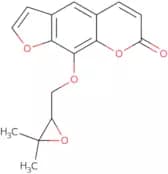
CAS:(+/-)-Heraclenin is a naturally occurring coumarin, which is a class of organic compounds notable for diverse biological activities. This compound is primarily sourced from various plant species belonging to the family Apiaceae, such as Heracleum species. Coumarins like (+/-)-heraclenin are known for their ability to modify biological responses due to their chemical structure.Fórmula:C16H14O5Pureza:Min. 98 Area-%Cor e Forma:PowderPeso molecular:286.28 g/mol4-Hydroxyindole
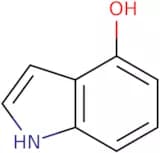
CAS:4-Hydroxyindole is an inorganic acid that is produced by the oxidation of 4-hydroxyphenylacetic acid. It is a metabolite of the synthetic cannabinoids, JWH-018 and JWH-073. The production of 4-hydroxyindole has been shown to be dependent on the presence of a nucleophilic attack on the diazonium salt, which leads to protonation. The fluorescence properties of this molecule are dependent on its hydroxyl group, which allows for detection using magnetic resonance spectroscopy. Hydrochloric acid can be used as an alternate solvent to produce 4-hydroxyindole from 4-hydroxyphenylacetic acid. 4-Hydroxyindole has been shown to have pharmacokinetic properties that are similar to those of THC, but it does not bind well to cannabinoid receptors or activate them.br> br> The structure of this molecule can be seen belowFórmula:C8H7NOCor e Forma:White PowderPeso molecular:133.15 g/mol5-Methoxypsoralen
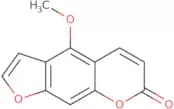
CAS:5-Methoxypsoralen is a light-activated compound, which is a naturally derived organic substance found in certain plants, particularly from the Apiaceae family. This compound functions as a furocoumarin that interacts with DNA through photoactivation, forming cross-links upon exposure to ultraviolet A (UVA) light. These cross-links disrupt DNA replication, ultimately inhibiting cell proliferation.
Fórmula:C12H8O4Pureza:Min. 98 Area-%Cor e Forma:White PowderPeso molecular:216.19 g/molXanthine sodium salt monohydrate
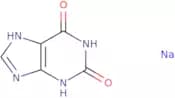
CAS:Xanthine sodium salt monohydrate is a dietary supplement that is used to treat metabolic disorders such as hyperuricemia and gout. It also has antiviral effects against herpes simplex virus-1 (HSV-1) and type-2 (HSV-2). Xanthine sodium salt monohydrate inhibits the production of viral DNA polymerase, which causes cell death by inhibiting the synthesis of proteins vital for cell division. Xanthine sodium salt monohydrate can be used to inhibit the growth of cancer cells in vitro. The mechanism of action is not yet fully understood, but it is thought that xanthine may inhibit phosphodiesterase activity or have a direct effect on the cell membrane.Fórmula:C5H3N4NaO2•H2OPureza:Min. 95 Area-%Cor e Forma:PowderPeso molecular:192.11 g/molIsatin dianilide
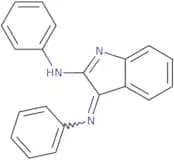
CAS:Isatin dianilide is an organic compound with the chemical formula C8H6N2O. It is a white solid that is soluble in water, ethanol and acetone. Isatin dianilide can be synthesized by reacting phenylacetic acid with ammonia and formaldehyde. Isatin dianilide has been shown to have efficient oxidation reaction with Baeyer-Villiger oxidation, which makes it suitable for industrial use. Isatin dianilide also has biological activities such as inhibition of aminopeptidase N and aminopeptidase M, which are enzymes involved in protein synthesis. Yields of isatin dianilide are high because it can be produced from the commercially available compounds isatin and amidine.
Fórmula:C20H15N3Pureza:Min. 95%Peso molecular:297.35 g/mol5-Methoxy-2,3-dihydroindoline
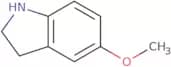
CAS:5-Methoxy-2,3-dihydroindoline is a methoxy compound that is substituted with a methyl group. It has been shown to be an effective hydrogen transfer agent in cyclopentenone reactions, and can also be used as a sensor for nitroaromatic compounds. 5-Methoxy-2,3-dihydroindoline can be synthesized by the reaction of methoxylated aniline with sodium ethoxide in acetonitrile. This reaction produces the desired product in high yield (70%), and it can also be used for the methylation of secondary amines in good yield (80%). 5-Methoxy-2,3-dihydroindoline is potently active when titrated against benzo[a]pyrene.
Fórmula:C9H11NOPureza:Min. 95%Cor e Forma:PowderPeso molecular:149.19 g/mol6-Fluoro-1,2,3,4-tetrahydro-2-methylquinoline
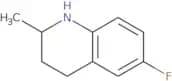
CAS:6-Fluoro-1,2,3,4-tetrahydro-2-methylquinoline is an organocatalytic fluorine compound that has been investigated as a fluoroquinolone antibiotic. It is an enantiopure compound and has been shown to be effective in the treatment of bacterial infections. 6-Fluoro-1,2,3,4-tetrahydro-2-methylquinoline inhibits bacterial growth by binding to DNA gyrase and topoisomerase IV. 6FLMQ is a chiral molecule with two possible configurations (R or S), which can be determined from x-ray crystallography. The S configuration is more potent than the R configuration. 6FLMQ also binds with chloride ions to form a cationic complex that can be used for antibacterial activity against Gram negative bacteria such as Escherichia coli and Pseudomonas aeruginosa. 6FLMQ hasFórmula:C10H12FNPureza:Min. 95%Cor e Forma:PowderPeso molecular:165.21 g/mol7-Azaindole
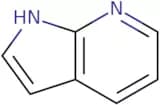
CAS:7-Azaindole is a reactive chemical that has been shown to be effective in the treatment of skin cancer, as well as hepatic steatosis. The compound can promote the transfer of hydrogen atoms and form a dimer with protonated nitrogen. 7-Azaindole reacts rapidly with nucleophiles such as amines, alcohols, and thiols to form covalent bonds. The reaction mechanism is characterized by an initial protonation step followed by nucleophilic attack or hydrogen transfer from the nucleophile to 7-azaindole. Kinetic studies have demonstrated that the rate of this reaction depends on the concentration of both reactants.
Fórmula:C7H6N2Cor e Forma:PowderPeso molecular:118.14 g/mol