Compostos Policiclícos
Subcategorias de "Compostos Policiclícos"
- Acridinas(97 produtos)
- Antraquinonas(533 produtos)
- Ácidos antraquinonasulfónicos(16 produtos)
- Azobenzenos(270 produtos)
- Azonaftalenos(98 produtos)
- Azoxibenzenos(12 produtos)
- Azulenos(11 produtos)
- Benzimidazóis(1.475 produtos)
- Benzodioxanos(27 produtos)
- Benzofuranos(924 produtos)
- Benzotiofenos(700 produtos)
- Benzotriazóis(438 produtos)
- Binaftil(133 produtos)
- Carbazóis(462 produtos)
- Cromanos, Cromenos(480 produtos)
- Cumarinas(1.120 produtos)
- Ciclofanos(11 produtos)
- Fluorenos e Fluorenonas(381 produtos)
- Imidazopiridinas(10 produtos)
- Indans(118 produtos)
- Indazóis(2.038 produtos)
- Indenos(22 produtos)
- Indóis(3.984 produtos)
- Indolinas(119 produtos)
- Isatinas(234 produtos)
- Isobenzofuranos(17 produtos)
- Ftalimidas N-Substituída(153 produtos)
- Naftalenos(2.437 produtos)
- Naftiridina(17 produtos)
- Naftoquinona(2 produtos)
- Perilenos(36 produtos)
- Fenazinas(25 produtos)
- Ftalazinas(33 produtos)
- Ftalimida(153 produtos)
- Hidrocarbonetos aromáticos policíclicos (PAHs)(301 produtos)
- Polifenol(261 produtos)
- Pteridinas(52 produtos)
- Pireno(87 produtos)
- Quinuclidina(1 produtos)
- Tetracenos(7 produtos)
Foram encontrados 4573 produtos de "Compostos Policiclícos"
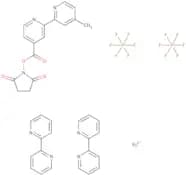
Bis(2,2'-bipyridine)-4'-methyl-4-carboxybipyridine-ruthenium N-succinimidyl ester-bis(hexafluorophosphate)
CAS:Bis(2,2'-bipyridine)-4'-methyl-4-carboxybipyridine-ruthenium N-succinimidyl ester-bis(hexafluorophosphate) is a molecule that inhibits the activity of matrix metalloproteinases. It binds to the active site of the enzyme and blocks its activity. This drug has been shown to be effective in inhibiting the activity of MMPs in cells, but not in tissue culture because it does not cross cell membranes. Bis(2,2'-bipyridine)-4'-methyl-4-carboxybipyridine-ruthenium N-succinimidyl ester-bis(hexafluorophosphate) has also been shown to have a low detection limit and can detect low levels of matrix metalloproteinase activity in cells.
Fórmula:C36H29F12N7O4P2RuPureza:Min. 95%Cor e Forma:PowderPeso molecular:1,014.66 g/mol2-Mercapto-5-benzimidazole sulfonic acid sodium salt dihydrate
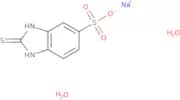
CAS:2-Mercapto-5-benzimidazole sulfonic acid sodium salt dihydrate is a molecule that can be used in devices. It has been shown to reversibly change the morphology of a monolayer and to generate asymmetric structures. 2-Mercapto-5-benzimidazole sulfonic acid sodium salt dihydrate can be used to generate fluorescent emulsions, which are systems where the magnetic particles are suspended in an oil droplet and illuminated by light of an appropriate wavelength. The molecules that make up 2-Mercapto-5-benzimidazole sulfonic acid sodium salt dihydrate have been shown to function as acceptors for molecular orbitals, which are wave functions that describe electron distribution around the atomic nucleus. These properties make it a promising candidate for use in microscopy techniques, such as scanning tunneling microscopy (STM) or atomic force microscopy (AFM).Fórmula:C7H5N2NaO3S2·2H2OPureza:Min. 95%Cor e Forma:PowderPeso molecular:288.28 g/mol1-Benzyl-3-hydroxy-1H-indazole
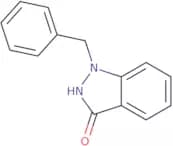
CAS:1-Benzyl-3-hydroxy-1H-indazole is a hydrophilic matrix that can be used to deliver drugs. The hydrophilicity of the matrix allows it to dissolve in water and form a paste when mixed with water. The drug or drug formulation is dispersed within the paste and delivered to the site of action by the matrix. 1-Benzyl-3-hydroxy-1H-indazole has shown inhibition of inflammation, which may be due to its ability to inhibit prostaglandin synthesis. 1BHI can also be used for electroreduction reactions, such as reduction of metal ions, at temperatures ranging from -10°C to +20°C.
Fórmula:C14H12N2OPureza:Min. 95%Cor e Forma:PowderPeso molecular:224.26 g/mol6-Bromo-2H-pyrido[3,2-b][1,4]oxazin-3(4H)-one
CAS:6-Bromo-2H-pyrido[3,2-b][1,4]oxazin-3(4H)-one is a versatile building block that can be used in a variety of chemical reactions as an intermediate. It is also useful in the synthesis of a variety of compounds, such as pharmaceuticals and research chemicals. 6-Bromo-2H-pyrido[3,2-b][1,4]oxazin-3(4H)-one is an organic compound with a molecular formula of C8H5BrN4O. It has an mp of 152°C and decomposes to form nitrogen gas and carbon monoxide at higher temperatures.Fórmula:C7H5BrN2O2Pureza:Min. 95%Cor e Forma:SolidPeso molecular:229.03 g/molRutaretin
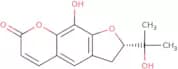
CAS:Rutaretin is a polyphenolic compound, which is a derivative of natural flavonoids extracted from plant sources. It functions primarily as an antioxidant by scavenging free radicals and inhibiting oxidative stress at the cellular level. Its molecular structure allows it to interact with reactive oxygen species, mitigating the damaging effects on cellular components such as DNA, proteins, and lipids.Fórmula:C14H14O5Pureza:Min. 98 Area-%Cor e Forma:PowderPeso molecular:262.26 g/molIndole-5-carboxylic acid ethyl ester
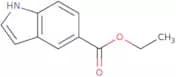
CAS:Indole-5-carboxylic acid ethyl ester is a formamide activated analog of piperidine. It is an effective antibacterial agent against Staphylococcus aureus. Indole-5-carboxylic acid ethyl ester inhibits the growth of bacteria by binding to the extracellular surface and interfering with cell membrane permeability. The compound also has anti-cancer properties, and may be used in pharmaceuticals as a pyrazole derivative.Fórmula:C11H11NO2Pureza:Min. 95%Cor e Forma:PowderPeso molecular:189.21 g/molXanthine sodium salt monohydrate
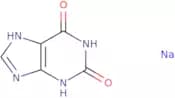
CAS:Xanthine sodium salt monohydrate is a dietary supplement that is used to treat metabolic disorders such as hyperuricemia and gout. It also has antiviral effects against herpes simplex virus-1 (HSV-1) and type-2 (HSV-2). Xanthine sodium salt monohydrate inhibits the production of viral DNA polymerase, which causes cell death by inhibiting the synthesis of proteins vital for cell division. Xanthine sodium salt monohydrate can be used to inhibit the growth of cancer cells in vitro. The mechanism of action is not yet fully understood, but it is thought that xanthine may inhibit phosphodiesterase activity or have a direct effect on the cell membrane.Fórmula:C5H3N4NaO2•H2OPureza:Min. 95 Area-%Cor e Forma:PowderPeso molecular:192.11 g/mol3-(3,4-dimethoxyphenyl)-4-(hydroxyimino)-1,6,6-trimethyl-5,6,7-trihydro1H-indazole
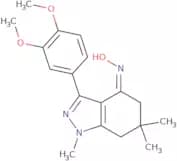
CAS:Please enquire for more information about 3-(3,4-dimethoxyphenyl)-4-(hydroxyimino)-1,6,6-trimethyl-5,6,7-trihydro1H-indazole including the price, delivery time and more detailed product information at the technical inquiry form on this pagePureza:Min. 90%1H-Indazole-3-carboxylic acid
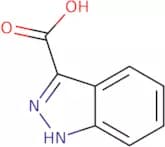
CAS:1H-Indazole-3-carboxylic acid is an organic compound with a molecular formula of C9H6N2O2. It is a colorless solid, but appears yellow in solution. This compound has been shown to inhibit protein synthesis by binding to the apical site of the ribosome, preventing the peptide bond from forming between amino acids. It also inhibits carboxylate metabolism and cellular glycolysis by inhibiting ATP production. 1H-Indazole-3-carboxylic acid has been shown to be effective against cancer cells and can be used as a potential anti-cancer drug.Fórmula:C8H6N2O2Pureza:Min. 98 Area-%Cor e Forma:PowderPeso molecular:162.15 g/mol6-Iodopurine
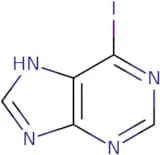
CAS:6-Iodopurine is a biologically active substance that belongs to the group of carbinols. It is biosynthesized from 6-chloropurine and an iridoid glucoside, and has been shown to have biochemical properties. 6-Iodopurine can be converted into 6-iodoindoxyl by oxidation with halogens or transfer mechanism with palladium-catalyzed cross-coupling. A high efficiency method for the synthesis of this substance has been developed using a strain of bacteria. The reaction requires an activation energy of 150 kJ/mol.br> 6-Iodopurine inhibits tumor growth by inhibiting DNA synthesis. It also possesses anti-inflammatory activity, which may be due to its inhibitory effects on prostaglandin synthesis.Fórmula:C5H3IN4Pureza:Min. 95%Cor e Forma:White PowderPeso molecular:246.01 g/molOsthole
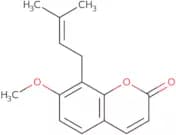
CAS:Osthole is a coumarin derivative, which is a type of natural compound. It is predominantly sourced from the Cnidium monnieri plant, as well as other Apiaceae family members. Osthole exerts its effects primarily through modulation of various molecular pathways, including the suppression of inflammatory mediators and the modulation of calcium channels, which results in vasodilation and various other physiological effects.Fórmula:C15H16O3Pureza:Min. 95%Cor e Forma:PowderPeso molecular:244.29 g/mol4-Aminoindole
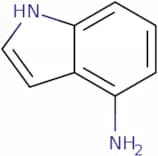
CAS:4-Aminoindole is a heterocycle with a carboxy group and four nitrogen atoms. It can be synthesized by reacting hydrochloric acid with nitrobenzene. 4-Aminoindole has shown potential as a drug target, which may be due to its ability to inhibit the enzyme carboxamidase. The compound is also acidic in water, making it an ideal candidate for use as an acid catalyst. Electropolymerization of 4-aminoindole has been achieved using Pt electrodes in the presence of an acidic environment. This reaction results in the formation of functional groups on the metal surface that are not found in most other electropolymerization reactions.
Fórmula:C8H8N2Cor e Forma:PowderPeso molecular:132.16 g/mol8-Aza-2,6-diaminopurine sulfate (1:x)
CAS:8-Aza-2,6-diaminopurine sulfate (1:x) is a sulfate salt that is soluble in water. The molecular mass of the compound is 581.10 g/mol and it has a molecular formula of C5H7N3O4S. The crystal structure of the compound consists of an asymmetric unit containing one molecule. The 8-aza-2,6-diaminopurine monohydrate salt has a solubility of 1 g/100 mL in water at 25°C. It also has a melting point of 190°C and a boiling point of 340°C.
Fórmula:C4H5N7·xH2SO4Pureza:Min. 95%Cor e Forma:Slightly Yellow PowderPeso molecular:151.13 g/molBergaptol
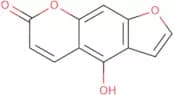
CAS:Bergaptol is a naturally occurring furanocoumarin, which is a compound derived from plants, particularly from the Rutaceae family such as bergamot and other citrus species. It is primarily characterized by its chemical structure containing a furan ring fused to a coumarin moiety. Bergaptol acts primarily through its interaction with biological systems by inhibiting certain enzymatic activities and interfering with the biological pathways that involve reactive oxygen species. This compound exhibits antioxidant properties, reducing oxidative stress by scavenging free radicals and thereby protecting cells from damage.Fórmula:C11H6O4Pureza:Min. 95%Cor e Forma:Off-White PowderPeso molecular:202.16 g/mol5-Methoxyindole-3-acetonitrile
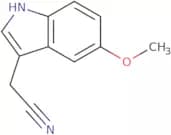
CAS:5-Methoxyindole-3-acetonitrile is a synthetic compound used as a reference for the synthesis of melatonin. It is produced by the addition of magnesium to 5-methoxyindole, followed by reaction with cyanide and nitrile. The synthesis of this compound was first published in 1938 and has since been used as a reference for many other studies. It has been shown that 5-methoxyindole-3-acetonitrile has high performance liquid chromatography properties, with a linear range from 0.5 to 50 mg/mL and an ultraviolet spectrum that falls within the region between 220 nm and 400 nm. A molecular modeling study was conducted on this compound, which showed that it conforms with 4-hydroxy indole ring systems found in natural products such as tryptophan and serotonin. This product also has fluorescent properties, which are caused by its electron withdrawing group (cyano).Fórmula:C11H10N2OPureza:Min. 95%Cor e Forma:PowderPeso molecular:186.21 g/mol4,4'-Bis(bromomethyl)-2,2'-bipyridine
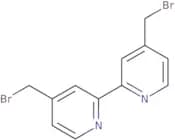
CAS:4,4'-Bis(bromomethyl)-2,2'-bipyridine is a cyclic molecule that can be synthesized by the reaction of 4-bromo-2,2'-bipyridine with a brominating agent. It is used as a precursor to ruthenium catalysts in organic synthesis, and as an additive in dendrimers. The compound has been shown to have light absorption properties and can be used in photovoltaics and electropolymerization.Fórmula:C12H10N2Br2Pureza:Min. 95%Cor e Forma:PowderPeso molecular:342.03 g/mol5-Chloro-4-hydroxy-1-methyl-2-oxo-1,2-dihydro-quinoline-3-carboxylic acid ethyl-phenyl-amide
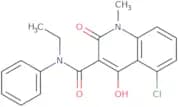
CAS:Laquinimod is an immunomodulator drug that inhibits the activity of the immune system. It binds to toll-like receptor 7, which is a protein on the surface of certain cells that responds to infection and inflammation. Laquinimod has been shown to inhibit neurodegeneration in vitro, which may be due to its ability to bind with neuronal death receptors and block the inflammatory response. Laquinimod also inhibits bowel disease by reducing inflammation and controlling immunity in the intestinal tract. Laquinimod has been shown to have long-term efficacy when administered at physiological levels. This drug is chemically stable, even after exposure to light.Fórmula:C19H17ClN2O3Pureza:Min. 95%Cor e Forma:White PowderPeso molecular:356.8 g/mol5-Chloroindole-3-acetic acid
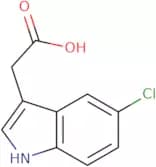
CAS:5-Chloroindole-3-acetic acid (5CI3A) is a compound that belongs to the indole class of compounds. It is structurally similar to the amino acid tryptophan, which makes it a good template molecule for the synthesis of other indoles. 5CI3A is mainly found in plants and bacteria, where it acts as an auxin. In plants, 5CI3A stimulates cell elongation and leaf growth by interacting with plant hormones such as auxins and gibberellins. This compound also binds to serum albumin, which may be responsible for its low toxicity in humans. 5CI3A has been shown to inhibit the activity of human serum albumin by forming hydrogen bonds with it. This inhibition reduces the binding affinity of 5CI3A for other proteins in serum, making it less likely to interact with them than if there were no binding competition.Fórmula:C10H8ClNO2Cor e Forma:PowderPeso molecular:209.63 g/molHalquinol, mixture of 5,7-Dichloro-8-quinolinol, 5-Chloro-8-quinolinol, 7-Chloro-8-quinolinol and 8-Hydroxyquinoline
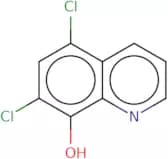
CAS:Halquinol, a mixture of 5,7-dichloro-8-quinolinol, 5-chloro-8-quinolinol, 7-chloro-8-quinolinol and 8-hydroxyquinoline, is an important intermediate in organic synthesis. It has been used as a reagent in the synthesis of a variety of complex compounds. Halquinol has also been used as a building block for the synthesis of many other chemical products. The CAS number for halquinol is 806769-4.Fórmula:C18H11Cl3N2O2Pureza:Min. 95%Cor e Forma:Off-White PowderPeso molecular:393.65 g/mol3-Amino-5-nitroindazole
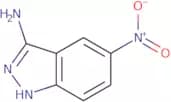
CAS:3-Amino-5-nitroindazole is an anticancer drug that inhibits the growth of cancer cells. It has been shown to inhibit the growth of cancer cells by blocking the synthesis and repair of DNA, leading to cell death. 3-Amino-5-nitroindazole also blocks the production of new proteins, which are needed for cell division. This drug also acts on pathways that are important for tumor development and progression, such as signaling pathways and transcription factors. This compound has been shown to be selective against human squamous cell carcinoma cells and has been studied in combination with other anticancer drugs in clinical trials.
Fórmula:C7H6N4O2Pureza:Min. 95%Cor e Forma:SolidPeso molecular:178.15 g/mol

![6-Bromo-2H-pyrido[3,2-b][1,4]oxazin-3(4H)-one](/_next/image/?url=https%3A%2Fstatic.cymitquimica.com%2Fproducts%2F3D%2Fthumb-webp%2FFB144104.webp&w=3840&q=75)