Compostos Policiclícos
Subcategorias de "Compostos Policiclícos"
- Acridinas(97 produtos)
- Antraquinonas(533 produtos)
- Ácidos antraquinonasulfónicos(16 produtos)
- Azobenzenos(270 produtos)
- Azonaftalenos(98 produtos)
- Azoxibenzenos(12 produtos)
- Azulenos(11 produtos)
- Benzimidazóis(1.475 produtos)
- Benzodioxanos(27 produtos)
- Benzofuranos(924 produtos)
- Benzotiofenos(700 produtos)
- Benzotriazóis(438 produtos)
- Binaftil(133 produtos)
- Carbazóis(462 produtos)
- Cromanos, Cromenos(480 produtos)
- Cumarinas(1.122 produtos)
- Ciclofanos(11 produtos)
- Fluorenos e Fluorenonas(381 produtos)
- Imidazopiridinas(10 produtos)
- Indans(118 produtos)
- Indazóis(2.037 produtos)
- Indenos(22 produtos)
- Indóis(3.988 produtos)
- Indolinas(119 produtos)
- Isatinas(234 produtos)
- Isobenzofuranos(17 produtos)
- Ftalimidas N-Substituída(153 produtos)
- Naftalenos(2.437 produtos)
- Naftiridina(17 produtos)
- Naftoquinona(2 produtos)
- Perilenos(36 produtos)
- Fenazinas(25 produtos)
- Ftalazinas(33 produtos)
- Ftalimida(153 produtos)
- Hidrocarbonetos aromáticos policíclicos (PAHs)(270 produtos)
- Polifenol(261 produtos)
- Pteridinas(52 produtos)
- Pireno(87 produtos)
- Quinuclidina(1 produtos)
- Tetracenos(7 produtos)
Foram encontrados 4574 produtos de "Compostos Policiclícos"
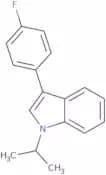
1-Isopropyl-3-(4-fluorophenyl)indole
CAS:1-Isopropyl-3-(4-fluorophenyl)indole is a solvent that has been shown to be useful for the deuterium enrichment of carbonyl compounds. It is also used as a reagent for the Friedel-Crafts acylation and for the synthesis of 3-methoxyacrylate. The process of wastewater treatment is made more efficient by adding 1-isopropyl-3-(4-fluorophenyl)indole to chloride. This process increases yields and decreases the amount of time it takes to complete wastewater treatment. 1-Isopropyl-3-(4-fluorophenyl)indole can also be used in the synthesis of fluvastatin, an antilipidemic agent.Fórmula:C17H16FNPureza:Min. 95%Cor e Forma:PowderPeso molecular:253.31 g/molThiamine hydrochloride
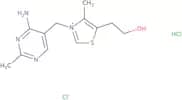
CAS:Thiamine hydrochloride is a water-soluble vitamin that belongs to the group of B vitamins. It has been used as a model system for investigating the phase transition temperature of fatty acids in biological membranes. In addition, it has been shown to enhance thermal expansion and improve chronic exposure in fetal bovine brain cells. Thiamine hydrochloride has also shown insecticidal activity against various species of insects, including the tobacco budworm and the Indianmeal moth. This drug has been found to be active against phytophagous insects that cause crop damage, such as Anthranilate and Pyridoxine Hydrochloride. Thiamine hydrochloride is involved in cellular metabolism by enhancing the conversion of l-lysine into succinic acid via an intermediate product called anthranilate. It also plays an important role in pyridoxal phosphate synthesis, which is essential for protein synthesis and tissue growth.
Fórmula:C12H18Cl2N4OSPureza:Min. 95%Cor e Forma:White Off-White PowderPeso molecular:337.27 g/molIndole-4-carboxaldehyde
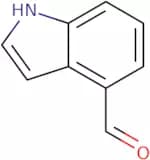
CAS:Indole-4-carboxaldehyde is a natural compound that can be found in the acetate extract of the roots of Scopolia japonica. It has been shown to have an inhibitory effect on locomotor activity and may also have an inhibitory effect on protein synthesis. The mechanism of this inhibition is not yet known, but it may be due to an intramolecular hydrogen bond or other interactions with proteins. Indole-4-carboxaldehyde has also been shown to induce apoptotic cell death in 3T3-L1 preadipocytes by inducing mitochondrial dysfunction and oxidative stress.
Fórmula:C9H7NOCor e Forma:Off-White PowderPeso molecular:145.16 g/mol4-[(7-Chloro-4-quinolinyl)amino]-1-pentanol
CAS:4-[(7-Chloro-4-quinolinyl)amino]-1-pentanol (QLT) is a drug that has been shown to be effective against both healthy volunteers and malaria patients. It is a prodrug that is metabolized by the liver into 7-chloroquinalone, which inhibits the growth of plasmodium falciparum. QLT has been shown to be safe and well tolerated in studies with healthy volunteers, and it does not appear to cause significant adverse effects. QLT also has an effect on T cells, which may be due to its ability to inhibit protein synthesis and cell division.Fórmula:C14H17ClN2OPureza:Min. 95%Cor e Forma:Yellow SolidPeso molecular:264.75 g/molAmodiaquine
CAS:Amodiaquine is a drug that belongs to the class of antimalarial agents. It is used for the treatment and prevention of malaria caused by erythrocytic forms of Plasmodium falciparum. Amodiaquine has shown synergistic effects with other drugs, such as sulfadoxine and pyrimethamine, for the treatment of malaria due to P. falciparum. The mechanism of action of amodiaquine is not well understood, but it may involve inhibition of the Toll-like receptor. Amodiaquine has been shown to inhibit polymerase chain reaction in a concentration-dependent manner and also inhibits polymorphonuclear leucocytes, which are important in innate immunity. In addition, amodiaquine is a hypoglycemic agent and can be used for the treatment of bowel disease.
Fórmula:C20H22ClN3OPureza:Min. 95%Cor e Forma:Off-White PowderPeso molecular:355.86 g/mol4-Iodoisatin
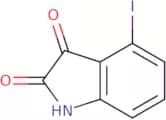
CAS:4-Iodoisatin is a heterocyclic compound that can be synthesized by cross-coupling reactions. It has been shown to inhibit the production of prostaglandin E2, COX-2 protein, and tumor necrosis factor in mouse macrophages. 4-Iodoisatin also inhibits the production of protein kinase C (PKC) in these cells. 4-Iodoisatin can be modified into a dimer form with many different substitutions on the ring structure and this modification increases its potency as an inhibitor of PKC. Irradiation can decompose the compound into a single isomer that is more potent than either of the two isomers. This drug may have therapeutic potential for treatment of cancer, arthritis, and other inflammatory disorders.
Fórmula:C8H4INO2Pureza:Min. 95%Cor e Forma:PowderPeso molecular:273.03 g/mol8-Hydroxyquinoline
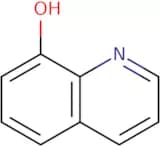
CAS:8-HQ, liberated by enzymatic activity, is a strong metal chelator and forms insoluble, grey precipitates with several metal cations such as Fe3+Fórmula:C9H7NOCor e Forma:PowderPeso molecular:145.16 g/mol7-Cyanoindole
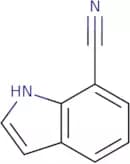
CAS:7-Cyanoindole is a synthetic compound that can be synthesized from amino-acids. The synthesis of 7-cyanoindole starts with the hydration of cyanamide, which yields cyanogen chloride. This reaction is followed by the dehydration of this molecule to produce 7-cyanoindole. The fluorescence properties and lifetimes are dependent on the hydration and dehydrations states. Synthetically, 7-cyanoindole is used as a fluorescent probe for amino acids in solution. This probe has been shown to bind to amino acids at acidic pHs and fluoresce brightly at wavelengths around 400 nm. Industrialized methods for synthesis include reacting cyanoacetylene with ammonia or methylamine in the presence of silicane or silicon dioxide as a catalyst. Reaction yield is dependent on the method used and ranges from 10% to 100%.Fórmula:C9H6N2Pureza:Min. 95%Cor e Forma:Off-White PowderPeso molecular:142.16 g/molIndoline-2-carboxylic acid
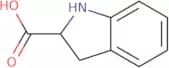
CAS:Indoline-2-carboxylic acid is a photophysical molecule with an absorption maximum at 518 nm. It has been shown to inhibit the activity of enzymes such as cyclooxygenase, lipoxygenase, and monoamine oxidases. This compound has been found to be effective in the treatment of cancer cells. Indoline-2-carboxylic acid is also used in pharmaceutical preparations, where it binds to enantiomers of other molecules and inhibits their biological activity. Indoline-2-carboxylic acid reacts with hydrochloric acid to form allyl carbonate and amide.
Fórmula:C9H9NO2Pureza:Min. 97 Area-%Cor e Forma:PowderPeso molecular:163.17 g/mol4-Hydroxy-2-methylindole
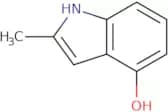
CAS:4-Hydroxy-2-methylindole is an organic compound that belongs to the class of metal salts. It can be obtained as a white solid by reacting indole with alkali metal hydroxide or alkali metal carbonate in the presence of water at high temperatures. The reaction yields 4-hydroxy-2-methylindole and hydrogen chloride gas, which are removed by distillation. 4-Hydroxy-2-methylindole is used in the production of epichlorohydrin, which is a raw material for polyurethane resins and olefins.Fórmula:C9H9NOPureza:Min. 95%Cor e Forma:PowderPeso molecular:147.17 g/mol6-Hydroxy-7-methoxy-4-phenylcoumarin
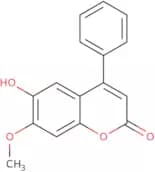
CAS:6-Hydroxy-7-methoxy-4-phenylcoumarin is a synthetic chemical compound classified as a coumarin derivative. Derived from natural coumarin structures, this compound is often synthesized through organic chemistry techniques involving the hydroxylation and methoxylation of coumarin backbones, with the addition of a phenyl group.Fórmula:C16H12O4Pureza:Min. 95%Cor e Forma:PowderPeso molecular:268.26 g/mol3-(4-chlorophenyl)spiro[1,3-thiazolidine-2,3'-indoline]-4,7-dione
CAS:Please enquire for more information about 3-(4-chlorophenyl)spiro[1,3-thiazolidine-2,3'-indoline]-4,7-dione including the price, delivery time and more detailed product information at the technical inquiry form on this pageFórmula:C16H11ClN2O2SPureza:Min. 95%Cor e Forma:PowderPeso molecular:330.79 g/mol4-Nitrobenzyl (4R,5R,6S)-3-[(diphenylphosphono)oxy]-6-[(R)-1-hydroxyethyl]-4-methyl-7-oxo-1-azabicyclo[3.2.0]hept-2-ene-2-carboxylat e
CAS:4-Nitrobenzyl (4R,5R,6S)-3-[(diphenylphosphono)oxy]-6-[(R)-1-hydroxyethyl]-4-methyl-7-oxo-1-azabicyclo[3.2.0]hept-2-ene-2-carboxylat e is a synthetic compound that is used as an alkalizer and impurity scavenger in the manufacture of pesticides and other organic chemicals. It has been shown to be a stereoselective herbicide with acetonitrile as its primary degradation product. The compound has also been found to be a potent inhibitor of the enzyme carbapenemase, which may lead to increased resistance to antibiotics such as monosodium salt of ertapenem.Fórmula:C29H27N2O10PPureza:Min. 98 Area-%Cor e Forma:White PowderPeso molecular:594.51 g/mol4-Methylesculetin
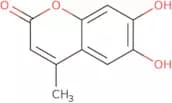
CAS:4-Methylesculetin is a coumarin derivative, which is a type of organic compound. This compound is primarily sourced from various plant species, where it occurs naturally as a secondary metabolite. Known for its bioactive properties, 4-Methylesculetin exhibits significant antioxidant activity by scavenging free radicals and protecting against oxidative stress.Fórmula:C10H8O4Pureza:Min. 95%Cor e Forma:PowderPeso molecular:192.17 g/mol2-Chloroquinoline-8-carboxylic acid
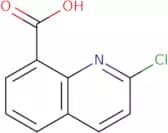
CAS:2-Chloroquinoline-8-carboxylic acid is a fine chemical that is useful as a scaffold for the synthesis of other compounds. It is a versatile building block and can be used in the production of the drug chloroquine. 2-Chloroquinoline-8-carboxylic acid has been used as an intermediate in research chemicals, reaction components in speciality chemical and complex compound. This compound has high quality and can be used as a reagent.Fórmula:C10H6ClNO2Pureza:Min. 95 Area-%Cor e Forma:White Off-White PowderPeso molecular:207.61 g/mol5-Benzyloxyindole
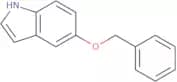
CAS:5-Benzyloxyindole is an inhibitor molecule that binds to the active site of cytochrome P450 and inhibits the enzyme's ability to catalyze reactions. This compound has potent inhibitory activity against a number of enzymes, including amide and hydroxyl groups, chloride ion channels, and electrochemical studies. 5-Benzyloxyindole also shows potential as a cancer treatment agent due to its ability to inhibit cell proliferation. It was shown in cell culture studies using human colon cancer cells that this molecule inhibited the growth of cancer cells by blocking DNA synthesis, leading to apoptosis or programmed cell death.
5-Benzyloxyindole is synthesized through an acylation reaction between benzoyl chloride and indole. The product can be purified through recrystallization or chromatography on silica gel.Fórmula:C15H13NOPureza:Min. 95%Cor e Forma:Brown PowderPeso molecular:223.27 g/mol8-Methoxy-2-methylquinolin-5-amine monohydrochloride
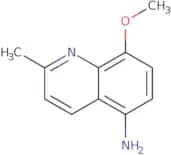
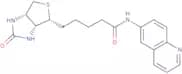
CAS:8-Methoxy-2-methylquinolin-5-amine monohydrochloride is a fine chemical that is used as a versatile building block in the synthesis of complex compounds. 8-Methoxy-2-methylquinolin-5-amine monohydrochloride is an intermediate for the production of research chemicals and pharmaceuticals. It can be used to synthesize speciality chemicals, useful scaffolds, and reagents. It also has a wide range of applications as a reaction component in synthetic organic chemistry. 8-Methoxy-2-methylquinolin-5-amine monohydrochloride has high purity and quality.Fórmula:C11H12N2O•HClPureza:Min. 95 Area-%Cor e Forma:PowderPeso molecular:224.73 g/molBiotinyl-6-aminoquinoline
CAS:Biotinyl-6-aminoquinoline is a synthetic chemical that has been shown to inhibit the growth of cancer cells in laboratory mice. It was synthesized to be a substrate for the enzyme quinolinate synthase, which is involved in the synthesis of nicotinic acid. Biotinyl-6-aminoquinoline is an analytical method that has been used in urinary samples from patients with bladder cancer as well as healthy individuals. The sequences of each individual were determined and analyzed using an algorithm that performs logistic regression, which can predict whether or not the patient has bladder cancer.
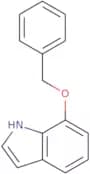
Fórmula:C19H22N4O2SPureza:Min. 95 Area-%Cor e Forma:PowderPeso molecular:370.47 g/mol7-Benzyloxyindole
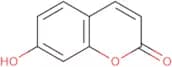
CAS:7-Benzyloxyindole is a regulatory compound that is used to study the interactions between transcription factors and chromatin. 7-Benzyloxyindole has been shown to induce caspase-independent cell death in human pathogens. 7-Benzyloxyindole induces reactive oxygen species and alters the expression of genes involved in the immune system and inflammation, suggesting an interaction with transcriptional regulation. 7-Benzyloxyindole's hemolytic activity may be due to its enantiomer, which binds to carotenoids such as β-carotene or retinol and forms a complex that is more reactive than the parent molecule. This reactive form of 7-benzyloxyindole has been shown to induce cell death in staphylococcus, suggesting a possible use for this drug as an antibacterial agent against opportunistic fungal infections.Fórmula:C15H13NOPureza:90%Cor e Forma:PowderPeso molecular:223.27 g/mol7-Hydroxycoumarin
CAS:7-Hydroxycoumarin is a fluorescent compound, known as a coumarin derivative, which is a naturally occurring chemical found in many plants. Derived from the umbelliferone compound family, it exhibits strong blue fluorescence under UV light due to its unique structural properties. This fluorescence is a result of its molecular conjugation and the electron-donating nature of the hydroxyl group, allowing it to absorb and emit light efficiently.
Fórmula:C9H6O3Pureza:90%Cor e Forma:Off-White PowderPeso molecular:162.14 g/mol

![4-[(7-Chloro-4-quinolinyl)amino]-1-pentanol](/_next/image/?url=https%3A%2Fstatic.cymitquimica.com%2Fproducts%2F3D%2Fthumb-webp%2FFC20107.webp&w=3840&q=75)

![3-(4-chlorophenyl)spiro[1,3-thiazolidine-2,3'-indoline]-4,7-dione](/_next/image/?url=https%3A%2Fstatic.cymitquimica.com%2Fproducts%2F3D%2Fthumb-webp%2FFC169673.webp&w=3840&q=75)
![4-Nitrobenzyl (4R,5R,6S)-3-[(diphenylphosphono)oxy]-6-[(R)-1-hydroxyethyl]-4-methyl-7-oxo-1-azabic…](/_next/image/?url=https%3A%2Fstatic.cymitquimica.com%2Fproducts%2F3D%2Fthumb-webp%2FFM140061.webp&w=3840&q=75)