Compostos Policiclícos
Subcategorias de "Compostos Policiclícos"
- Acridinas(97 produtos)
- Antraquinonas(533 produtos)
- Ácidos antraquinonasulfónicos(16 produtos)
- Azobenzenos(270 produtos)
- Azonaftalenos(98 produtos)
- Azoxibenzenos(12 produtos)
- Azulenos(11 produtos)
- Benzimidazóis(1.475 produtos)
- Benzodioxanos(27 produtos)
- Benzofuranos(924 produtos)
- Benzotiofenos(700 produtos)
- Benzotriazóis(438 produtos)
- Binaftil(133 produtos)
- Carbazóis(462 produtos)
- Cromanos, Cromenos(480 produtos)
- Cumarinas(1.122 produtos)
- Ciclofanos(11 produtos)
- Fluorenos e Fluorenonas(381 produtos)
- Imidazopiridinas(10 produtos)
- Indans(118 produtos)
- Indazóis(2.037 produtos)
- Indenos(22 produtos)
- Indóis(3.988 produtos)
- Indolinas(119 produtos)
- Isatinas(234 produtos)
- Isobenzofuranos(17 produtos)
- Ftalimidas N-Substituída(153 produtos)
- Naftalenos(2.437 produtos)
- Naftiridina(17 produtos)
- Naftoquinona(2 produtos)
- Perilenos(36 produtos)
- Fenazinas(25 produtos)
- Ftalazinas(33 produtos)
- Ftalimida(153 produtos)
- Hidrocarbonetos aromáticos policíclicos (PAHs)(270 produtos)
- Polifenol(261 produtos)
- Pteridinas(52 produtos)
- Pireno(87 produtos)
- Quinuclidina(1 produtos)
- Tetracenos(7 produtos)
Foram encontrados 4574 produtos de "Compostos Policiclícos"
4-Benzyloxyindole-2-carboxylic acid
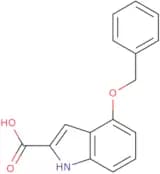
CAS:4-Benzyloxyindole-2-carboxylic acid is a synthetic intermediate. It can be prepared from the hydrazide by reaction with benzaldehyde and subsequent reduction. The carboxylic acid moiety of 4-benzyloxyindole-2-carboxylic acid reacts with an electron source to form a class of compounds that can be used as synthetic intermediates. The diazonium salts formed in this process are then reacted with different electrophiles to give other useful products. 4-Benzyloxyindole-2-carboxylic acid has been used for the synthesis of many organic compounds, such as active compounds, intermediates, and synthetic intermediates, by spectroscopic techniques.
Fórmula:C16H13NO3Pureza:Min. 95%Cor e Forma:PowderPeso molecular:267.28 g/mol7-Ethylindole
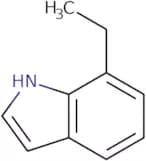
CAS:7-Ethylindole is a fatty acid with a cationic surfactant that belongs to the group of mesoporous materials. It has been synthesized by using chromatographic method and sample preparation techniques. The synthetic process is based on the protonation of 7-ethylindole. It undergoes dehydrogenation and activation energy, which is programmed in copper chromite. The chemical compositions are chloride, hydrogenated, and activated 7-ethylindole.Fórmula:C10H11NPureza:Min. 95%Peso molecular:145.2 g/molOroselol
CAS:Oroselol is an innovative beta-adrenergic blocker, which is a synthetic derivative with unique cardiovascular targeting properties. It is sourced from engineered chemical synthesis, utilizing advanced molecular design to enhance selectivity for beta-adrenergic receptors. The mode of action of Oroselol involves competitive antagonism of beta-1 and beta-2 adrenergic receptors, leading to a decrease in heart rate and myocardial contractility. This blockade of adrenergic stimulation results in reduced cardiac output and lower blood pressure.
Fórmula:C14H12O4Pureza:Min. 95%Cor e Forma:PowderPeso molecular:244.24 g/mol6-Amino-9H-purine-9-propanoic acid
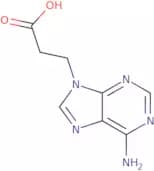
CAS:6-Amino-9H-purine-9-propanoic acid is an acid lactam that belongs to the class of dihedral molecules. It is a colorless solid that crystallizes in plates, which have been shown to have a strong affinity for ammonium ions. 6-Amino-9H-purine-9-propanoic acid has been shown to be a substrate for the enzyme purine nucleoside phosphorylase, which catalyzes the phosphorolysis of nucleosides with the release of inorganic phosphate and ribose 5'-phosphate. The molecule can also react with electron radiation to form gamma rays, which may lead to its use as a molecular probe.Fórmula:C8H9N5O2Pureza:Min. 95%Cor e Forma:PowderPeso molecular:207.19 g/mol5-Fluoroindole-3-acetic acid
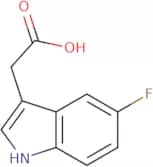
CAS:5-Fluoroindole-3-acetic acid is a fluorine-containing drug that inhibits the transport of indoleacetic acid (IAA), an auxin, in the peo-iaa system. It has been shown to inhibit cancer cell growth and induce apoptosis in a variety of tumour cells. 5-Fluoroindole-3-acetic acid can be used as a chemotherapeutic agent for cancers such as bladder, breast, and prostate cancers. This drug also activates enzymatic reactions by introducing fluorine atoms into reaction sites.Fórmula:C10H8FNO2Cor e Forma:PowderPeso molecular:193.17 g/molIndole-3-propionic acid
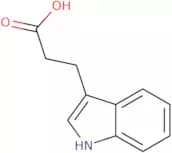
CAS:Indole-3-propionic acid is a metabolite of tryptophan. It has been shown to have a number of physiological effects, including the induction of apoptosis and inhibition of cell proliferation. Indole-3-propionic acid may be a potential biomarker for bowel disease, as well as an analytical method for detecting hydrogen bonding interactions. This compound has also been shown to have pharmacological effects in the treatment of diseases such as mitochondrial dysfunction, heart failure, and cancer. Indole-3-propionic acid is an agonist to the 5HT receptor and can activate the mammalian target of rapamycin (mTOR) pathway. The mTOR pathway regulates energy metabolism by regulating protein synthesis and cell growth.Fórmula:C11H11NO2Cor e Forma:White Off-White PowderPeso molecular:189.21 g/molTetraethyl 2,2'-bipyridine-4,4'-diylbisphosphonate
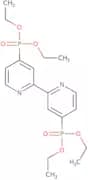
CAS:Tetraethyl 2,2'-bipyridine-4,4'-diylbisphosphonate is a chemical that is used as an intermediate in the synthesis of other fine chemicals. Tetraethyl 2,2'-bipyridine-4,4'-diylbisphosphonate can be used as a building block for synthesis of more complex compounds with high chemical and biological activity. Tetraethyl 2,2'-bipyridine-4,4'-diylbisphosphonate can also be used to synthesize speciality chemicals or research chemicals. This compound has many versatile uses due to its ability to react with different substances to form new chemical compounds.
Fórmula:C18H26N2O6P2Pureza:Min. 95%Cor e Forma:PowderPeso molecular:428.36 g/molIndole-3-acetic acid hydrazide
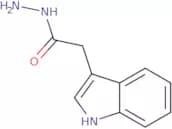
CAS:Indole-3-acetic acid hydrazide is a molecule that has been shown to inhibit the activity of enzymes such as phosphofructokinase, pyruvate kinase, and lactate dehydrogenase. The compound also inhibits hemolytic activity by binding to the red blood cell membrane and inhibiting the enzyme NADH oxidoreductase. Indole-3-acetic acid hydrazide has been shown to bind to divinylbenzene with a hydrogen bond. The compound is also able to inhibit fatty acid synthesis through its interaction with the fatty acid synthase enzyme. In addition, indole-3-acetic acid hydrazide can be used as an inhibitor of SplA2 in cells.Fórmula:C10H11N3OPureza:Min. 95%Cor e Forma:PowderPeso molecular:189.21 g/mol6-Fluoro-5-Methyl-2-[(5-Methyl-1H-Imidazol-4-Yl)Methyl]-2,3,4,5-Tetrahydro-1H-Pyrido[4,3-b]Indol-1-One
CAS:Produto Controlado6-Fluoro-5-Methyl-2-[(5-Methyl-1H-Imidazol-4-Yl)Methyl]-2,3,4,5-Tetrahydro-1H-Pyrido[4,3-b]Indol-1-One is a drug that belongs to the class of fatty acid esters. It has been shown to be effective in clinical trials for the treatment of symptoms of dry eye syndrome. 6FMETI has a low safety profile and does not cause any adverse effects in humans. The drug can be administered by intravenous injection or oral administration and has a long elimination half life of 36 hours. 6FMETI is metabolized by hydrolysis to its active form, 5FMTI, which is then conjugated with glucuronic acid or methyl glutaryl coenzyme A to form an inactive metabolite. This drug also has good pharmacokinetic properties
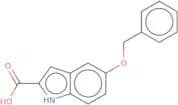
Fórmula:C17H17FN4OPureza:Min. 95%Peso molecular:312.34 g/mol5-Benzyloxyindole-2-carboxylic acid
CAS:5-Benzyloxyindole-2-carboxylic acid is a versatile compound that has been used as a building block for the synthesis of diverse chemical compounds. It has been shown to be useful in the synthesis of natural products and pharmaceuticals, such as anticancer drugs, antibiotics, and analgesics. 5-Benzyloxyindole-2-carboxylic acid is also used as an intermediate in the production of other chemical compounds. It has a CAS number of 6640-09-1 and is classified as a research chemical.
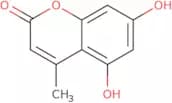
Fórmula:C16H13NO3Pureza:Min. 95%Cor e Forma:PowderPeso molecular:267.28 g/mol5,7-Dihydroxy-4-methylcoumarin monohydrate
CAS:5,7-Dihydroxy-4-methylcoumarin monohydrate is an organic chemical compound, specifically a type of coumarin derivative. Coumarins are a class of naturally occurring aromatic compounds that are found in various plant sources, such as tonka beans, sweet clover, and other botanicals. This particular compound, with its distinct hydroxyl and methyl groups, falls under the broader category of hydroxycoumarins, which are of significant interest in biochemical research due to their various functional properties.Fórmula:C10H8O4•H2OPureza:Min. 95%Cor e Forma:Off-White Yellow PowderPeso molecular:210.18 g/mol6-Methylcoumarin
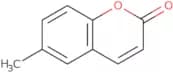
CAS:The 6-methylcoumarin is a benzalkonium chloride that can be used as a stabilizer for biological samples. It has been shown to inhibit the activity of coumarin derivatives, which are receptors that are involved in the transmission of pain signals in the brain. The 6-methylcoumarin is also able to inhibit signal peptide, which is a protein that is secreted by cells and functions as a messenger between cells. This compound was found to have hypoglycemic effects due to its ability to stimulate glucose uptake in the body.
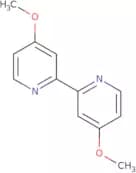
Fórmula:C10H8O2Pureza:Min. 95%Cor e Forma:PowderPeso molecular:160.17 g/mol4,4'-Dimethoxy-2,2'-bipyridine
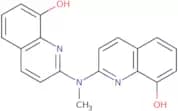
CAS:4,4'-Dimethoxy-2,2'-bipyridine (DMBP) is a reactive compound that can undergo nucleophilic attack on protonated molecules. DMBP has a high value for protonation and is able to react with water vapor in the air to form hydroxide. It has been used as a model protein to study the redox potential of biomolecules and the biological properties of halides. The crystal structure of DMBP has been studied by X-ray crystallography and is found to be related to technetium.Fórmula:C12H12N2O2Pureza:Min. 95%Cor e Forma:PowderPeso molecular:216.24 g/mol2,2'-(Methylimino)diquinolin-8-ol
CAS:Please enquire for more information about 2,2'-(Methylimino)diquinolin-8-ol including the price, delivery time and more detailed product information at the technical inquiry form on this pageFórmula:C19H15N3O2Pureza:Min. 95%Peso molecular:317.34 g/mol4-Fluoroindole
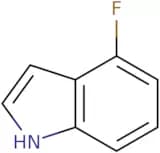
CAS:4-Fluoroindole is a compound that belongs to the class of 5-methoxyindoles, which are used as drugs in plant physiology. The analog of 4-fluoroindole is important for cell culture and transcriptomic analysis. It has been shown to reduce the growth of cryptococcus neoformans by inhibiting its ability to produce acid. 4-Fluoroindole also inhibits the growth of other opportunistic fungi, such as Aspergillus niger. This drug is addictive and can be toxic if it enters the environment. 4-Fluoroindole also inhibits the growth of plants when applied as a pesticide.Fórmula:C8H6FNCor e Forma:PowderPeso molecular:135.14 g/mol4,6-Dichloro-1H-indole-2-carboxylic acid ethyl ester
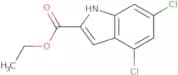
CAS:4,6-Dichloro-1H-indole-2-carboxylic acid ethyl ester is a synthetic compound that functions as an agonist of the indole 2 receptor. It has been shown to have affinity for cortical and brain membranes, with a greater affinity for acidic regions of the membrane. 4,6-Dichloro-1H-indole-2-carboxylic acid ethyl ester is also capable of binding to the indole 2 receptor and activating it. The carboxyl group in this compound is substituted with benzene rings, which are connected by a moiety containing two carboxylic groups. 4,6-Dichloro-1H-indole-2-carboxylic acid ethyl ester was synthesised from 1H -indole acetic acid and chloroethane in four steps.Fórmula:C11H9Cl2NO2Pureza:Min. 95%Cor e Forma:SolidPeso molecular:258.1 g/mol5-Benzyloxyindole-3-acetic acid
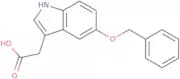
CAS:5-Benzyloxyindole-3-acetic acid is a synthetic chemical that is used as a plant growth regulator. It inhibits the uptake of other plant nutrients, such as nitrates and phosphate ions by roots, which leads to decreased plant growth. This compound also has an inhibitory effect on membranes and morphology. The inhibition of membrane transport can lead to cell death, which can be seen in the case of plants treated with this chemical. 5-Benzyloxyindole-3-acetic acid has been shown to affect the response pathway of plants at temperatures between c1-c3 degrees Celsius.Fórmula:C17H15NO3Pureza:Min. 95%Cor e Forma:PowderPeso molecular:281.31 g/mol7-Hydroxyindole
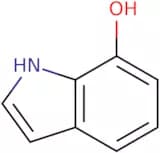
CAS:7-Hydroxyindole is a biochemical that is produced by wild-type strains of Escherichia coli. It has been shown to inhibit the action of an efflux pump, which is a protein that pumps drugs and other foreign substances out of the cell. The alkoxy radical reacts with 7-hydroxyindole to form a hydroperoxide intermediate. This intermediate then reacts with molecular oxygen to form hydrogen peroxide, which may be responsible for the antimicrobial activity of 7-hydoxyindole. Studies have shown that this compound can also inhibit multidrug efflux pumps in Pseudomonas aeruginosa cells, which may lead to an increase in antibiotic uptake.
Fórmula:C8H7NOPureza:Min. 98 Area-%Cor e Forma:Off-White PowderPeso molecular:133.15 g/mol3-(2,6,6-Trimethyl-4-oxo-5,6,7-trihydroindolyl)benzoic acid
CAS:Please enquire for more information about 3-(2,6,6-Trimethyl-4-oxo-5,6,7-trihydroindolyl)benzoic acid including the price, delivery time and more detailed product information at the technical inquiry form on this pageFórmula:C18H19NO3Pureza:Min. 95%Cor e Forma:PowderPeso molecular:297.35 g/mol5-Hydroxy-6-methoxyindole-carboxylic acid
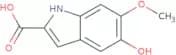
CAS:5-Hydroxy-6-methoxyindole-carboxylic acid (5-HMICA) is a molecule that is found in the pericardium and urine of patients with cancer. 5-HMICA has been shown to suppress tumor growth and activate cell mediated cytotoxicity in vitro. It also induces T helper type 1 (Th1) immune responses, which are associated with the production of cytokines such as interferon gamma and tumor necrosis factor alpha.Fórmula:C10H9NO4Cor e Forma:PowderPeso molecular:207.18 g/mol


![6-Fluoro-5-Methyl-2-[(5-Methyl-1H-Imidazol-4-Yl)Methyl]-2,3,4,5-Tetrahydro-1H-Pyrido[4,3-b]Indol-1…](/_next/image/?url=https%3A%2Fstatic.cymitquimica.com%2Fproducts%2F3D%2Fthumb-webp%2FFF102588.webp&w=3840&q=75)