Compostos Policiclícos
Subcategorias de "Compostos Policiclícos"
- Acridinas(97 produtos)
- Antraquinonas(533 produtos)
- Ácidos antraquinonasulfónicos(16 produtos)
- Azobenzenos(270 produtos)
- Azonaftalenos(98 produtos)
- Azoxibenzenos(12 produtos)
- Azulenos(11 produtos)
- Benzimidazóis(1.475 produtos)
- Benzodioxanos(27 produtos)
- Benzofuranos(924 produtos)
- Benzotiofenos(700 produtos)
- Benzotriazóis(438 produtos)
- Binaftil(133 produtos)
- Carbazóis(462 produtos)
- Cromanos, Cromenos(480 produtos)
- Cumarinas(1.122 produtos)
- Ciclofanos(11 produtos)
- Fluorenos e Fluorenonas(381 produtos)
- Imidazopiridinas(10 produtos)
- Indans(118 produtos)
- Indazóis(2.037 produtos)
- Indenos(22 produtos)
- Indóis(3.988 produtos)
- Indolinas(119 produtos)
- Isatinas(234 produtos)
- Isobenzofuranos(17 produtos)
- Ftalimidas N-Substituída(153 produtos)
- Naftalenos(2.436 produtos)
- Naftiridina(17 produtos)
- Naftoquinona(2 produtos)
- Perilenos(36 produtos)
- Fenazinas(25 produtos)
- Ftalazinas(33 produtos)
- Ftalimida(153 produtos)
- Hidrocarbonetos aromáticos policíclicos (PAHs)(270 produtos)
- Polifenol(261 produtos)
- Pteridinas(52 produtos)
- Pireno(87 produtos)
- Quinuclidina(1 produtos)
- Tetracenos(7 produtos)
Foram encontrados 4574 produtos de "Compostos Policiclícos"
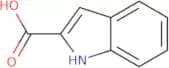
Indole-2-carboxylic acid
CAS:Indole-2-carboxylic acid is a potent inducer of the cytochrome P450 enzyme. It has been shown to bind to the active site of the enzyme and inhibit its activity. Indole-2-carboxylic acid is an acidic molecule with two hydrogen atoms that are capable of forming an intermolecular hydrogen bond, which may be responsible for its ability to bind to the enzyme. This compound has been shown to inhibit the activity of other enzymes such as xanthine oxidase and phosphodiesterase, which are involved in chemical reactions that produce reactive oxygen species (ROS). ROS are implicated in neuronal death and Parkinson's disease.Fórmula:C9H7NO2Pureza:Min 98%Cor e Forma:PowderPeso molecular:161.16 g/mol13,4-diaza-5-(tert-butyl)-2-hydroxy-7-oxotricyclo[6.4.0.0<2,6>]dodeca-1(8),4,9,11-tetraene-3-carboxamide
CAS:Please enquire for more information about 13,4-diaza-5-(tert-butyl)-2-hydroxy-7-oxotricyclo[6.4.0.0<2,6>]dodeca-1(8),4,9,11-tetraene-3-carboxamide including the price, delivery time and more detailed product information at the technical inquiry form on this pagePureza:Min. 95%3-Methylphenanthrene
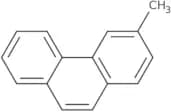
CAS:3-Methylphenanthrene is a compound that inhibits the reductase activity of aromatic hydrocarbons. 3-Methylphenanthrene has been shown to inhibit both bacterial and mammalian reductases, with interactive effects on the enzyme's substrate molecule. It also shows an inhibitory effect on axonal growth, which may be due to its ability to reduce fatty acid uptake, as well as its ability to interact with the aromatic hydrocarbon uptake system. 3-Methylphenanthrene is easily detected by spectrometry analyses and can be used as a substrate molecule for bacterial enzymes.Fórmula:C15H12Pureza:Min. 98%Cor e Forma:White PowderPeso molecular:192.26 g/molQuinoline 2,4-dicarboxylic acid
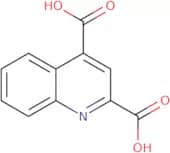
CAS:Quinoline 2,4-dicarboxylic acid (QDA) is a novel cytotoxic agent that targets cervical cancer cells. It inhibits the uptake of glucose and other nutrients by cervical cancer cells, leading to cell death through apoptosis. QDA also inhibits the expression of genes involved in cross-linking reactions, which are important for the structural integrity of proteins. This agent has been shown to inhibit the growth of aniline-induced breast cancer cells and glutamate-stimulated PC12 cells. QDA binds to DNA and forms covalent bonds with nucleotide bases, inhibiting DNA synthesis, as well as interfering with protein synthesis and cell division. The QDA mechanism is similar to that of benzoquinolines and estrone sulfate.
Fórmula:C11H7NO4Pureza:Min. 95%Cor e Forma:White PowderPeso molecular:217.18 g/mol6-Bromo-2-oxindole
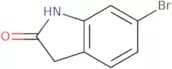
CAS:6-Bromo-2-oxindole is a crystalline compound with a molecular formula of C10H6BrO. It has been shown to have a high efficiency in the production of butyric acid and other organic acids. 6-Bromo-2-oxindole is also used in electron microscopy studies as an electron acceptor, and can be used for producing polymers with crystalline structures and dihedral angles. The compound has been shown to inhibit the growth of breast cancer cells by preventing the synthesis of mda-mb-231 breast cancer cells. It also has been shown to inhibit the production of isoindigo and morphology.
Fórmula:C8H6BrNOPureza:Min. 98 Area-%Cor e Forma:PowderPeso molecular:212.04 g/mol4-Nitrobenzyl (4R,5R,6S)-3-[(diphenylphosphono)oxy]-6-[(R)-1-hydroxyethyl]-4-methyl-7-oxo-1-azabicyclo[3.2.0]hept-2-ene-2-carboxylat e
CAS:4-Nitrobenzyl (4R,5R,6S)-3-[(diphenylphosphono)oxy]-6-[(R)-1-hydroxyethyl]-4-methyl-7-oxo-1-azabicyclo[3.2.0]hept-2-ene-2-carboxylat e is a synthetic compound that is used as an alkalizer and impurity scavenger in the manufacture of pesticides and other organic chemicals. It has been shown to be a stereoselective herbicide with acetonitrile as its primary degradation product. The compound has also been found to be a potent inhibitor of the enzyme carbapenemase, which may lead to increased resistance to antibiotics such as monosodium salt of ertapenem.Fórmula:C29H27N2O10PPureza:Min. 98 Area-%Cor e Forma:White PowderPeso molecular:594.51 g/mol4-Hydroxy-2-methylindole
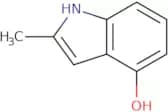
CAS:4-Hydroxy-2-methylindole is an organic compound that belongs to the class of metal salts. It can be obtained as a white solid by reacting indole with alkali metal hydroxide or alkali metal carbonate in the presence of water at high temperatures. The reaction yields 4-hydroxy-2-methylindole and hydrogen chloride gas, which are removed by distillation. 4-Hydroxy-2-methylindole is used in the production of epichlorohydrin, which is a raw material for polyurethane resins and olefins.Fórmula:C9H9NOPureza:Min. 95%Cor e Forma:PowderPeso molecular:147.17 g/molIndoline-2-carboxylic acid
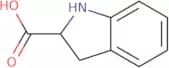
CAS:Indoline-2-carboxylic acid is a photophysical molecule with an absorption maximum at 518 nm. It has been shown to inhibit the activity of enzymes such as cyclooxygenase, lipoxygenase, and monoamine oxidases. This compound has been found to be effective in the treatment of cancer cells. Indoline-2-carboxylic acid is also used in pharmaceutical preparations, where it binds to enantiomers of other molecules and inhibits their biological activity. Indoline-2-carboxylic acid reacts with hydrochloric acid to form allyl carbonate and amide.
Fórmula:C9H9NO2Pureza:Min. 97 Area-%Cor e Forma:PowderPeso molecular:163.17 g/mol8-Hydroxyquinoline
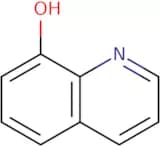
CAS:8-HQ, liberated by enzymatic activity, is a strong metal chelator and forms insoluble, grey precipitates with several metal cations such as Fe3+Fórmula:C9H7NOCor e Forma:PowderPeso molecular:145.16 g/molEthyl 4,5-dichloro-1H-indole-2-carboxylate
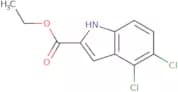
CAS:Ethyl 4,5-dichloro-1H-indole-2-carboxylate is an organic chemical compound that is a reaction component, reagent, and useful scaffold in the synthesis of pharmaceuticals. It has been shown to have high quality and be a versatile building block for the synthesis of complex compounds. This chemical can be used as a speciality chemical or research chemical.Fórmula:C11H9Cl2NO2Pureza:Min. 95%Cor e Forma:White PowderPeso molecular:258.1 g/mol3-(4-ethoxyphenyl)spiro[1,3-thiazolidine-2,3'-indoline]-4,7-dione
CAS:Please enquire for more information about 3-(4-ethoxyphenyl)spiro[1,3-thiazolidine-2,3'-indoline]-4,7-dione including the price, delivery time and more detailed product information at the technical inquiry form on this pagePureza:Min. 95%6-Methoxyindoline-2,3-dione
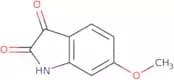
CAS:6-Methoxyindoline-2,3-dione is an indole alkaloid that has been isolated from the leaves of plants in the genus Apiaceae. It is synthesized by a reaction system that involves the oxidation of 6-methoxyindole to the corresponding oxindole and subsequent reduction to the desired product. The cytotoxicity of 6-methoxyindoline-2,3-dione has been demonstrated using a fluorescent assay with cancer cells. The compound binds to and activates cb2 receptors, which are expressed on immune cells and have been shown to be involved in inflammatory processes.Fórmula:C9H7NO3Pureza:Min. 95%Cor e Forma:PowderPeso molecular:177.16 g/mol2-Thioxanthine
CAS:2-Thioxanthine is a hydrated form of xanthine, which is a purine base that occurs in all living cells. This compound has been shown to be able to inhibit the growth of resistant mutants and the formation of atherosclerotic lesions in mice. 2-Thioxanthine also inhibits the transfer reactions that are required for bacterial DNA synthesis. The stability of 2-thioxanthine can be increased by forming stable complexes with hydrochloric acid and by reducing the pH to less than 7. 2-Thioxanthine has been shown to have genotoxic effects on mouse liver cells and human fibroblasts, as well as pharmacological properties against cardiovascular disease.Fórmula:C5H4N4OSPureza:Min. 95%Cor e Forma:PowderPeso molecular:168.18 g/molMethyl 3-formyl-6-methoxy-1-(4-methoxybenzyl)-1H-indole-2-carboxylate
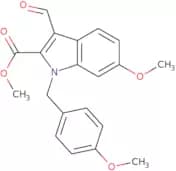
CAS:Produto ControladoPlease enquire for more information about Methyl 3-formyl-6-methoxy-1-(4-methoxybenzyl)-1H-indole-2-carboxylate including the price, delivery time and more detailed product information at the technical inquiry form on this page
Fórmula:C20H19NO5Pureza:Min. 95%Peso molecular:353.37 g/mol7-Methylxanthine
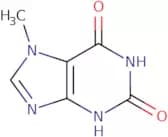
CAS:Produto Controlado7-Methylxanthine is a purine alkaloid that is the primary metabolite of caffeine. It is structurally related to theobromine, which is found in chocolate. 7-Methylxanthine has been shown to have hypoglycemic effects and may be useful for the treatment of myopia. The optimum concentration of 7-methylxanthine for inhibiting carotenoid biosynthesis has been determined as 10 μM. It also inhibits axial elongation in cultured chick retinal cells by reducing carotenoid levels and increasing p-hydroxybenzoic acid levels in the retina. The analytical method for quantifying 7-methylxanthine relies on high performance liquid chromatography with ultraviolet detection (HPLC/UV).Fórmula:C6H6N4O2Pureza:Min. 96 Area-%Cor e Forma:White PowderPeso molecular:166.14 g/mol5-Hydroxy-3-methylindole
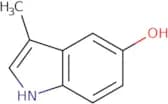
CAS:5-Hydroxy-3-methylindole (5HMI) is a metabolite of the drug tamoxifen, which is used for the treatment of breast cancer. It is also found in urine samples and has been shown to be reactive with cytochrome P450 2E1 (CYP2E1). 5HMI has been shown to inhibit the activity of CYP2E1 in humans, rats, and mice. 5HMI has also been shown to have anti-epileptic properties in epileptics. This active form is metabolized by adipose tissue or liver cells through oxidation and conjugation with glucuronic acid. The human liver cells show constitutive androstane receptor (CAR) activation, which may be due to its ability to act as an agonist or partial agonist.
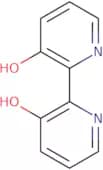
Fórmula:C9H9NOPureza:Min. 96%Cor e Forma:PowderPeso molecular:147.17 g/mol3,3'-Dihydroxy-2,2'-bipyridine
CAS:3,3'-Dihydroxy-2,2'-bipyridine is a water-soluble drug that has been shown to be cytotoxic. It binds to the hydroxyl group of hemoglobin and prevents it from binding with oxygen. 3,3'-Dihydroxy-2,2'-bipyridine also binds to the cell membrane and enters the cell where it forms a cavity with a chelate ring. The molecule has been shown to have high photophysical properties and can be used in biological studies.Fórmula:C10H8N2O2Pureza:Min. 97.5 Area-%Cor e Forma:White PowderPeso molecular:188.18 g/mol1,1'-Bicyclo[1,1,1]pentane-1,3-dicarboxylic acid
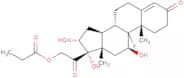
CAS:1,1'-Bicyclo[1,1,1]pentane-1,3-dicarboxylic acid is a diacid that has been found to be effective in the synthesis of many organic compounds. It can be used as a building block for other molecules with different functional groups and is an excellent bioisostere for disulfides. The addition of 1,1'-bicyclo[1,1,1]pentane-1,3-dicarboxylic acid to a nucleophilic compound can be used to synthesize an ester. This molecule can also undergo cross-coupling reactions with halogens such as chlorine or bromine. The crystal x-ray diffraction pattern indicates that this molecule has a linear structure.Fórmula:C7H8O4Pureza:Min. 95%Cor e Forma:SolidPeso molecular:156.14 g/mol[2-[(8S,10S,11S,13S,14S,16R,17S)-9-Fluoro-11,16,17-Trihydroxy-10,13-Dimethyl-3-Oxo-1,2,6,7,8,11,12,14,15,16-Decahydrocyclopenta[a]Ph enanthren-17-Yl]-2-Oxoethyl] Propanoate
CAS:Produto Controlado(8S,10S,11S,13S,14S,16R,17S)-9-fluoro-11,16,17-trihydroxy-10,13-dimethyl-3-oxo-1,2,6,7,8,11,12,14,-15,-16-decahydrocyclopenta[a]phenanthren-17-yl]-2-oxoethyl propanoate is a pesticide that is classified as a pyrethroid. It has been shown to be an insecticide that binds to cholinergic receptors in the nerve synapses of insects and disrupts transmission of nerve impulses. This allows the insect's nervous system to recover from the initial attack. The molecule has also been shown to bind to other proteins that have been identified as targets for pesticide interaction.Fórmula:C24H33FO7Pureza:Min. 95%Peso molecular:452.51 g/molGeiparvarin
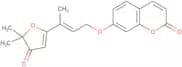
CAS:Geiparvarin is a cytotoxic compound, which is a plant-derived chemical with notable bioactivity. It is sourced from the roots of the Daflon plant, known for various natural compounds with potential therapeutic effects. Geiparvarin acts by interfering with cellular processes, leading to apoptosis in malignant cells. This mode of action is particularly significant in the study and development of anticancer therapies.Pureza:Min. 95%

![13,4-diaza-5-(tert-butyl)-2-hydroxy-7-oxotricyclo[6.4.0.0<2,6>]dodeca-1(8),4,9,11-tetraene-3-carbo…](/_next/image/?url=https%3A%2Fstatic.cymitquimica.com%2Fproducts%2F3D%2Fthumb-webp%2FFD169872.webp&w=3840&q=75)
![4-Nitrobenzyl (4R,5R,6S)-3-[(diphenylphosphono)oxy]-6-[(R)-1-hydroxyethyl]-4-methyl-7-oxo-1-azabic…](/_next/image/?url=https%3A%2Fstatic.cymitquimica.com%2Fproducts%2F3D%2Fthumb-webp%2FFM140061.webp&w=3840&q=75)
![3-(4-ethoxyphenyl)spiro[1,3-thiazolidine-2,3'-indoline]-4,7-dione](/_next/image/?url=https%3A%2Fstatic.cymitquimica.com%2Fproducts%2F3D%2Fthumb-webp%2FFE169782.webp&w=3840&q=75)

![1,1'-Bicyclo[1,1,1]pentane-1,3-dicarboxylic acid](/_next/image/?url=https%3A%2Fstatic.cymitquimica.com%2Fproducts%2F3D%2Fthumb-webp%2FFB33678.webp&w=3840&q=75)