Compostos Policiclícos
Os compostos policíclicos são moléculas orgânicas que contêm múltiplos anéis interconectados. Esses compostos incluem hidrocarbonetos aromáticos policíclicos e outros sistemas de anéis complexos. Eles são significativos na ciência dos materiais, produtos farmacêuticos e eletrônica orgânica. Na CymitQuimica, oferecemos compostos policíclicos de alta qualidade para apoiar suas pesquisas e aplicações industriais, garantindo resultados confiáveis e eficazes em seus projetos.
Subcategorias de "Compostos Policiclícos"
- Acridinas(97 produtos)
- Antraquinonas(533 produtos)
- Ácidos antraquinonasulfónicos(16 produtos)
- Azobenzenos(270 produtos)
- Azonaftalenos(98 produtos)
- Azoxibenzenos(12 produtos)
- Azulenos(11 produtos)
- Benzimidazóis(1.475 produtos)
- Benzodioxanos(27 produtos)
- Benzofuranos(924 produtos)
- Benzotiofenos(700 produtos)
- Benzotriazóis(438 produtos)
- Binaftil(133 produtos)
- Carbazóis(462 produtos)
- Cromanos, Cromenos(480 produtos)
- Cumarinas(1.122 produtos)
- Ciclofanos(11 produtos)
- Fluorenos e Fluorenonas(381 produtos)
- Imidazopiridinas(10 produtos)
- Indans(118 produtos)
- Indazóis(2.037 produtos)
- Indenos(22 produtos)
- Indóis(3.988 produtos)
- Indolinas(119 produtos)
- Isatinas(234 produtos)
- Isobenzofuranos(17 produtos)
- Ftalimidas N-Substituída(153 produtos)
- Naftalenos(2.436 produtos)
- Naftiridina(17 produtos)
- Naftoquinona(2 produtos)
- Perilenos(36 produtos)
- Fenazinas(25 produtos)
- Ftalazinas(33 produtos)
- Ftalimida(153 produtos)
- Hidrocarbonetos aromáticos policíclicos (PAHs)(270 produtos)
- Polifenol(261 produtos)
- Pteridinas(52 produtos)
- Pireno(87 produtos)
- Quinuclidina(1 produtos)
- Tetracenos(7 produtos)
Exibir 32 mais subcategorias
Foram encontrados 4574 produtos de "Compostos Policiclícos"
Ordenar por
Pureza (%)
0
100
|
0
|
50
|
90
|
95
|
100
1-Methyl-1H-indole-3-carbohydrazide
CAS:Produto Controlado<p>1-Methyl-1H-indole-3-carbohydrazide (MZ) is a potential anticancer drug that inhibits the growth of cancer cells. It binds to the colchicine binding site on the DNA, which prevents doxorubicin from binding and causing damage to the DNA. MZ has been shown to be effective against breast cancer and has been shown to inhibit tumor growth in mice by targeting cancer cells lines. MZ also inhibits proliferation of MDA-MB-231 cells in culture, as well as inhibiting cell cycle progression, leading to apoptosis. The molecular docking studies show that 1MZ binds to colchicine site on DNA with high affinity and specificity.</p>Fórmula:C10H11N3OPureza:Min. 95%Peso molecular:189.21 g/molAnomelin
<p>Anomelin is a synthetic anticancer compound, which is derived from complex organic synthesis methodologies. This compound is typically produced through careful laboratory processes due to its intricate chemical structure, which is crafted to target specific molecular pathways involved in cancer cell proliferation.</p>Pureza:Min. 95%Bis(tricyclohexylphosphine)palladium(II) Dichloride
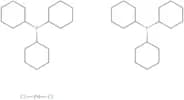
CAS:Produto Controlado<p>Bis(tricyclohexylphosphine)palladium(II) Dichloride is a cross-coupling agent that is used for the synthesis of organic and organometallic compounds. It reacts with terminal alkynes to form a phosphine oxide, which can then be converted into an arylated product. The reaction proceeds by the formation of a palladium-carbon bond and subsequent cleavage of the carbon-palladium bond in the presence of ammonium formate. Bis(tricyclohexylphosphine)palladium(II) Dichloride is insoluble in water, but soluble in organic solvents such as dichloromethane, 1,2-dichloroethane, or chloroform. This reagent has been shown to enhance the rate of transfer reactions between monomers.</p>Fórmula:C36H66Cl2P2PdPureza:Min. 95%Peso molecular:738.18 g/mol1-Methylindole-3-boronic acid pinacol ester
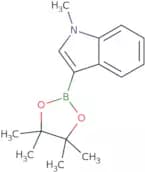
CAS:<p>Please enquire for more information about 1-Methylindole-3-boronic acid pinacol ester including the price, delivery time and more detailed product information at the technical inquiry form on this page</p>Fórmula:C15H20BNO2Pureza:Min. 95%Peso molecular:257.14 g/mol2-Hydroxy-4-methylquinoline
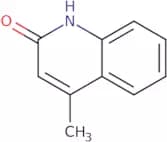
CAS:<p>2-Hydroxy-4-methylquinoline is an organic compound that has a chelate ring. It is soluble in deionized water and reacts with metal ions to form a fluorescent product. The molecule also has antibacterial activity, which may be due to its ability to inhibit the growth of bacteria by acting as a metal ion chelator. 2-Hydroxy-4-methylquinoline can react with halides and ammonium persulfate to form isomeric products, such as 4,5-dihydroxyquinoline, which have been shown to have antimicrobial properties. 2-Hydroxy-4-methylquinoline can also react with phosphorus oxychloride and alkylating agents such as chloroethane or chloroform to form substituted derivatives.</p>Fórmula:C10H9NOPureza:Min. 95%Cor e Forma:PowderPeso molecular:159.18 g/mol1-Benzyl-3-[3-(diethylamino)propoxy]-1H-indazole
CAS:Produto Controlado<p>Please enquire for more information about 1-Benzyl-3-[3-(diethylamino)propoxy]-1H-indazole including the price, delivery time and more detailed product information at the technical inquiry form on this page</p>Fórmula:C21H27N3OPureza:Min. 98 Area-%Cor e Forma:Clear LiquidPeso molecular:337.46 g/molCapensin
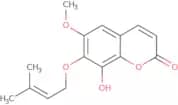
CAS:<p>Capensin is an alkaloid-based compound, which is a naturally occurring chemical derived from specific plant sources known for producing bioactive molecules. Its mode of action involves interacting with cellular pathways to produce pharmacological effects, making it of particular interest in biochemical and medical research.</p>Fórmula:C15H16O5Pureza:Min. 95%Peso molecular:276.28 g/mol7-Azaindole-5-carboxylic acid methyl ester
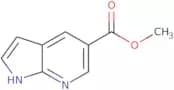
CAS:<p>7-Azaindole-5-carboxylic acid methyl ester is an ester derivative that can be synthesized from the reaction of acetyl chloride and diazotization. 7-Azaindole-5-carboxylic acid methyl ester has been used in research for its biological activity, specifically as a cytotoxic agent. It has also been shown to inhibit the growth of cancer cells by alkylation reactions and cyclization reactions. 7-Azaindole-5-carboxylic acid methyl ester has been shown to have antitumor properties with a mechanism that is not yet fully understood.</p>Fórmula:C9H8N2O2Pureza:Min. 95%Peso molecular:176.17 g/mol1-Benzylindole-3-Carboxylic Acid
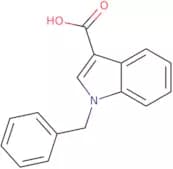
CAS:Produto Controlado<p>1-Benzylindole-3-carboxylic acid is a bioactive molecule that has been shown to inhibit the activity of histamine, which is a neurotransmitter involved in inflammatory reactions. 1-Benzylindole-3-carboxylic acid has an affinity ligand for binding to the H1 receptor and can be used as an antihistaminic agent. It also has antihistaminic effects by inhibiting the release of histamine from mast cells and basophils, which are two types of white blood cells that are involved in allergic reactions. The pharmacophore model for 1-benzylindole-3-carboxylic acid suggests that it could be used as an antihistamine or anticholinergic.</p>Fórmula:C16H13NO2Pureza:Min. 95%Peso molecular:251.28 g/mol5-Hydroxyquinolin-2(1H)-one
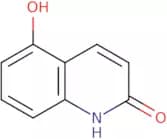
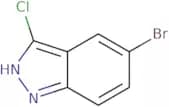
CAS:<p>5-Hydroxyquinolin-2(1H)-one is a chalcone that can be synthesized from 2,5-dihydroxybenzaldehyde and quinoline. It is a bacteriostatic agent that inhibits bacterial growth by binding to the 50S ribosomal subunit, blocking the formation of an antibiotic-substrate complex with the enzyme cell wall synthesis that is required for cell wall biosynthesis, inhibiting protein synthesis and cell division. 5-Hydroxyquinolin-2(1H)-one has shown activity against methicillin resistant Staphylococcus aureus (MRSA) and methicillin resistant Enterococcus faecium. 5-Hydroxyquinolin-2(1H)-one also represses the expression of DNA topoisomerase II genes, which may be associated with its inhibitory effects on bacterial growth.</p>Fórmula:C9H7NO2Pureza:Min. 95%Peso molecular:161.16 g/mol5-Bromo-3-chloro-1H-indazole
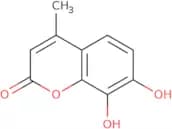
CAS:<p>Please enquire for more information about 5-Bromo-3-chloro-1H-indazole including the price, delivery time and more detailed product information at the technical inquiry form on this page</p>Fórmula:C7H4BrClN2Pureza:Min. 95%Peso molecular:231.48 g/mol7,8-Dihydroxy-4-methylcoumarin
CAS:<p>7,8-Dihydroxy-4-methylcoumarin is a bioactive compound, specifically a derivative of coumarin. This compound is naturally derived from plant sources, where it acts as a metabolite in various biochemical pathways. Its chemical structure is characterized by the presence of two hydroxyl groups at the 7 and 8 positions, along with a methyl group at the 4 position of the coumarin core, contributing to its unique pharmacological profile.</p>Fórmula:C10H8O4Pureza:Min. 95%Peso molecular:192.17 g/molMethyl 3-formyl-4,6-dimethoxy-1-methyl-1H-indole-2-carboxylate
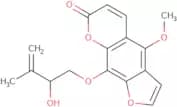
CAS:Produto Controlado<p>Please enquire for more information about Methyl 3-formyl-4,6-dimethoxy-1-methyl-1H-indole-2-carboxylate including the price, delivery time and more detailed product information at the technical inquiry form on this page</p>Fórmula:C14H15NO5Pureza:Min. 95%Peso molecular:277.27 g/molNeobyakangelicol
CAS:<p>Neobyakangelicol is a phytochemical compound, which is a natural product derived from various plant species. Its source is predominantly the roots of certain medicinal plants that are known for their array of bioactive constituents. The mode of action of Neobyakangelicol primarily involves interacting with specific biochemical pathways, potentially including modulation of enzyme activity or receptor binding, which could result in diverse pharmacological effects.</p>Fórmula:C17H16O6Pureza:Min. 95%Peso molecular:316.31 g/mol1,2,3,4-Tetrahydroquinoline-3-carboxylic acid
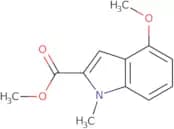
CAS:<p>Tetrahydroquinoline-3-carboxylic acid is a crystalline, water-soluble compound. It is an intermediate in the synthesis of l-phenylalanine, paraformaldehyde and formaldehyde. Tetrahydroquinoline-3-carboxylic acid can be hydrolyzed to produce formic acid and hydrogen chloride. This product is also optically active and can be used as an indicator for hydroiodic acid.</p>Fórmula:C10H11NO2Pureza:Min. 95%Peso molecular:177.2 g/molMethyl 4-methoxy-1-methyl-1H-indole-2-carboxylate
CAS:Produto Controlado<p>Please enquire for more information about Methyl 4-methoxy-1-methyl-1H-indole-2-carboxylate including the price, delivery time and more detailed product information at the technical inquiry form on this page</p>Fórmula:C12H13NO3Pureza:Min. 95%Peso molecular:219.24 g/mol(1R,4R,5R)-4,7,7-Trimethyl-6-thiabicyclo[3.2.1]octane
CAS:<p>Please enquire for more information about (1R,4R,5R)-4,7,7-Trimethyl-6-thiabicyclo[3.2.1]octane including the price, delivery time and more detailed product information at the technical inquiry form on this page</p>Fórmula:C10H18SPureza:90%MinPeso molecular:170.32 g/molcis-Isokhellactone
CAS:<p>cis-Isokhellactone is a bioactive compound that belongs to the class of sesquiterpene lactones, which is isolated from plants in the genus Khella. With a well-characterized molecular structure, this compound exhibits significant binding affinity for cellular targets that are crucial in the regulation of cell proliferation and apoptosis. The mode of action involves the modulation of signaling pathways involved in cell cycle regulation and the induction of apoptosis in neoplastic cells.</p>Fórmula:C14H14O5Pureza:Min. 95%Peso molecular:262.26 g/mol3-Oxabicyclo[3.1.0]hexane-2,4-dione
CAS:3-Oxabicyclo[3.1.0]hexane-2,4-dione is a cocatalyst with a molecular formula of C6H14O3. It is a synthetic compound that is used as an inhibitor in organic synthesis reactions and as a cocatalyst for the ring-opening polymerization of cyclic olefins. 3-Oxabicyclo[3.1.0]hexane-2,4-dione binds to the receptor subtype site on the benzene ring of benzoate, amines, and acid catalysts. This binding prevents the formation of an enzyme/substrate complex at the active site of the enzyme, inhibiting its activity and leading to cell death.Pureza:95%NmrPhellopterin
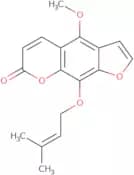
CAS:Phellopterin is a bioactive compound belonging to the class of furanocoumarins. It is extracted from various plants within the Apiaceae family, notably Angelica and Peucedanum species. These plants are found in diverse geographical regions and have been used in traditional medicine for centuries.Pureza:Min. 95%


![1-Benzyl-3-[3-(diethylamino)propoxy]-1H-indazole](/_next/image/?url=https%3A%2Fstatic.cymitquimica.com%2Fproducts%2F3D%2Fthumb-webp%2FFB162091.webp&w=3840&q=75)


![(1R,4R,5R)-4,7,7-Trimethyl-6-thiabicyclo[3.2.1]octane](/_next/image/?url=https%3A%2Fstatic.cymitquimica.com%2Fproducts%2F3D%2Fthumb-webp%2FFT60017.webp&w=3840&q=75)
![3-Oxabicyclo[3.1.0]hexane-2,4-dione](/_next/image/?url=https%3A%2Fstatic.cymitquimica.com%2Fproducts%2F3D%2Fthumb-webp%2FFO62778.webp&w=3840&q=75)