Compostos Policiclícos
Subcategorias de "Compostos Policiclícos"
- Acridinas(97 produtos)
- Antraquinonas(533 produtos)
- Ácidos antraquinonasulfónicos(16 produtos)
- Azobenzenos(270 produtos)
- Azonaftalenos(98 produtos)
- Azoxibenzenos(12 produtos)
- Azulenos(11 produtos)
- Benzimidazóis(1.475 produtos)
- Benzodioxanos(27 produtos)
- Benzofuranos(924 produtos)
- Benzotiofenos(700 produtos)
- Benzotriazóis(438 produtos)
- Binaftil(133 produtos)
- Carbazóis(462 produtos)
- Cromanos, Cromenos(480 produtos)
- Cumarinas(1.120 produtos)
- Ciclofanos(11 produtos)
- Fluorenos e Fluorenonas(381 produtos)
- Imidazopiridinas(10 produtos)
- Indans(118 produtos)
- Indazóis(2.038 produtos)
- Indenos(22 produtos)
- Indóis(3.984 produtos)
- Indolinas(119 produtos)
- Isatinas(234 produtos)
- Isobenzofuranos(17 produtos)
- Ftalimidas N-Substituída(153 produtos)
- Naftalenos(2.437 produtos)
- Naftiridina(17 produtos)
- Naftoquinona(2 produtos)
- Perilenos(36 produtos)
- Fenazinas(25 produtos)
- Ftalazinas(33 produtos)
- Ftalimida(153 produtos)
- Hidrocarbonetos aromáticos policíclicos (PAHs)(301 produtos)
- Polifenol(261 produtos)
- Pteridinas(52 produtos)
- Pireno(87 produtos)
- Quinuclidina(1 produtos)
- Tetracenos(7 produtos)
Foram encontrados 4573 produtos de "Compostos Policiclícos"
4',6-Diamidino-2-phenylindole 2HCl
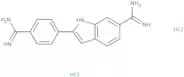
CAS:4',6-Diamidino-2-phenylindole 2HCl (DAB) is a chemical compound used as a histological stain to detect and identify different types of cancer cells. It has been shown to have cytotoxic activity against cancer cells in vitro, but not normal cells. DAB inhibits the growth of cancer cells by disrupting the mitochondrial membrane potential, leading to the release of cytochrome c and apoptosis. The use of this substance has shown that it is not toxic to maternal blood or embryonic tissues. DAB binds to nuclear DNA and polymerase chain reaction products, providing an accurate way to measure cancer cell proliferation.Fórmula:C16H17Cl2N5Pureza:Min. 97.5 Area-%Cor e Forma:Yellow PowderPeso molecular:350.25 g/mol3-Methylxanthine
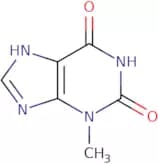
CAS:Produto ControladoDiuretic; cardiac stimulant; smooth muscle relaxant; bronchodilatorFórmula:C6H6N4O2Pureza:Min. 98 Area-%Cor e Forma:PowderPeso molecular:166.14 g/mol2,4-Dihydroxy-6-methoxyquinoline
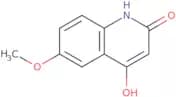
CAS:2,4-Dihydroxy-6-methoxyquinoline is a compound that exhibits antifungal properties. It has been shown to have activity against Aspergillus flavus, Aspergillus fumigatus, Candida albicans and other fungi. 2,4-Dihydroxy-6-methoxyquinoline also inhibits the growth of E. coli and A. aureus in vitro. Elemental analysis showed that this compound possesses antibacterial properties and can inhibit the growth of Staphylococcus aureus.Fórmula:C10H9NO3Pureza:Min. 95%Cor e Forma:PowderPeso molecular:191.18 g/mol6-Bromo-1H-indole-3-carboxylic acid
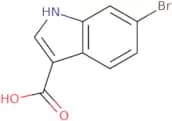
CAS:6-Bromo-1H-indole-3-carboxylic acid is a natural product that is isolated from the marine sponge Smenospongia purpurea. It was first reported in 1979 and has been used for the synthesis of other compounds. 6-Bromoindole, a precursor to 6-bromo-1H-indole-3-carboxylic acid, is biosynthesized from methyl ester and NMR spectra indicate that it has a dihedral angle of 173°. This compound has been shown to have antibacterial activity against staphylococcus.Fórmula:C9H6BrNO2Pureza:Min. 95%Cor e Forma:PowderPeso molecular:240.05 g/mol7-Fluoroisatin
CAS:7-Fluoroisatin is a crystalline compound that can exist as two different polymorphs. The metastable form of 7-fluoroisatin has been shown to have low energy vibrations and hydrogen bonding interactions, which are responsible for the intermolecular hydrogen bonding. 7-Fluoroisatin also has a tautomeric form that exists as a hydrochloride salt, which is not stable in the solid state. The protonated form of 7-fluoroisatin has been shown to be an excellent hydrogen bond acceptor, with the ability to stabilize long range interactions.Fórmula:C8H4FNO2Pureza:Min. 95%Cor e Forma:SolidPeso molecular:165.12 g/mol1,10-Phenanthroline monohydrate
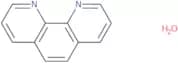
CAS:1,10-Phenanthroline monohydrate is a metal chelate that binds to DNA by hydrogen bonds. It has been shown to have an intramolecular hydrogen and a linear calibration curve with a coefficient of determination (r2) of 0.998. The rate constant for the reaction of 1,10-phenanthroline monohydrate with DNA is 5.00 x 10 M-1 s-1 at 25°C in water and pH 7.4 buffer. The coordination geometry for 1,10-phenanthroline monohydrate is octahedral with the axial ligands occupying the equatorial positions and the equatorial ligands occupying the axial positions. This compound has been shown to be active against HL-60 cells, which causes cancerous transformations in vitro. Fluorescence spectrometry data shows that 1,10-phenanthroline monohydrate can bind to DNA in vitro but not in vivo.Fórmula:C12H10N2OPureza:Min. 95%Cor e Forma:Off-White PowderPeso molecular:198.22 g/mol4-Nitroindole
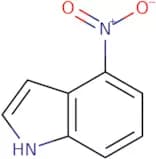
CAS:4-Nitroindole is a chemical compound that is used to synthesize 5-hydroxytryptamine (5-HT) and also has been used as a substitute for tryptophan in the synthesis of serotonin. It can be prepared by reacting sodium nitrite with an organic acid such as acetic acid or propionic acid. The reaction proceeds through a diazonium salt intermediate, which is hydrolyzed with hydrochloric acid to give 4-nitroindole. 4-Nitroindole can also be prepared by the Friedel-Crafts reaction between an aromatic nitro compound and an alkyl halide. The hydrogen bond between the hydroxyl group and nitrogen atom in the molecule makes it soluble in organic solvents. In addition, the constant boiling point of the compound allows it to be analyzed using gas chromatography.
Fórmula:C8H6N2O2Pureza:Min. 95%Cor e Forma:PowderPeso molecular:162.15 g/mol6-Mercaptopurine hydrate
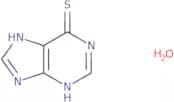
CAS:6-Mercaptopurine is a purine analog that suppresses the production of white blood cells by inhibiting the enzyme thiopurine methyltransferase. It has been used to treat bowel disease and also for long-term suppression of the immune system in patients with autoimmune diseases. 6-Mercaptopurine is metabolized to 6-mercaptopurine, which is then converted to dinucleotide phosphate (dNTP) by group P2 enzymes. This conversion allows 6-mercaptopurine to inhibit dNTP synthesis and cell division. The effects of 6-mercaptopurine are potentiated when given in conjunction with azathioprine, another drug that inhibits purine metabolism. 6-Mercaptopurine is not active against human serum albumin or erythrocytes because it cannot be cleaved into an active form by these proteins. However, it does inhibit enzyme activities such as DNA polymerase, RNA polymerase, and proteinFórmula:C5H4N4S•H2OPureza:Min. 97 Area-%Cor e Forma:Yellow PowderPeso molecular:152.18 g/mol3-(2-Aminoethyl)-5-methoxy-1H-indole-2-carboxylic acid
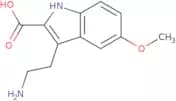
CAS:3-(2-Aminoethyl)-5-methoxy-1H-indole-2-carboxylic acid is a fine chemical that is used as a building block for research chemicals, reagents, and specialty chemicals. It has the CAS No. 52648-13-2. 3-(2-Aminoethyl)-5-methoxy-1H-indole-2-carboxylic acid is also a versatile building block for synthesis of complex compounds with high quality and is a reaction component in many reactions. This compound can serve as an intermediate or scaffold in chemical synthesis.Fórmula:C12H14N2O3Pureza:Min. 95%Cor e Forma:White PowderPeso molecular:234.25 g/mol5-Hydroxyisoquinoline
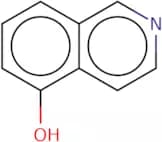
CAS:5-Hydroxyisoquinoline is a quinoline derivative that is synthesized from aziridine. It has been shown to be a potent insulin sensitizing agent in mice with type 2 diabetes mellitus. 5-Hydroxyisoquinoline has been shown to inhibit the activity of purified enzymes preparations and show high selectivity for chloride channels, which are responsible for the transport of chloride ions across cell membranes. This inhibition leads to an influx of protons into the cell, which may lead to a change in the redox potential and changes in the molecular structure of the molecule. The reaction mechanism involves substitution at position 5 of the isoquinoline ring by hydroxy groups (OH).Fórmula:C9H7NOPureza:Min. 95%Cor e Forma:Yellow PowderPeso molecular:145.16 g/mol8-Hydroxy-7-methoxycoumarin
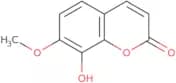
CAS:8-Hydroxy-7-methoxycoumarin is a fluorescent compound, which is a derivative of the coumarin family. This compound is typically sourced through synthetic organic chemistry processes involving the modification of natural coumarin compounds. Its mode of action involves the ability to absorb ultraviolet light and re-emit it as visible light, a characteristic feature of fluorescent molecules. This property makes it particularly useful in scientific research.
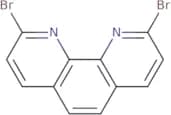
Fórmula:C10H8O4Pureza:Min. 95%Cor e Forma:PowderPeso molecular:192.17 g/mol2,9-Dibromo-1,10-phenanthroline
CAS:2,9-Dibromo-1,10-phenanthroline is a molecule that has been shown to be an effective sensitizer for the photochemical conversion of chlorine dioxide to ozone. It has been used as a model compound in molecular orbital calculations and has been shown to enhance the yield of ozone by up to 3%. The emission spectrum of 2,9-dibromo-1,10-phenanthroline displays a peak at 362 nm, which lies in the ultraviolet region. The molecule is orthorhombic and crystallizes in space group P2/c with cell dimensions a = 17.8 Å and c = 18.7 Å.Fórmula:C12H6Br2N2Pureza:Min. 95%Cor e Forma:White PowderPeso molecular:338 g/mol4-Fluoroisoquinoline
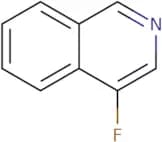
CAS:4-Fluoroisoquinoline is a synthetic compound that can be produced by the reduction of an acetonitrile-chlorinated isoquinoline compound. It is also possible to produce 4-fluoroisoquinoline by the reaction of chlorinating agents with an aldehyde, followed by the addition of phosphorus oxychloride and fluorine. The reductive sulfonation of 4-fluoroisoquinoline can be achieved by reacting it with sulfur trioxide, which is in turn generated from phosphorous oxychloride and sulfur dioxide. This process produces the desired product in good yields.
Fórmula:C9H6FNPureza:Min. 95%Cor e Forma:Brown PowderPeso molecular:147.15 g/mol5-Cyanoindole
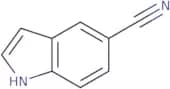
CAS:5-Cyanoindole is a hydrophobic molecule that has been shown to have an inhibitory effect on the trifluoroacetic acid-induced fluorescence in the presence of chloride ions. It is also able to bind peptides and has been used as an antimicrobial peptide. 5-Cyanoindole can be synthesized electrochemically or by electrochemical impedance spectroscopy. The synthesis of 5-cyanoindole can be achieved through a Friedel-Crafts reaction, followed by a hydrolysis with hydrogen peroxide and then a reduction with sodium borohydride.
!-- END OF PRODUCT DESCRIPTION -->Fórmula:C9H6N2Cor e Forma:White PowderPeso molecular:142.16 g/mol2-Phenylquinoline-4-carbohydrazide
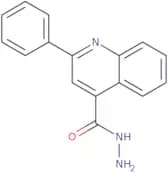
CAS:2-Phenylquinoline-4-carbohydrazide is an antibacterial agent that binds to bacterial DNA gyrase and topoisomerase, which are enzymes that maintain the integrity of bacterial DNA. It also has significant anti-inflammatory activity and can be used for the treatment of skin disorders, such as acne. 2-Phenylquinoline-4-carbohydrazide has been shown to induce apoptosis in human dermal fibroblast cells. This drug has been shown to have anticancer activity in vitro and in vivo. The anticancer activity of this drug may be due to its ability to inhibit cancer cell proliferation by binding to DNA gyrase and topoisomerase, which are enzymes that maintain the integrity of bacterial DNA.Fórmula:C16H13N3OPureza:Min. 95%Peso molecular:263.29 g/molL(+)-Amethopterin hydrate
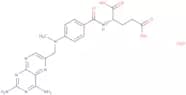
CAS:L(+)-Amethopterin hydrate is an immunosuppressant that suppresses the immune system by inhibiting RNA synthesis. It is a structural analogue of folic acid and has been shown to be effective in treating autoimmune diseases, such as rheumatoid arthritis. L(+)-Amethopterin hydrate is a neutral compound that is soluble in water and microsomal membranes, making it more easily absorbed through the gut than other compounds of this class. It also has been shown to have no toxic effects on cardiac cells at therapeutic concentrations. These properties make L(+)-Amethopterin hydrate an attractive candidate for treating autoimmune diseases when other treatments have failed.Fórmula:C20H22N8O5·xH2OPureza:Min. 98 Area-%Cor e Forma:Yellow PowderPeso molecular:454.44 g/mol5-Chloroindole-2-carboxylic acid methyl ester
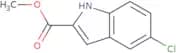
CAS:5-Chloroindole-2-carboxylic acid methyl ester is a potent inhibitor of the enzyme tyrosine kinase in cell culture, with an IC50 value of 0.5 nM. It has been shown to inhibit the growth of cancer cells (e.g., MDA-MB231, MCF-7) in vitro and in vivo. The IC50 values for inhibition of MDA-MB231 and MCF-7 cells are 0.1 and 10 nM, respectively. 5-Chloroindole-2-carboxylic acid methyl ester binds to the ATP binding site on tyrosine kinase, preventing ATP from binding and inhibiting phosphorylation of the receptor protein. This allows the receptor's downstream signaling pathways to be blocked, which leads to cell growth inhibition by arresting cell cycle progression at G0/G1 phase or inducing apoptosis.Fórmula:C10H8ClNO2Pureza:Min. 95%Peso molecular:209.63 g/mol7H-Imidazo[4,5-d]pyrimidine
CAS:7H-imidazo[4,5-d]pyrimidine is a small molecule that exhibits receptor activity against toll-like receptors. It has been shown to inhibit the production of proinflammatory cytokines and chemokines in HL60 cells. 7H-imidazo[4,5-d]pyrimidine also inhibits the activities of enzymes involved in purine metabolism and cellular metabolic processes, as well as intracellular targets including protein kinases, phosphatases and transcription factors. 7H-imidazo[4,5-d]pyrimidine has been shown to be effective against solid tumours such as murine sarcoma virus and plant tumors. This drug also inhibits the enzymatic activity of p2y receptors that are involved in inflammation and platelet aggregation.Fórmula:C5H4N4Pureza:Min. 95%Cor e Forma:PowderPeso molecular:120.11 g/molBenazepril HCl
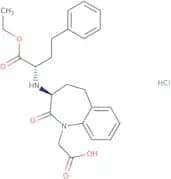
CAS:Angiotensin-converting enzyme inhibitor; anti-hypertensiveFórmula:C24H29ClN2O5Pureza:Min. 95%Cor e Forma:PowderPeso molecular:460.95 g/mol(8S,10S,11S,13S,14S,17S)-9-Fluoro-11-Hydroxy-17-(2-Hydroxyacetyl)-10,13-Dimethyl-2,6,7,8,11,12,14,15,16,17-Decahydro-1H-Cyclopenta[a ]Phenanthren-3-One
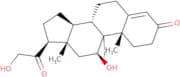
CAS:Produto Controlado(8S,10S,11S,13S,14S,17S)-9-Fluoro-11-hydroxy-17-(2-hydroxyacetyl)-10,13-dimethyl-2,6,7,8,11,12,14,15,16,17-decahydrocyclopenta[a]phenanthren-3-one (fluorometholone) is a corticosteroid that is used in the treatment of asthma and other respiratory diseases. Fluorometholone has been shown to have strong antiinflammatory activity and inhibit the production of inflammatory cytokines. It also has mineralocorticoid activity and can be used to treat adrenal insufficiency. This drug has potent potencies structurally similar to glucocorticoids and mineralocorticoids.Fórmula:C21H29FO4Pureza:Min. 95%Peso molecular:364.45 g/mol


![7H-Imidazo[4,5-d]pyrimidine](/_next/image/?url=https%3A%2Fstatic.cymitquimica.com%2Fproducts%2F3D%2Fthumb-webp%2FFI34476.webp&w=3840&q=75)