Compostos Policiclícos
Os compostos policíclicos são moléculas orgânicas que contêm múltiplos anéis interconectados. Esses compostos incluem hidrocarbonetos aromáticos policíclicos e outros sistemas de anéis complexos. Eles são significativos na ciência dos materiais, produtos farmacêuticos e eletrônica orgânica. Na CymitQuimica, oferecemos compostos policíclicos de alta qualidade para apoiar suas pesquisas e aplicações industriais, garantindo resultados confiáveis e eficazes em seus projetos.
Subcategorias de "Compostos Policiclícos"
- Acridinas(97 produtos)
- Antraquinonas(533 produtos)
- Ácidos antraquinonasulfónicos(16 produtos)
- Azobenzenos(270 produtos)
- Azonaftalenos(98 produtos)
- Azoxibenzenos(12 produtos)
- Azulenos(11 produtos)
- Benzimidazóis(1.475 produtos)
- Benzodioxanos(27 produtos)
- Benzofuranos(924 produtos)
- Benzotiofenos(700 produtos)
- Benzotriazóis(438 produtos)
- Binaftil(133 produtos)
- Carbazóis(462 produtos)
- Cromanos, Cromenos(480 produtos)
- Cumarinas(1.122 produtos)
- Ciclofanos(11 produtos)
- Fluorenos e Fluorenonas(381 produtos)
- Imidazopiridinas(10 produtos)
- Indans(118 produtos)
- Indazóis(2.037 produtos)
- Indenos(22 produtos)
- Indóis(3.988 produtos)
- Indolinas(119 produtos)
- Isatinas(234 produtos)
- Isobenzofuranos(17 produtos)
- Ftalimidas N-Substituída(153 produtos)
- Naftalenos(2.436 produtos)
- Naftiridina(17 produtos)
- Naftoquinona(2 produtos)
- Perilenos(36 produtos)
- Fenazinas(25 produtos)
- Ftalazinas(33 produtos)
- Ftalimida(153 produtos)
- Hidrocarbonetos aromáticos policíclicos (PAHs)(270 produtos)
- Polifenol(261 produtos)
- Pteridinas(52 produtos)
- Pireno(87 produtos)
- Quinuclidina(1 produtos)
- Tetracenos(7 produtos)
Exibir 32 mais subcategorias
Foram encontrados 4574 produtos de "Compostos Policiclícos"
Ordenar por
Pureza (%)
0
100
|
0
|
50
|
90
|
95
|
100
1,2-Diazabicyclo[2.2.2]octan-3-one
CAS:Produto Controlado<p>Applications 1,2-Diazabicyclo[2.2.2]octan-3-one is an intermediate used in the synthesis of Bicyclo Risperidone (B382800), which is an impurity of Risperidone (R525000); a combined serotonin (5-HT2) and dopamine (D2) receptor antagonist.<br>References Jannssen, P.A.J., et al.: J. Pharmacol. Exp. Ther., 244, 685 (1988); Gelders, Y.G., et al.: Pharmacopsychiatry, 23, 206 (1990); Green, B.: Curr. Med. Res. Opin., 16, 57 (2000)<br></p>Fórmula:C6H10N2OCor e Forma:NeatPeso molecular:126.166-Chloropurine, Hydrochloride
CAS:Produto Controlado<p>Applications 6-Chloropurine, Hydrochloride (cas# 88166-54-5 ) is a compound useful in organic synthesis.<br></p>Fórmula:C5H3ClN4·ClHCor e Forma:NeatPeso molecular:191.0181,4-Dioxa-8-azaspiro[4.5]decane-8-carboxylic Acid 1,1-Dimethylethyl Ester
CAS:Produto Controlado<p>Applications 1,4-Dioxa-8-azaspiro[4.5]decane-8-carboxylic Acid 1,1-Dimethylethyl Ester (cas# 123387-51-9) is a compound useful in organic synthesis.<br></p>Fórmula:C12H21NO4Cor e Forma:NeatPeso molecular:243.32,9-Dimethyl-1,10-phenanthroline hemihydrate
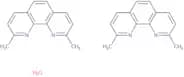
CAS:<p>Chelating agent used to detect aqueous copper ions by electrochemiluminescence</p>Fórmula:C14H12N2•(H2O)0Pureza:Min. 95%Cor e Forma:PowderPeso molecular:217.27 g/mol4,7-Dichloroisatin
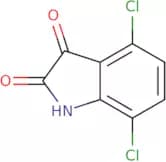
CAS:<p>4,7-Dichloroisatin is an organic compound that is synthesized by ring-opening of oxindole. It is a bifunctional molecule that can be used for the synthesis of other organic compounds. 4,7-Dichloroisatin has been found to be an efficient method for the synthesis of thiazolidinedione derivatives and can be used as a control experiment for this type of reaction. The mechanism for the reaction includes nitroaldol addition to the C=O group, followed by nucleophilic attack on the carbonyl group to form a tetrahedral intermediate. The intermediate then collapses to form a new C=N bond and release acetonitrile.</p>Fórmula:C8H3Cl2NO2Pureza:Min. 95%Cor e Forma:SolidPeso molecular:216.02 g/mol2-Bromoquinoline
CAS:<p>2-Bromoquinoline is an antimicrobial agent that binds to bacterial receptors. It is a bifunctional molecule with two reactive groups: a hydroxyl group and a nitrogen atom. 2-Bromoquinoline has been shown to inhibit the growth of various bacteria, including Mycobacterium tuberculosis, Staphylococcus epidermidis and Streptococcus pyogenes, by preventing the formation of a proton gradient across the bacterial membrane. 2-Bromoquinoline also inhibits hyperproliferative diseases such as amyloidosis in mice by binding to amyloid fibrils. This drug has been shown to cause DNA damage in mammalian cells, which may be due to its ability to form hydrogen bonds with methyl ethyl groups on DNA bases.</p>Fórmula:C9H6BrNPureza:Min. 95%Cor e Forma:White To Yellow To Pink SolidPeso molecular:208.05 g/molAcridone
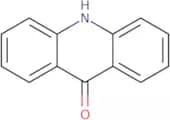
CAS:<p>Acridone is a potent antimicrobial agent that inhibits bacteria by binding to the duplex DNA. Acridone has been shown to have inhibitory properties against wastewater treatment, which may be due to its ability to bind with the bacterial dna and inhibit the replication of bacterial cells. Acridone also has genotoxic activity, as it has been shown to react with nuclei in carcinoma cell lines and cause DNA strand breakage. Acridone is a fluorescent probe that can be used for electrochemical impedance spectroscopy (EIS). It binds to the complementary sequence of double-stranded DNA and causes an increase in the impedance of a solution when exposed to an electric current. This property can be used for analytical methods such as gel electrophoresis or chromatography.</p>Fórmula:C13H9NOPureza:Min. 95%Cor e Forma:PowderPeso molecular:195.22 g/mol6-Aza-5-methyl-1H-indazole
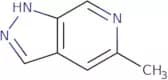
CAS:<p>6-Aza-5-methyl-1H-indazole is a chemical compound that acts as a building block for the synthesis of pharmaceuticals and other compounds. It is used in research for the development of new drugs, such as antihypertensive agents, antibiotics, and immunosuppressants. 6-Aza-5-methyl-1H-indazole has been shown to be an effective intermediate in the synthesis of many complex compounds, including cephalosporins, penicillins, carbapenems, and aminoglycosides. This versatile reagent can be used to synthesize a wide variety of organic compounds.</p>Fórmula:C7H7N3Pureza:Min. 95%Cor e Forma:White To Beige SolidPeso molecular:133.15 g/mol4-Methylindole
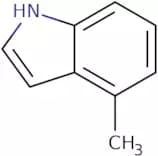
CAS:4-Methylindole is an anthranilic acid derivative that inhibits the polymerase chain reaction (PCR) by binding to the polymerase and preventing DNA replication. 4-Methylindole has been shown to inhibit the production of human liver proteins in vitro, but its effects on other tissues have not been determined. 4-Methylindole is a low toxicity compound that is metabolized by hydrolysis, which can be reversed with acid or base. It also binds to and irreversibly oxidizes human protein, which may be due to its reversible oxidation properties. This chemical has been found in capsicum annuum, which produces it as a natural defense against herbivores.Fórmula:C9H9NPureza:Min. 95%Cor e Forma:LiquidPeso molecular:131.17 g/mol2-Azabicyclo[2.2.1]heptane
CAS:2-Azabicyclo[2.2.1]heptane is a lactam that has been synthesized in the laboratory. The compound exhibits significant antiproliferative activity and is shown to have a stereoselective, stereogenic, nucleophilic attack on amides. 2-Azabicyclo[2.2.1]heptane has been used to study the mechanisms of neurodegenerative diseases such as Parkinson's disease and Alzheimer's disease. The conformational properties of this compound can be determined by NMR spectra, which show that it has a skeleton with significant conformational flexibility.Fórmula:C6H11NPureza:Min. 95%Cor e Forma:Red PowderPeso molecular:97.16 g/mol6-Hydroxy-3,4-dihydro-1H-quinoline-2-one
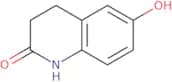
CAS:This is a quinoline derivative that has been shown to have inotropic and cardioprotective effects. It has been shown to increase the duration of action potentials and contractions in isolated heart muscle, as well as to improve the function of the heart by reducing the rate of myocardial oxygen consumption. 6-Hydroxy-3,4-dihydro-1H-quinoline-2-one has been shown to have anti-inflammatory properties and may be useful for treating respiratory diseases such as asthma. This compound is also used as a precursor for some pharmaceutical drugs, including chloroquine, mefloquine, amodiaquine, and primaquine. The compound is metabolized into conjugates that are recycled back into the body or excreted in human urine; this process is regulated by the balance between conjugation reactions and hydrolysis reactions.Fórmula:C9H9NO2Pureza:Min. 95%Peso molecular:163.17 g/molIndole-3-acetyl-L-alanine acid methyl ester
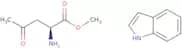
CAS:<p>Please enquire for more information about Indole-3-acetyl-L-alanine acid methyl ester including the price, delivery time and more detailed product information at the technical inquiry form on this page</p>Fórmula:C14H16N2O3Pureza:Min. 95%Peso molecular:260.29 g/mol5-Methoxyindole-3-acetic acid
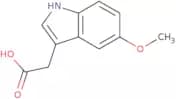
CAS:5-Methoxyindole-3-acetic acid (5MI) is an endogenous indole and metabolite of melatonin that is found in high concentrations in the human serum. 5MI has been shown to inhibit the activity of cyclase enzymes and may be a specific inhibitor of the type I form of estrone sulfate, which is involved in estrogen production. This agent also inhibits matrix metalloproteinases and aminotransferases, which are enzymes that play a role in oxidative injury. 5MI also has a fluorescent derivative that can be used as a probe for biological samples or to study the target enzyme.Fórmula:C11H11NO3Pureza:Min. 97.5 Area-%Cor e Forma:PowderPeso molecular:205.21 g/mol6-Bromo-4-chloro-1H-indazole
CAS:<p>6-Bromo-4-chloro-1H-indazole is an organic compound that has been reported as a reaction component, reagent, and useful scaffold in the synthesis of complex compounds. It is also a speciality chemical with versatile building block and useful intermediate properties. 6-Bromo-4-chloro-1H-indazole is a fine chemical with complex structure and high purity.</p>Fórmula:C7H4BrClN2Pureza:Min. 95%Cor e Forma:Off-white to brown solid.Peso molecular:231.48 g/mol1,2,3,4-Tetrahydrophenanthren-4-one
CAS:<p>1,2,3,4-Tetrahydrophenanthren-4-one is a synthetic quinone that is used as an intermediate in the Diels–Alder reaction. The compound has been shown to react with benzyne and amine molecules to form semicarbazones. 1,2,3,4-Tetrahydrophenanthren-4-one can be used as a reactive probe for studying intramolecular interactions. It can also be used to synthesize polycyclic compounds such as tetrafluoroborates. 1,2,3,4-Tetrahydrophenanthren-4-one can also serve as a reagent for the synthesis of frameworks such as zeolites.</p>Fórmula:C14H12OPureza:Min. 95%Cor e Forma:PowderPeso molecular:196.24 g/mol2,2'-Bipyridine-3,3'-dicarboxylic acid
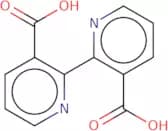
CAS:2,2'-Bipyridine-3,3'-dicarboxylic acid is a coordination compound that contains two carboxylic acid groups. It forms a dihydrate in water and is orthorhombic in crystal form. The molecule can be represented by the following chemical structure:Fórmula:C12H8N2O4Pureza:Min. 95%Cor e Forma:SolidPeso molecular:244.2 g/mol7-Isopropyl-1,4-dimethylazulene-3-carboxaldehyde
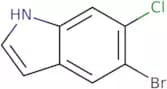
CAS:Fórmula:C16H18OPureza:>97.0%(GC)Cor e Forma:Gray to Dark purple to Black powder to crystalPeso molecular:226.325-Bromo-6-chloro-1H-indole
CAS:<p>5-Bromo-6-chloro-1H-indole is a fine chemical that is used as a building block for research chemicals, reagents, and speciality chemicals. It is soluble in chloroform and benzene, but insoluble in water. This product can be used as a reaction component or a useful intermediate in the production of complex compounds. 5-Bromo-6-chloro-1H-indole has been reported to be an effective scaffold for the synthesis of many novel compounds with potential applications such as pharmaceuticals, agrochemicals, and dyes.</p>Fórmula:C8H5BrClNPureza:Min. 95%Cor e Forma:PowderPeso molecular:230.49 g/mol5-Nitroquinoline
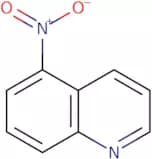
CAS:5-Nitroquinoline is a nitrogen-containing heterocyclic organic compound. It is a white solid that has a melting point of 104 °C and a boiling point of 212 °C. 5-Nitroquinoline can be synthesized by the addition of sodium carbonate to 6-nitroquinoline in hydrochloric acid. The product is then purified by vacuum distillation and recrystallization from nitric acid and acetic acid. 5-Nitroquinoline can be used as an intermediate in the synthesis of other molecules, such as quinolones, which are used in pharmaceuticals. This compound has been shown to cause metastatic colorectal cancer in mice, but not in human liver cells or human lymphocytes.Fórmula:C9H6N2O2Pureza:Min. 95%Cor e Forma:Light (Or Pale) Yellow To Dark Yellow SolidPeso molecular:174.16 g/molEllagic Acid
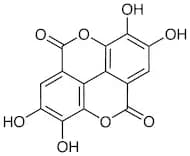
CAS:Fórmula:C14H6O8Pureza:>95.0%(T)(HPLC)Cor e Forma:White to Light yellow powder to crystalPeso molecular:302.19
![1,2-Diazabicyclo[2.2.2]octan-3-one](/_next/image/?url=https%3A%2Fstatic.cymitquimica.com%2Fproducts%2FTR%2Fthumb-webp%2FD417148.webp&w=3840&q=75)


![1,4-Dioxa-8-azaspiro[4.5]decane-8-carboxylic Acid 1,1-Dimethylethyl Ester](/_next/image/?url=https%3A%2Fstatic.cymitquimica.com%2Fproducts%2FTR%2Fthumb-webp%2FD485270.webp&w=3840&q=75)


![2-Azabicyclo[2.2.1]heptane](/_next/image/?url=https%3A%2Fstatic.cymitquimica.com%2Fproducts%2F3D%2Fthumb-webp%2FFA116876.webp&w=3840&q=75)