Cumarinas
As cumarinas são uma classe de compostos aromáticos policíclicos que consistem em um anel benzênico fundido a um anel de pirona. Esses compostos são amplamente utilizados como fragrâncias, agentes aromatizantes e na síntese de produtos farmacêuticos e agroquímicos. As cumarinas exibem várias atividades biológicas, incluindo propriedades anticoagulantes, anti-inflamatórias e antimicrobianas. Na CymitQuimica, oferecemos uma ampla seleção de cumarinas de alta qualidade para apoiar suas pesquisas e aplicações industriais.
Foram encontrados 1121 produtos de "Cumarinas"
Ordenar por
Pureza (%)
0
100
|
0
|
50
|
90
|
95
|
100
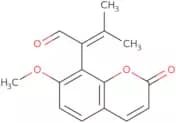
Murralongin
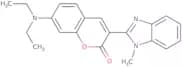
CAS:<p>Murralongin is a natural compound that falls under the category of sesquiterpenes, a class of terpenoids characterized by their three isoprene units. It is derived from the leaves and stems of the plant Eremophila mitchellii, a species known for its rich diversity of bioactive compounds often utilized in traditional medicine. The primary mode of action of Murralongin involves modulation of specific enzymatic pathways, potentially influencing a range of biological processes, including anti-inflammatory and antimicrobial activities.</p>Fórmula:C15H14O4Pureza:Min. 95%Peso molecular:258.27 g/mol7-(Diethylamino)-3-(1-methyl-2-benzimidazolyl)coumarin
CAS:<p>7-(Diethylamino)-3-(1-methyl-2-benzimidazolyl)coumarin is a fluorescent dye, which is synthesized through chemical derivatization of coumarin compounds. Originating from coumarin, a naturally occurring compound in plants, this dye is particularly noted for its ability to fluoresce under UV and visible light.</p>Fórmula:C21H21N3O2Pureza:Min. 95%Peso molecular:347.41 g/molCichoriin
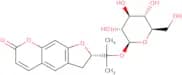
CAS:<p>Cichoriin is a coumarin glycoside, which is a type of phytochemical compound found in certain plants. It is primarily sourced from plants of the Asteraceae family, particularly chicory (Cichorium intybus). The compound exhibits its biochemical effects by interacting with various cellular pathways, including acting as an antioxidant and displaying potential anti-inflammatory and antimicrobial properties.</p>Fórmula:C15H16O9Pureza:Min. 95%Peso molecular:340.28 g/mol7-Geranyloxycoumarin
CAS:<p>7-Geranyloxycoumarin is a naturally occurring coumarin derivative, which is primarily sourced from plant species in the Rutaceae family. It is a bioactive compound known for its presence in various essential oils and its contribution to the properties of these plant extracts. The mode of action of 7-Geranyloxycoumarin involves interactions at the cellular level, including enzyme inhibition and modulation of signal transduction pathways, which can lead to diverse pharmacological effects.</p>Fórmula:C19H22O3Pureza:Min. 95%Cor e Forma:PowderPeso molecular:298.38 g/molcis-Khellactone
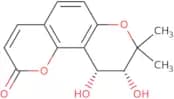
CAS:<p>cis-Khellactone is a naturally occurring organic compound, which is a type of coumarin derivative sourced predominantly from the roots of Peucedanum and Angelica species, plants native to various regions. These botanical sources are known for yielding secondary metabolites with diverse biological properties.</p>Fórmula:C14H14O5Pureza:Min. 95%Peso molecular:262.26 g/molcis-Isokhellactone
CAS:<p>cis-Isokhellactone is a bioactive compound that belongs to the class of sesquiterpene lactones, which is isolated from plants in the genus Khella. With a well-characterized molecular structure, this compound exhibits significant binding affinity for cellular targets that are crucial in the regulation of cell proliferation and apoptosis. The mode of action involves the modulation of signaling pathways involved in cell cycle regulation and the induction of apoptosis in neoplastic cells.</p>Fórmula:C14H14O5Pureza:Min. 95%Peso molecular:262.26 g/molPhellopterin
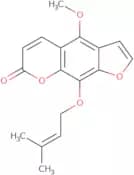
CAS:<p>Phellopterin is a bioactive compound belonging to the class of furanocoumarins. It is extracted from various plants within the Apiaceae family, notably Angelica and Peucedanum species. These plants are found in diverse geographical regions and have been used in traditional medicine for centuries.</p>Pureza:Min. 95%5,7-Dihydroxycoumarin
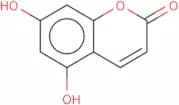
CAS:<p>5,7-Dihydroxycoumarin is a natural product isolated from the dichloromethane extract of the inflorescences of Macaranga triloba.</p>Fórmula:C9H6O4Pureza:98.76%Cor e Forma:SolidPeso molecular:178.14(+)-Peucedanol
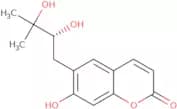
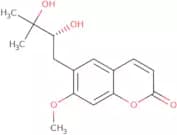
CAS:<p>(+)-Peucedanol is a sesquiterpene compound, which is a type of natural organic compound composed of three isoprene units resulting in a 15-carbon backbone. It is derived from various species within the plant genus Peucedanum, known for their rich content of bioactive compounds. The stereoisomerism indicated by the "(+)" suggests a specific three-dimensional configuration that may influence its biological activity.</p>Fórmula:C14H16O5Pureza:Min. 95%Peso molecular:264.27 g/molByakangelicin
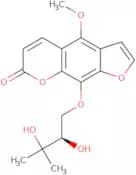
CAS:<p>Byakangelicin is a furanocoumarin compound, which is derived from the roots of various Angelica plant species. This compound is of particular interest due to its complex chemical structure that allows it to interact with biological systems in distinctive ways. Byakangelicin's mode of action includes the inhibition of specific enzymes, interference with signal transduction pathways, and potential modulation of cellular responses, making it a valuable subject for various pharmacological studies.</p>Fórmula:C17H18O7Pureza:Min. 95%Cor e Forma:PowderPeso molecular:334.32 g/molMarmesinin
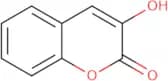
CAS:<p>Marmesinin is a furanocoumarin compound, which is a type of phytochemical derived from certain plant species. It is specifically obtained from the plant Aegle marmelos, commonly known as the bael tree. Marmesinin acts primarily through mechanisms that are characteristic of coumarins, such as influencing biochemical pathways involved in cellular growth and immune response modulation.</p>Fórmula:C20H24O9Pureza:Min. 95%Peso molecular:408.4 g/mol3-Hydroxycoumarin
CAS:<p>3-Hydroxycoumarin is a coumarin derivative, which is a type of organic compound with significant pharmacological interest. It is derived from the parent structure of coumarin, naturally found in various plant sources such as tonka beans and sweet clover. Its molecular structure includes a hydroxyl group added at the third position of the coumarin backbone, conferring distinct chemical properties.</p>Fórmula:C9H6O3Pureza:Min. 95%Cor e Forma:PowderPeso molecular:162.14 g/molPeucedanol methyl ether
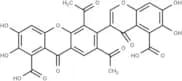
CAS:<p>Peucedanol methyl ether is a bioactive natural compound, which is derived from certain species of the Peucedanum genus, commonly found in various geographic regions. This compound is predominantly obtained from natural extracts through advanced chromatographic techniques. Its molecular structure is characterized by its functional groups, which contribute to its biological activities.</p>Fórmula:C15H18O5Pureza:Min. 95%Vinaxanthone
CAS:<p>Vinaxanthone (SM-345431), an extract from Penicillium chrysogenum, is a semaphorin3A inhibitor with antimicrobial activity.</p>Fórmula:C28H16O14Pureza:82.56% - 97.8%Cor e Forma:SolidPeso molecular:576.42Seselin
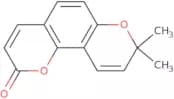
CAS:<p>Seselin is a furanocoumarin, a type of organic compound, which is typically sourced from various plant species, particularly those in the Apiaceae family. This compound is characterized by a furan ring fused with a coumarin core, contributing to its unique chemical structure.</p>Fórmula:C14H12O3Pureza:Min. 95%Peso molecular:228.24 g/mol(+)-Phyllodulcin
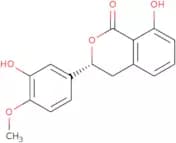
CAS:<p>(+)-Phyllodulcin is a natural sweetener, which is predominantly derived from the leaves of the Hydrangea macrophylla var. thunbergii, commonly referred to as the sweet hydrangea. As a compound, it functions primarily as a sweetening agent by interacting with taste receptors on the human tongue, offering a sweetness intensity significantly greater than sucrose.</p>Fórmula:C16H14O5Pureza:Min. 95%Peso molecular:286.28 g/molElsamicin B
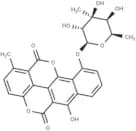
CAS:<p>Elsamicin B is an antitumor antibiotic belonging to the Chartreusin group.</p>Fórmula:C26H22O10Cor e Forma:SolidPeso molecular:494.447Coumafuryl
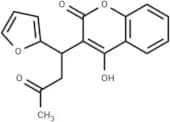
CAS:<p>Coumafuryl is a coumarin-based rodenticide. It inhibits the metabolic cycle of vitamin K, thereby interfering with the biosynthesis of vitamin K-dependent clotting factors (factors II, VII, IX, and X) in the liver.</p>Fórmula:C17H14O5Cor e Forma:SolidPeso molecular:298.29Dalbergin
CAS:<p>Dalbergin analytical standard provided with chromatographic purity, to be used as reference material for qualitative determination.</p>Fórmula:C16H12O4Pureza:(HPLC) ≥90%Cor e Forma:PowderPeso molecular:268.28Coumarin 314
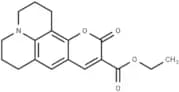
CAS:<p>Coumarin 314 is a useful organic compound for research related to life sciences. The catalog number is T66908 and the CAS number is 55804-66-5.</p>Fórmula:C18H19NO4Cor e Forma:SolidPeso molecular:313.3537-(Diethylamino)-4-methyl-2H-chromen-2-one
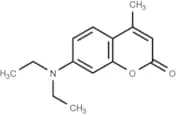
CAS:<p>7-(Diethylamino)-4-methyl-2H-chromen-2-one is a useful organic compound for research related to life sciences.</p>Fórmula:C14H17NO2Cor e Forma:SolidPeso molecular:231.30