Cumarinas
As cumarinas são uma classe de compostos aromáticos policíclicos que consistem em um anel benzênico fundido a um anel de pirona. Esses compostos são amplamente utilizados como fragrâncias, agentes aromatizantes e na síntese de produtos farmacêuticos e agroquímicos. As cumarinas exibem várias atividades biológicas, incluindo propriedades anticoagulantes, anti-inflamatórias e antimicrobianas. Na CymitQuimica, oferecemos uma ampla seleção de cumarinas de alta qualidade para apoiar suas pesquisas e aplicações industriais.
Foram encontrados 1125 produtos de "Cumarinas"
Ordenar por
Pureza (%)
0
100
|
0
|
50
|
90
|
95
|
100
(-)-Oxypeucedanin
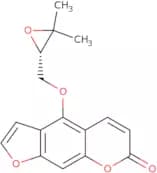
CAS:(-)-Oxypeucedanin is a natural furanocoumarin, which is a type of organic compound. Furanocoumarins are derived from specific plants and are known for their complex structures and biological activities. (-)-Oxypeucedanin is sourced primarily from plants belonging to the Apiaceae family, such as Peucedanum species.Fórmula:C16H14O5Pureza:Min. 95%Cor e Forma:White PowderPeso molecular:286.28 g/molScopolin
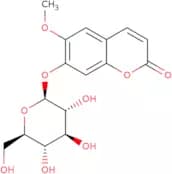
CAS:Scopolin is a coumarin glucoside, which is derived from the plant secondary metabolism. It originates predominantly from species within the Solanaceae family, including tobacco and potato plants. Its biosynthesis involves the conversion of scopoline, a precursor molecule, through glucosylation. This process is catalyzed by glucosyltransferases, which facilitate the attachment of a glucose moiety.
Fórmula:C16H18O9Pureza:Min. 98 Area-%Cor e Forma:White PowderPeso molecular:354.31 g/mol7-Methoxy-4-methylcoumarin
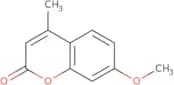
CAS:7-Methoxy-4-methylcoumarin is a synthetic organic compound, which is a derivative of coumarins—a class of compounds widely found in plants. This compound is primarily synthesized through organic chemical reactions rather than extracted directly from natural sources. Its mode of action involves exhibiting fluorescence, which makes it a valuable probe in various scientific studies.Fórmula:C11H10O3Pureza:Min. 95%Cor e Forma:PowderPeso molecular:190.2 g/mol6-Hydroxy-7-methoxy-4-phenylcoumarin
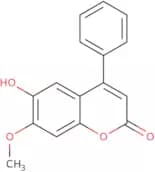
CAS:6-Hydroxy-7-methoxy-4-phenylcoumarin is a synthetic chemical compound classified as a coumarin derivative. Derived from natural coumarin structures, this compound is often synthesized through organic chemistry techniques involving the hydroxylation and methoxylation of coumarin backbones, with the addition of a phenyl group.Fórmula:C16H12O4Pureza:Min. 95%Cor e Forma:PowderPeso molecular:268.26 g/molDaphnetin dimethyl ether
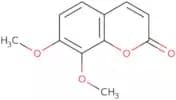
CAS:Daphnetin dimethyl ether is a synthetic chemical compound, which is a derivative of the naturally occurring coumarin scaffold. It is primarily sourced through chemical synthesis rather than extraction from natural compounds, allowing for precise control over purity and structural modifications that are otherwise challenging to achieve through natural means.Fórmula:C11H10O4Pureza:Min. 95%Cor e Forma:PowderPeso molecular:206.19 g/mol8-Geranyloxypsoralen
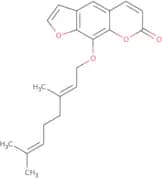
CAS:8-Geranyloxypsoralen is a natural furanocoumarin, which is a secondary metabolite typically derived from plants, particularly those in the Rutaceae family. Its source lies predominantly in certain fruits and herbs, where it functions as a natural defense compound.
Fórmula:C21H22O4Pureza:Min. 95 Area-%Cor e Forma:Off-White PowderPeso molecular:338.4 g/molAcetyl columbianetin
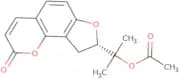
CAS:Acetyl columbianetin is a natural compound, which is a type of secondary metabolite derived primarily from plant sources. This compound is part of a broader category of phytochemicals known for their diverse bioactive properties. Acetyl columbianetin is specifically sourced from certain species within the Apiaceae family, commonly found in traditional medicine.Fórmula:C16H16O5Pureza:Min. 95%Cor e Forma:PowderPeso molecular:288.3 g/molIsopimpinellin - Angelica archangelica (angelica)
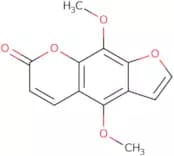
CAS:Isopimpinellin is a furanocoumarin compound, which is derived from the plant Angelica archangelica, commonly known as angelica. This compound is characterized by its intricate chemical structure that includes the fusion of a furan ring to a coumarin backbone. The source, Angelica archangelica, is a biennial plant found predominantly in temperate regions and is notable for its use in traditional herbal medicine.Fórmula:C13H10O5Pureza:Min. 95%Cor e Forma:Off-White Yellow PowderPeso molecular:246.22 g/mol7,8-Dihydroxycoumarin
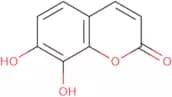
CAS:7,8-Dihydroxycoumarin is a naturally occurring coumarin, which is derived from plants and certain fungi. It possesses a distinct chemical structure characterized by a benzopyrone core with hydroxyl groups at the 7th and 8th positions, contributing to its distinct biochemical properties. The mode of action of 7,8-Dihydroxycoumarin is largely attributed to its ability to act as a potent antioxidant, scavenging free radicals and chelating metal ions, thus mitigating oxidative stress at the cellular level.Fórmula:C9H6O4Pureza:Min. 95%Cor e Forma:PowderPeso molecular:178.14 g/molETHYL 3-COUMARINCARBOXYLATE
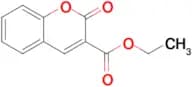
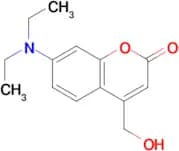
CAS:Fórmula:C12H10O4Pureza:97%Cor e Forma:Solid, CrystallinePeso molecular:218.2087-(Diethylamino)-4-(hydroxymethyl)-2H-chromen-2-one
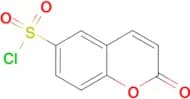
CAS:Fórmula:C14H17NO3Pureza:95%Cor e Forma:SolidPeso molecular:247.2942-Oxo-2H-chromene-6-sulfonyl chloride
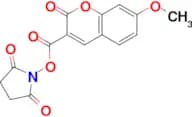
CAS:Fórmula:C9H5ClO4SPureza:95%Cor e Forma:SolidPeso molecular:244.65Succinimidyl 7-methoxycoumarin-3-carboxylate
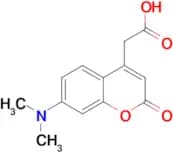
CAS:Fórmula:C15H11NO7Pureza:98%Cor e Forma:Solid, White to almost white powderPeso molecular:317.2537-Dimethylaminocoumarin-4-acetic acid
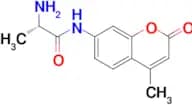
CAS:Fórmula:C13H13NO4Pureza:98%Cor e Forma:Liquid, No data available.Peso molecular:247.25(S)-2-Amino-N-(4-methyl-2-oxo-2H-chromen-7-yl)propanamide
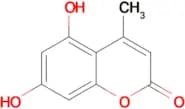
CAS:Fórmula:C13H14N2O3Pureza:95%Peso molecular:246.2664-ethyl-5-hydroxy-7-methyl-2H-chromen-2-one
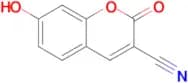
CAS:Fórmula:C12H12O3Pureza:98%Cor e Forma:Solid, Light yellow powderPeso molecular:204.2257-Hydroxycoumarin
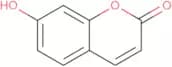
CAS:M05765 - 7-Hydroxycoumarin
Fórmula:C9H6O3Pureza:97%Cor e Forma:Solid, CrystallinePeso molecular:162.1442-oxo-2H-chromene-3-carboxylic acid
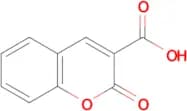
CAS:Fórmula:C10H6O4Pureza:95%Cor e Forma:SolidPeso molecular:190.1543-(Benzo[d]thiazol-2-yl)-7-(diethylamino)-2H-chromen-2-one
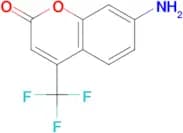
CAS:Fórmula:C20H18N2O2SPureza:98%Cor e Forma:SolidPeso molecular:350.447-Amino-4-(trifluoromethyl)coumarin
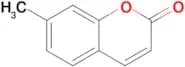
CAS:Fórmula:C10H6F3NO2Pureza:97%Cor e Forma:SolidPeso molecular:229.1587-Methyl-2H-chromen-2-one
CAS:Fórmula:C10H8O2Pureza:98%Cor e Forma:Solid, White to slightly pale yellow powderPeso molecular:160.1727-(Diethylamino)coumarin-3-carboxylic acid
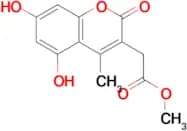
CAS:Fórmula:C14H15NO4Pureza:95%Cor e Forma:Solid, Pale yellow - Yellow red powderPeso molecular:261.277methyl (5,7-dihydroxy-4-methyl-2-oxo-2H-chromen-3-yl)acetate
CAS:Fórmula:C13H12O6Pureza:97%Peso molecular:264.233(7-Amino-2-oxo-2H-chromen-4-yl)acetic acid
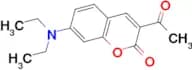
CAS:Fórmula:C11H9NO4Pureza:95%Cor e Forma:SolidPeso molecular:219.1963-Acetyl-7-(diethylamino)-2H-chromen-2-one
CAS:Fórmula:C15H17NO3Pureza:95%Cor e Forma:Solid, Orange powderPeso molecular:259.305




![3-(Benzo[d]thiazol-2-yl)-7-(diethylamino)-2H-chromen-2-one](/_next/image/?url=https%3A%2Fstatic.cymitquimica.com%2Fproducts%2F10%2Fthumb-webp%2FF430070.webp&w=3840&q=75)