Cumarinas
As cumarinas são uma classe de compostos aromáticos policíclicos que consistem em um anel benzênico fundido a um anel de pirona. Esses compostos são amplamente utilizados como fragrâncias, agentes aromatizantes e na síntese de produtos farmacêuticos e agroquímicos. As cumarinas exibem várias atividades biológicas, incluindo propriedades anticoagulantes, anti-inflamatórias e antimicrobianas. Na CymitQuimica, oferecemos uma ampla seleção de cumarinas de alta qualidade para apoiar suas pesquisas e aplicações industriais.
Foram encontrados 1122 produtos de "Cumarinas"
Ordenar por
Pureza (%)
0
100
|
0
|
50
|
90
|
95
|
100
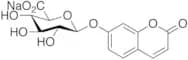
7-Hydroxy Coumarin β-D-Glucuronide Sodium Salt
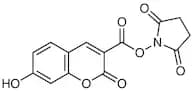
CAS:<p>Stability Hygroscopic<br>Applications A metabolite of 7-Ethoxycoumarin and Coumarin. Useful as a pharmacokinetic standard in metabolic studies.<br>References Blankson, E., et al.: Biochem. Pharmacol., 42, 1241 (1991), Steensma, A., et al.: Xenobiotica, 24, 893 (1994), Fisher, R., et al.: Toxicol. Methods, 5, 99 (1995), Ekins, S., et al.: Drug Metab. Dispos., 24, 990 (1996)<br></p>Fórmula:C15H13O9·NaCor e Forma:White To Light BeigePeso molecular:360.25N-Succinimidyl 7-Hydroxycoumarin-3-carboxylate
CAS:Fórmula:C14H9NO7Pureza:>96.0%(T)(HPLC)Cor e Forma:Light orange to Yellow to Green powder to crystalPeso molecular:303.23Xanthotoxol
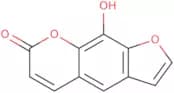
CAS:<p>Xanthotoxol is a naturally occurring furanocoumarin, which is derived from various plant species, primarily within the Apiaceae family. This compound exhibits its biological activity through several mechanisms, including the inhibition of enzyme pathways, modulation of signaling pathways, and interaction with cellular proteins, impacting various physiological processes.</p>Fórmula:C11H6O4Pureza:Min. 95%Cor e Forma:Brown PowderPeso molecular:202.16 g/molCoumarin 504T
CAS:Fórmula:C22H27NO4Pureza:>98.0%(HPLC)(N)Cor e Forma:Light yellow to Brown powder to crystalPeso molecular:369.466'-Dehydromarmin
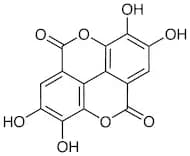
CAS:6'-Dehydromarmin is a natural product, classified as a coumarin derivative, which is primarily sourced from certain plant species, notably within the Rutaceae family. This compound arises through the biochemical transformation of secondary metabolites in plants, typically involving oxidation processes that occur under specific enzymatic conditions.Fórmula:C19H22O5Pureza:Min. 95%Peso molecular:330.37 g/molEllagic Acid
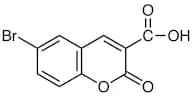
CAS:Fórmula:C14H6O8Pureza:>95.0%(T)(HPLC)Cor e Forma:White to Light yellow powder to crystalPeso molecular:302.196-Bromocoumarin-3-carboxylic Acid
CAS:Fórmula:C10H5BrO4Pureza:>98.0%(HPLC)Cor e Forma:White to Orange to Green powder to crystalPeso molecular:269.05Suberosin
CAS:<p>Suberosin is a naturally occurring sesquiterpene lactone, which is isolated from members of the Rutaceae family, such as the plant Feronia limonia. The compound exhibits diverse biological activities, primarily attributed to its complex structure that facilitates interaction with various biological targets. Suberosin's mode of action involves disrupting microbial cell membranes and interfering with critical biochemical pathways, effectively inhibiting microbial growth and propagation.</p>Fórmula:C15H16O3Pureza:Min. 95%Peso molecular:244.29 g/mol2-[(6-chloro-4-ethyl-2-oxo-2H-chromen-7-yl)oxy]propanoic acid
CAS:Fórmula:C14H13ClO5Pureza:95.0%Peso molecular:296.74-ethyl-7-methyl-5-(1-methyl-2-oxopropoxy)-2H-chromen-2-one
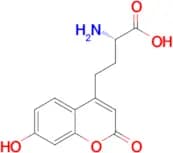
CAS:Fórmula:C16H18O4Pureza:95.0%Peso molecular:274.316(S)-2-AMINO-4-(7-HYDROXY-2-OXO-2H-CHROMEN-4-YL)BUTANOIC ACID
CAS:Fórmula:C13H13NO5Pureza:95.0%Peso molecular:263.249





![2-[(6-chloro-4-ethyl-2-oxo-2H-chromen-7-yl)oxy]propanoic acid](/_next/image/?url=https%3A%2Fstatic.cymitquimica.com%2Fproducts%2F10%2Fthumb-webp%2FF315330.webp&w=3840&q=75)

![2-[(2-oxo-2H-chromen-7-yl)oxy]propanoic acid](/_next/image/?url=https%3A%2Fstatic.cymitquimica.com%2Fproducts%2F10%2Fthumb-webp%2FF314545.webp&w=3840&q=75)