Ligas Organometálicas
Nesta categoria, você encontrará um grande número de moléculas organometálicas usadas como ligantes em biomoléculas. Esses ligantes organometálicos podem ser usados em química orgânica e síntese no laboratório. Eles desempenham um papel crucial na formação de complexos de coordenação e na catálise de várias reações químicas. Na CymitQuimica, oferecemos uma seleção diversificada de ligantes organometálicos de alta qualidade para apoiar suas pesquisas e necessidades industriais.
Subcategorias de "Ligas Organometálicas"
- Ligantes de Buchwald(22 produtos)
- DPEN(4 produtos)
- DPHEN(4 produtos)
- JOSIPHOS(4 produtos)
- Fosfina(497 produtos)
- Porfirinas(75 produtos)
Foram encontrados 2887 produtos de "Ligas Organometálicas"
Ordenar por
Pureza (%)
0
100
|
0
|
50
|
90
|
95
|
100
AR-R 17779 hydrochloride
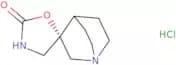
CAS:<p>AR-R 17779 is a selective agonist for α7 nicotinic acetylcholine receptors (nAChRs) (Ki value = 190 nM for rat α7 receptor). This compound has use as a tool to study the function of α7 nicotinic receptors. One such study revealed a role for α7 nicotinic receptors in nicotine-mediated excitatory effects on hippocampal learning and memory. AR-R17779 reduces formation of atherosclerotic plaques and abdominal aortic aneurysms in apolipoprotein E-deficient mice.</p>Fórmula:C9H14N2O2•HClPureza:Min. 95%Cor e Forma:White PowderPeso molecular:218.68 g/molPNU 159682
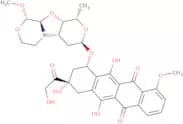
CAS:<p>DNA alkylating agent; highly potent metabolite of nemorubicin</p>Fórmula:C32H35NO13Pureza:Min. 90 Area-%Cor e Forma:Red PowderPeso molecular:641.62 g/molPF 06409577
CAS:<p>Potent agonist of a1β1γ1 5′-adenosine monophosphate-activated protein kinase (AMPK). It binds to the allosteric drug and metabolite (ADaM) site at the α- and β- subunit interface of AMPK. It has potential for the treatment of diabetic nephropathy. PF 06409577 reduces infections caused by flaviviruses, mediated by changes in the metabolism of lipids in host cells.</p>Fórmula:C19H16ClNO3Pureza:Min. 95%Cor e Forma:White/Off-White SolidPeso molecular:341.79 g/molXylometazoline hydrochloride
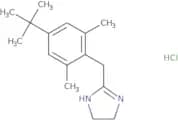
CAS:<p>alpha-adrenoceptor agonist; nasal decongestant</p>Fórmula:C16H25ClN2Pureza:Min. 99 Area-%Cor e Forma:PowderPeso molecular:280.84 g/molBX471 hydrochloride
CAS:<p>BX471 hydrochloride is a selective antagonist of the C-C chemokine receptor type 1 (CCR1), which is synthesized through rigorous chemical processes. It operates by inhibiting the binding of chemokines to the CCR1 receptor, thus interfering with the signaling pathways that lead to inflammation and immune responses. This mechanism is specifically effective in modulating immune system functions and controlling pathophysiological responses in various tissue types.</p>Fórmula:C21H25Cl2FN4O3Pureza:Min. 98 Area-%Cor e Forma:PowderPeso molecular:471.35 g/molCYT 387
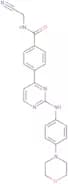
CAS:<p>Inhibits JAK1 and JAK2 kinases</p>Fórmula:C23H22N6O2Pureza:Min. 95%Cor e Forma:PowderPeso molecular:414.46 g/molRoflumilast - Bio-X ™
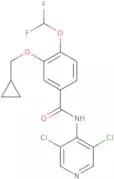
CAS:<p>Roflumilast is a selective phosphodiesterase-4 inhibitor that is used for the treatment of exacerbations in patients with chronic obstructive pulmonary disease (COPD). It is also used to treat plaque psoriasis. This drug has anti-inflammatory and immunomodulatory effects as it aids in increasing levels of cAMP.</p>Fórmula:C17H14Cl2F2N2O3Pureza:Min. 95%Cor e Forma:PowderPeso molecular:403.21 g/molDG 172 hydrochloride
CAS:<p>Potent inverse agonist of peroxisome proliferator-activated receptor PPARβ and PPARδ with IC50 value of 27 nM. In mouse myoblasts, DG 172 enhanced recruitment of transcriptional corepressor and down-regulated transcription of PPARβ/δ target gene Angptl4. DG 172 also possess a PPARβ/δ-independent activity on bone marrow cells and promotes dendritic cell differentiation.</p>Fórmula:C20H20BrN3·HClPureza:Min. 95%Cor e Forma:SolidPeso molecular:418.76 g/molDovitinib base
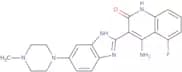
CAS:<p>Receptor tyrosine kinase inhibitor; anti-angiogenesis; anti-oncogenesis</p>Fórmula:C21H21FN6OPureza:Min. 98 Area-%Cor e Forma:PowderPeso molecular:392.43 g/molIsradipine
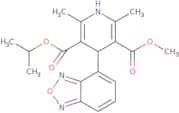
CAS:<p>L-type calcium channel blocker</p>Fórmula:C19H21N3O5Pureza:Min. 95%Cor e Forma:Yellow PowderPeso molecular:371.39 g/molDarolutamide
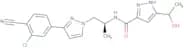
CAS:<p>Androgen receptor antagonist; therapy for endometriosis</p>Fórmula:C19H19ClN6O2Pureza:Min. 95%Cor e Forma:White To Off-White SolidPeso molecular:398.86 g/molR-(-)-Arundic acid
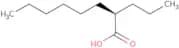
CAS:<p>R-(-)-Arundic acid is a chiral compound, which is a derivative of arundic acid specifically designed for enantiomeric purity. It is sourced through synthetic organic chemistry processes, allowing for precise control over its stereochemistry. The mode of action of R-(-)-Arundic acid involves the inhibition of astrocyte activation by modulating the synthesis of certain cytokines and inflammatory mediators. This mechanism provides a neuroprotective effect, making it a valuable tool in the study of neurodegenerative diseases and brain injuries.</p>Fórmula:C11H22O2Pureza:Min. 98 Area-%Cor e Forma:Clear Viscous LiquidPeso molecular:186.29 g/molMitoxantrone hydrochloride
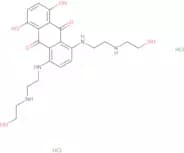
CAS:<p>Inhibits DNA topoisomerase II; antineoplastic; immunomodulatory; antimicrobial</p>Fórmula:C22H30Cl2N4O6Pureza:Min. 97 Area-%Cor e Forma:Dark Blue SolidPeso molecular:517.4 g/molSorafenib - Bio-X ™
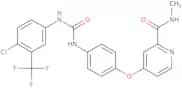
CAS:<p>Sorafenib is a drug that belongs to the class of multikinase inhibitors. It inhibits a number of kinases, including the Mcl-1 protein, which is involved in apoptosis along with blocking picolinic acid (PA), an endogenous metabolite involved in apoptosis signal transduction. Sorafenib also binds to epidermal growth factor receptor (EGFR) on the surface of cancer cells, inhibiting the production of proteins that are required for angiogenesis, thus blocking the formation of new blood vessels. Sorafenib may also inhibit P-glycoprotein (Pgp) activity. Overall, these cytotoxic effects give Sorafenib anti-tumor properties, inhibiting angiogenesis and cellular transformation, which are the two main processes of tumor growth and metastasis. Sorafenib has been shown to be effective against a range of solid tumors such as breast, prostate and lung cancers and is also used for the treatment of metastatic colorectal cancer and renal cell carcinoma. A combination therapy group found that sorafenib was more effective when used with interferon alfa-2b for the treatment of advanced renal cell carcinoma. Sorafenib also has the potential for drug interactions with other drugs that are metabolized by cytochrome P450 enzymes.<br>Sorafenib is part of our Bio-X ™ Range. These products are aimed at life science researchers who need high quality ready to use products for assay development, screening or other R&D work. With a solubility datasheet and convenient vials, all of our Bio-X ™ products are in stock across our global warehouses for rapid delivery and ease of use.</p>Fórmula:C21H16ClF3N4O3Pureza:Min. 98%Cor e Forma:PowderPeso molecular:464.82 g/molFingolimod phosphate
CAS:<p>Sphingosine-1-phosphate (S1P) receptor agonist; antineoplastic, immunosppressant</p>Fórmula:C19H34NO5PPureza:Min. 95%Cor e Forma:PowderPeso molecular:387.45 g/molPadsevonil
CAS:<p>Padsevonil is an investigational antiseizure medication, which is a synthetic pharmaceutical compound. It is derived from extensive medicinal chemistry research aiming to address complex seizure disorders resistant to conventional treatments. Padsevonil functions by exhibiting a dual mechanism of action. It binds to synaptic vesicle protein 2A (SV2A) with high affinity, similar to levetiracetam but with additional modulation of the benzodiazepine-sensitive gamma-aminobutyric acid-A (GABA-A) receptor. This combined activity potentiates its efficacy in stabilizing neuronal hyperactivity and dampening excitatory neurotransmission, providing a novel angle to tackle refractory seizures.</p>Fórmula:C14H14ClF5N4O2SPureza:Min. 95%Peso molecular:432.8 g/mol(-)-Sparteine hydroiodide
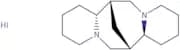
CAS:<p>Sparteine hydroiodide is the salt form of sparteine. This compound acts as an inhibitor of voltage-gated sodium channels. In organic chemisty, it is used for chiral synthesis.</p>Fórmula:C15H26N2•HIPureza:Min. 95%Peso molecular:362.29 g/molCyamemazine
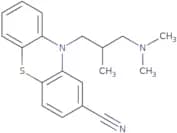
CAS:<p>Cyamemazine is a neuroleptic medication, which is a member of the phenothiazine class of compounds. It is synthesized from derivatives of phenothiazine, a group of agents primarily found in pharmaceuticals. The mode of action of cyamemazine involves antagonism at dopamine D2 receptors in the central nervous system. This inhibition of dopamine activity is the principal mechanism through which it exerts its antipsychotic effects. Due to its receptor activity, cyamemazine is used primarily in the management of various psychotic disorders, including schizophrenia and acute psychoses. It also exhibits anxiolytic properties, making it effective in treating anxiety associated with these conditions. By modulating neurotransmitter pathways, cyamemazine helps to alleviate symptoms such as hallucinations, delusions, and agitation, offering therapeutic benefit in complex neuropsychiatric cases. As an atypical antipsychotic, it provides an option for patients who may not respond adequately to other treatments. Although primarily used in a clinical setting, ongoing research continues to investigate potential wider applications and efficacy in treating other mental health issues.</p>Fórmula:C19H21N3SPureza:Min. 98 Area-%Cor e Forma:PowderPeso molecular:323.46 g/molFG 7142
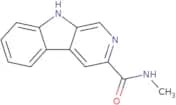
CAS:<p>Partial inverse agonist of benzodiazepine sites of the GABAA receptors with anxiogenic properties. FG 7142 is a pharmacological stressor which generates anxiety in humans and in experimental animals such as rhesus monkeys and rodents. FG 7142 also reduces food intake and frequency of feeding in male and female rats.</p>Fórmula:C13H11N3OPureza:Min. 95%Cor e Forma:Yellow PowderPeso molecular:225.25 g/molLacidipine - Bio-X ™
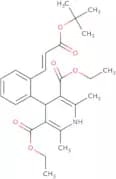
CAS:<p>Lacidipine is a lipophilic dihydropyridine calcium channel blocker that is used in the treatment of hypertension. This drug acts as an antihypertensive agent to dilate peripheral arteries and reduces blood pressure. Lacidipine blocks voltage-dependent L-type calcium channels.</p>Fórmula:C26H33NO6Pureza:Min. 95%Cor e Forma:PowderPeso molecular:455.54 g/mol