Ligas Organometálicas
Nesta categoria, você encontrará um grande número de moléculas organometálicas usadas como ligantes em biomoléculas. Esses ligantes organometálicos podem ser usados em química orgânica e síntese no laboratório. Eles desempenham um papel crucial na formação de complexos de coordenação e na catálise de várias reações químicas. Na CymitQuimica, oferecemos uma seleção diversificada de ligantes organometálicos de alta qualidade para apoiar suas pesquisas e necessidades industriais.
Subcategorias de "Ligas Organometálicas"
- Ligantes de Buchwald(22 produtos)
- DPEN(4 produtos)
- DPHEN(4 produtos)
- JOSIPHOS(4 produtos)
- Fosfina(497 produtos)
- Porfirinas(75 produtos)
Foram encontrados 2887 produtos de "Ligas Organometálicas"
Ordenar por
Pureza (%)
0
100
|
0
|
50
|
90
|
95
|
100
Fedratinib
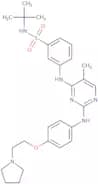
CAS:<p>JAK2 inhibitor with potential antineoplastic activity</p>Fórmula:C27H36N6O3SPureza:Min. 95%Peso molecular:524.68 g/molBunaprolast
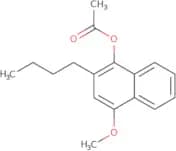
CAS:<p>Bunaprolast is a pharmaceutical compound that serves as a potent phosphodiesterase inhibitor. It is synthetically derived and exhibits its action by selectively inhibiting the breakdown of cyclic nucleotides, such as cyclic AMP (cAMP) and cyclic GMP (cGMP), within the cell. This mechanism effectively elevates the intracellular concentrations of these second messengers, leading to physiological effects such as vasodilation and reduction in inflammatory responses.</p>Fórmula:C17H20O3Pureza:Min. 95%Peso molecular:272.34 g/molRoflumilast-d4
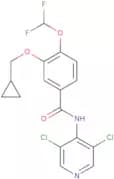
CAS:<p>Roflumilast-d4 is a deuterium-labeled derivative of the PDE4 inhibitor roflumilast, which is commonly used as a stable isotope-labeled internal standard in pharmacokinetic and metabolic studies. This compound is synthesized through the strategic incorporation of deuterium atoms, providing enhanced stability and traceability while maintaining the pharmacological properties of its non-labeled analog.</p>Fórmula:C17H14Cl2F2N2O3Pureza:Min. 95%Peso molecular:407.2 g/mol2-(2,2,2-Trifluoroethyl)-5'-[(E)-3-[4-(trifluoromethyl)piperidin-1-yl]prop-1-enyl]spiro[1,2,5-thiadiazolidine-4,13'-tricyclo[8.2.1.0 3,8]trideca-3(8),4,6-triene] 1,1-dioxide
CAS:<p>2-(2,2,2-Trifluoroethyl)-5'-[(E)-3-[4-(trifluoromethyl)piperidin-1-yl]prop-1-enyl]spiro[1,2,5-thiadiazolidine-4,13'-tricyclo[8.2.1.0^3,8^]trideca-3(8),4,6-triene] 1,1-dioxide is a synthetic compound characterized by its complex spirocyclic structure and multiple trifluoromethyl groups. This type of compound is typically derived through a series of advanced organic synthesis techniques involving multiple reaction steps to achieve its intricate molecular architecture. The presence of trifluoromethyl groups suggests enhanced metabolic stability and increased lipophilicity, which are desirable traits in drug design.</p>Fórmula:C25H31F6N3O2SPureza:Min. 95%Peso molecular:551.6 g/molMSP3
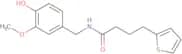
CAS:<p>Please enquire for more information about MSP3 including the price, delivery time and more detailed product information at the technical inquiry form on this page</p>Fórmula:C16H19NO3SPureza:Min. 95%Peso molecular:305.4 g/molMethyl gamma-linolenyl fluorophosphonate
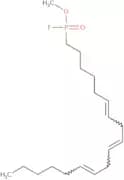
CAS:Produto Controlado<p>Methyl gamma-linolenyl fluorophosphonate is a specialized biochemical tool utilized within scientific research. This compound is synthesized through the chemical modification of gamma-linolenic acid, a fatty acid predominantly sourced from plant oils such as evening primrose oil, borage oil, and black currant seed oil. The fluorophosphonate group is strategically incorporated to inhibit serine hydrolases, a class of enzymes involved in various metabolic pathways.</p>Fórmula:C19H34FO2PPureza:Min. 95%Peso molecular:344.4 g/molAZ 6102
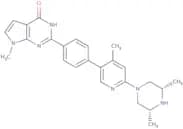
CAS:<p>AZ 6102 is a photoresist, typically utilized in the photolithography process. It is a chemically synthesized material, tailored for the precise patterning required in microfabrication. Its mode of action involves a photosensitive chemical composition that undergoes a structural change upon exposure to specific wavelengths of light, often ultraviolet. This change in molecular structure allows the exposed areas to be selectively dissolved by a developer solution, while the unexposed areas remain intact.</p>Fórmula:C25H28N6OPureza:Min. 95%Peso molecular:428.53 g/mol06:0 Pi(3,4,5)P3
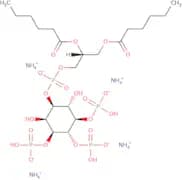
CAS:<p>06:0 PI(3,4,5)P3 is a synthetic phosphoinositide analog, which is typically obtained from laboratory synthesis utilizing phospholipid precursor molecules. Its mode of action involves mimicking the naturally occurring phosphatidylinositol (3,4,5)-trisphosphate (PIP3), allowing it to interact with specific intracellular signaling proteins. This product serves as a valuable tool for scientists investigating cellular signaling pathways, especially those involving the regulation of diverse cellular processes such as cell growth, proliferation, and survival.</p>Fórmula:C21H54N4O22P4Pureza:Min. 95%Peso molecular:838.56 g/molCCF-642
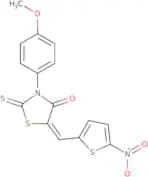
CAS:<p>CCF-642 is a synthetic antimicrobial compound designed for use in laboratory and clinical research settings. It is derived through chemical synthesis, utilizing a combination of heterocyclic structures and functional groups that enhance its activity against a range of bacterial pathogens. CCF-642 operates by disrupting bacterial cell wall synthesis, interfering with peptidoglycan cross-linking, which ultimately leads to cell lysis and death. It maintains efficacy in both gram-positive and gram-negative bacteria, making it a versatile tool in microbiological studies.</p>Fórmula:C15H10N2O4S3Pureza:Min. 95%Peso molecular:378.45 g/molAP20187
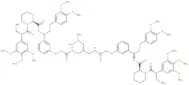
CAS:<p>AP20187 is a synthetic small molecule that functions as a chemical dimerizer, originating from the FKBP-binding domain technology. Its mode of action relies on promoting the dimerization of proteins fused with FKBP domains. This dimerization process triggers downstream signaling pathways or protein interactions within cells, providing a tool for controlled manipulation of cellular processes.</p>Fórmula:C82H107N5O20Pureza:Min. 95%Peso molecular:1,482.75 g/molCjb 090 dihydrochloride hydrate
CAS:<p>Cjb 090 dihydrochloride hydrate is a potent inhibitor of Protein Kinase C (PKC), which plays a crucial role in cellular signaling pathways. Derived through chemical synthesis, Cjb 090 selectively targets and inhibits PKC activity, thereby disrupting signal transduction mechanisms involved in cell growth, differentiation, and apoptosis.</p>Fórmula:C26H30Cl4N4OPureza:Min. 95%Peso molecular:556.3 g/molTC-I 2014
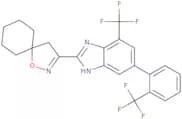
CAS:<p>TC-I 2014 is a specific chemical compound known as a selective inhibitor, which is derived from microbial sources. It operates by selectively inhibiting a particular protein or signaling pathway, thereby modulating cellular processes. This compound is often used in biochemical and cellular biology research to dissect and understand complex signaling networks within cells. By selectively blocking certain pathways, researchers can identify and study the role of specific proteins in biological processes and disease mechanisms.</p>Fórmula:C23H19F6N3OPureza:Min. 95%Peso molecular:467.4 g/molGDC-0575
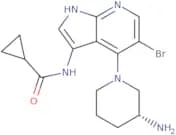
CAS:<p>GDC-0575 is a small molecule inhibitor that specifically targets the Ataxia-Telangiectasia and Rad3-related protein (ATR) kinase. This compound, developed from a synthetic chemical source, functions by selectively inhibiting the ATR kinase, a key regulator of the DNA damage response pathway. By binding to the active site of ATR, GDC-0575 disrupts its ability to activate downstream effectors involved in DNA repair processes.</p>Fórmula:C16H20BrN5OPureza:Min. 95%Peso molecular:378.27 g/molWAY-100135
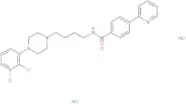
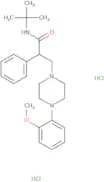
CAS:<p>WAY-100135 is a selective serotonin 5-HT1A receptor antagonist, which is a chemical compound primarily synthesized for scientific research. Its mode of action involves binding specifically to the 5-HT1A receptor subtype, thereby inhibiting the receptor's interaction with agonists. WAY-100135 is primarily utilized in neuropharmacological studies to elucidate the role of 5-HT1A receptors in various physiological and pathological processes.</p>Fórmula:C24H33N3O2·2HClPureza:Min. 95%Peso molecular:395.54 g/molCeapin-A7
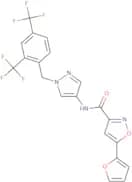
CAS:<p>Ceapin-A7 is a small molecule inhibitor, which is derived from chemical synthesis, targeting the ATF6 arm of the unfolded protein response (UPR). It functions by selectively inhibiting ATF6α signaling, a critical pathway activated during endoplasmic reticulum (ER) stress. The mode of action involves binding to ATF6α, preventing its transport to the Golgi apparatus, and thereby inhibiting its subsequent cleavage and activation.</p>Fórmula:C20H12F6N4O3Pureza:Min. 95%Peso molecular:470.3 g/molc24 Ceramide (d17:1/24:0)
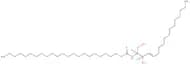
CAS:<p>C24 Ceramide (d17:1/24:0) is a bioactive sphingolipid, which is a key component of cellular membranes derived from natural lipid sources. This ceramide variant plays a crucial role in modulating cellular processes by acting as a signaling molecule. Its mechanism of action primarily includes the regulation of cell differentiation, proliferation, and apoptosis. Ceramides act by influencing intracellular signaling pathways and affecting the structural organization of lipid bilayers, which in turn alters membrane dynamics and protein activities.</p>Fórmula:C41H81NO3Pureza:Min. 95%Peso molecular:636.09 g/mol2-Methoxy-5-[2-(3,4,5-trimethoxyphenyl)ethenyl]phenyl dihydrogen phosphate
CAS:<p>2-Methoxy-5-[2-(3,4,5-trimethoxyphenyl)ethenyl]phenyl dihydrogen phosphate is a phosphorylated derivative of a stilbene compound, functioning as a potent chemical agent. This compound is synthesized through organic chemistry techniques, starting from its stilbene precursor, which is modified to incorporate phosphorus groups. This specific alteration enhances its biochemical stability and solubility, making it a suitable candidate for various scientific applications.</p>Fórmula:C18H21O8PPureza:Min. 95%Peso molecular:396.3 g/molN-(3-(5-((3-Acrylamido-4-(morpholine-4-carbonyl)phenyl)amino)-1-methyl-6-oxo-1,6-dihydropyridin-3-yl)-2-methylphenyl)-4-(tert-butyl) benzamide
CAS:<p>N-(3-(5-((3-Acrylamido-4-(morpholine-4-carbonyl)phenyl)amino)-1-methyl-6-oxo-1,6-dihydropyridin-3-yl)-2-methylphenyl)-4-(tert-butyl) benzamide is a novel pharmaceutical compound, which is synthesized through an intricate organic chemistry process aimed at targeting specific pathophysiological pathways. This compound functions by modulating cellular pathways with high specificity, potentially altering disease progression at the molecular level.</p>Fórmula:C38H41N5O5Pureza:Min. 95%Peso molecular:647.8 g/molSanguinarine chloride hydrate
CAS:<p>Sanguinarine chloride hydrate is a benzophenanthridine alkaloid, which is a plant-derived compound primarily extracted from species of the Papaveraceae family, such as the bloodroot plant. This compound functions through multiple biological mechanisms, including the inhibition of various enzymes and interference with protein synthesis. Specifically, sanguinarine chloride has been shown to intercalate with DNA, inducing apoptosis in different cell types.</p>Fórmula:C20H18ClNO6Pureza:Min. 95%Peso molecular:403.8 g/molSCH-202676
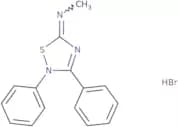
CAS:<p>SCH-202676 is a non-peptidyl allosteric modulator, which is a synthetic compound designed to influence receptor activity. It is sourced from chemical synthesis processes that allow for the precise modulation of receptor function through non-peptidyl mechanisms. The mode of action for SCH-202676 involves binding to an allosteric site on target receptors, altering their conformation and subsequently modulating their activity without directly competing with endogenous ligands.</p>Fórmula:C15H14BrN3SPureza:Min. 95%Peso molecular:348.3 g/mol

![2-(2,2,2-Trifluoroethyl)-5'-[(E)-3-[4-(trifluoromethyl)piperidin-1-yl]prop-1-enyl]spiro[1,2,5-thia…](/_next/image/?url=https%3A%2Fstatic.cymitquimica.com%2Fproducts%2F3D%2Fthumb-webp%2FYZA16593.webp&w=3840&q=75)
![2-Methoxy-5-[2-(3,4,5-trimethoxyphenyl)ethenyl]phenyl dihydrogen phosphate](/_next/image/?url=https%3A%2Fstatic.cymitquimica.com%2Fproducts%2F3D%2Fthumb-webp%2FXIA03063.webp&w=3840&q=75)