Ligas Organometálicas
Nesta categoria, você encontrará um grande número de moléculas organometálicas usadas como ligantes em biomoléculas. Esses ligantes organometálicos podem ser usados em química orgânica e síntese no laboratório. Eles desempenham um papel crucial na formação de complexos de coordenação e na catálise de várias reações químicas. Na CymitQuimica, oferecemos uma seleção diversificada de ligantes organometálicos de alta qualidade para apoiar suas pesquisas e necessidades industriais.
Subcategorias de "Ligas Organometálicas"
- Ligantes de Buchwald(22 produtos)
- DPEN(4 produtos)
- DPHEN(4 produtos)
- JOSIPHOS(4 produtos)
- Fosfina(497 produtos)
- Porfirinas(75 produtos)
Foram encontrados 2887 produtos de "Ligas Organometálicas"
Ordenar por
Pureza (%)
0
100
|
0
|
50
|
90
|
95
|
100
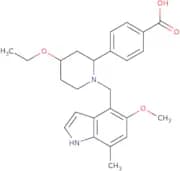
Iptacopan
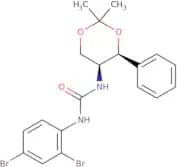
CAS:<p>Iptacopan is an oral, small-molecule therapeutic, which is a complement factor B inhibitor that targets the alternative pathway of the complement system. This pathway is a component of the immune system's innate response and, when dysregulated, can contribute to the pathogenesis of various complement-mediated diseases.</p>Fórmula:C25H30N2O4Pureza:Min. 95%Peso molecular:422.5 g/molJNJ 10397049
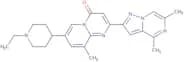
CAS:<p>JNJ 10397049 is a pharmacological compound categorized as a selective T-type calcium channel blocker, which is a synthetic compound designed for specific targeting of calcium channels. The product functions by inhibiting T-type calcium channels, which are voltage-gated ion channels involved in the regulation of intracellular calcium levels. This inhibition leads to a decrease in calcium influx, modulating neuronal excitability and reducing excessive neuronal firing.</p>Fórmula:C19H20Br2N2O3Pureza:Min. 95%Peso molecular:484.18 g/molSMN-C3
CAS:<p>SMN-C3 is a synthetic compound designed specifically as a targeted therapeutic agent. It is derived through advanced chemical synthesis techniques, utilizing a meticulous approach to optimize efficacy and specificity. The mode of action of SMN-C3 involves precise interaction with select molecular targets, thereby modulating biological pathways with high specificity. This interaction is designed to alter the course of disease processes, offering potential therapeutic benefits.</p>Fórmula:C24H28N6OPureza:Min. 95%Peso molecular:416.5 g/molPerfluorophenyl 19-(2,5-dioxo-2H-pyrrol-1(5H)-yl)-17-oxo-4,7,10,13-tetraoxa-16-azanonadecan-1-oate
CAS:<p>Perfluorophenyl 19-(2,5-dioxo-2H-pyrrol-1(5H)-yl)-17-oxo-4,7,10,13-tetraoxa-16-azanonadecan-1-oate is a synthetic compound, which is derived through a series of complex organic syntheses involving perfluorinated reagents. This compound is meticulously designed to incorporate both perfluorinated aromatic groups and a flexible, polyether-based linker. The mode of action for this compound primarily revolves around its unique chemical structure, which facilitates interactions at the molecular level that can be favorable for a variety of biochemical applications.</p>Fórmula:C24H27F5N2O9Pureza:Min. 95%Peso molecular:582.5 g/mol5-Hydroxymatrine
CAS:<p>5-Hydroxymatrine is an alkaloid compound, which is derived from the roots of Sophora plants, notably Sophora flavescens. This compound is characterized by its structure as a quinolizidine alkaloid and is a modified form of matrine, with a hydroxyl group adding to its chemical complexity.</p>Fórmula:C15H24N2O2Pureza:Min. 95%Peso molecular:264.36 g/molMitoridine
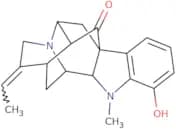
CAS:<p>Please enquire for more information about Mitoridine including the price, delivery time and more detailed product information at the technical inquiry form on this page</p>Fórmula:C20H22N2O2Pureza:Min. 95%Peso molecular:322.4 g/molFlavopiridol hydrochloride
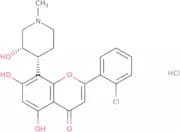
CAS:<p>Inhibitor of CKD1, CDK2, and CDK4 serine/threonine kinases</p>Fórmula:C21H21Cl2NO5Pureza:Min. 95%Cor e Forma:Light (Or Pale) Tan SolidPeso molecular:438.3 g/molDimethicone ~2000 (polydimethylsiloxane)
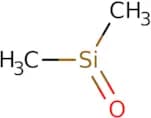
CAS:<p>Dimethicone ~2000 is a type of polydimethylsiloxane, which is a synthetic, organosilicon compound. This product is derived from silicon, oxygen, and organic groups, typically through the hydrolysis of dimethyldichlorosilane. Its primary mode of action involves forming a hydrophobic, flexible barrier on surfaces, which minimizes water evaporation and provides lubrication.</p>Fórmula:(C2H6OSi)nPureza:Min. 95%Peso molecular:74.15 g/molBIBF 1202
CAS:<p>BIBF 1202 is a potent inhibitor of phospholipase A2, prostaglandin synthase and cyclooxygenase-2. It inhibits the production of arachidonic acid from membrane phospholipids and is used in cancer research. BIBF 1202 has been shown to have anti-tumour activity in a number of animal models, including human liver cancer cells. This molecule has also been shown to inhibit the activation of nuclear factor kappa B (NF-κB), which is involved in carcinogenesis.</p>Fórmula:C30H31N5O4Pureza:Min. 95%Peso molecular:525.6 g/molMethyl-d3-magnesium iodide solution, 1.0 M in diethyl ether
CAS:Produto Controlado<p>Methyl-d3-magnesium iodide solution, 1.0 M in diethyl ether, is a specialized organometallic reagent used extensively in synthetic chemistry. This compound is a labeled Grignard reagent, where the methyl group is fully deuterated. It is sourced through the synthesis involving the reaction of deuterated methyl iodide with magnesium in an anhydrous diethyl ether solvent.</p>Fórmula:CD3IMgPureza:Min. 95%Peso molecular:169.26 g/molYK11
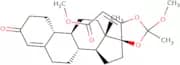
CAS:Produto Controlado<p>YK11 is a synthetic gene-selective androgen receptor modulator, which is derived from steroidal structures and designed to modulate specific pathways. This compound is characterized by its unique ability to act as a partial agonist/antagonist at the androgen receptor, with a focus on inhibiting the activity of myostatin, a regulatory protein that limits muscle growth.</p>Fórmula:C25H34O6Pureza:Min. 95%Peso molecular:430.53 g/molPT2977
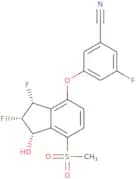
CAS:<p>PT2977 is a small-molecule inhibitor, which is derived from rational drug design, with a specific mode of action targeting hypoxia-inducible factor (HIF) pathways. This compound acts by selectively inhibiting HIF-2α, a critical driver of cellular response to hypoxic conditions, thus interfering with the transcription of genes involved in angiogenesis, erythropoiesis, and metabolic adaptation.</p>Fórmula:C17H12F3NO4SPureza:Min. 95%Peso molecular:383.34 g/molc18:1 Ceramide (d17:1/18:1(9Z))
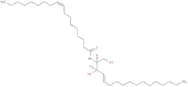
CAS:<p>C18:1 Ceramide (d17:1/18:1(9Z)) is a sphingolipid, which is originally sourced from plant or synthetic lipid precursors. Ceramides are integral components of the cellular lipid bilayer and are crucial for maintaining the integrity and function of the skin barrier. Their mode of action involves participating in cell signaling pathways that regulate cellular differentiation, proliferation, and apoptosis.</p>Fórmula:C35H67NO3Pureza:Min. 95%Peso molecular:549.91 g/molMethotrexate disodium
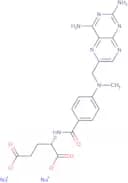
CAS:<p>Methotrexate is a drug that suppresses the immune system by inhibiting the production of white blood cells. It is used in the treatment of a number of diseases, including some cancers and autoimmune diseases such as rheumatoid arthritis and psoriasis. Methotrexate is metabolized to its active form, methotrexate, by an enzyme called dihydrofolate reductase (DHFR). The DHFR inhibitor activity of methotrexate blocks the synthesis of folate-dependent enzymes and prevents DNA synthesis in rapidly dividing cells. Methotrexate has been used in combination with other drugs to treat cancer. Methotrexate has also been shown to have antifungal properties against opportunistic fungal infections.</p>Fórmula:C20H20N8Na2O5Pureza:Min. 95%Cor e Forma:PowderPeso molecular:498.4 g/molPRI-724
CAS:<p>PRI-724 is an investigational small molecule known as a selective inhibitor of the Wnt/β-catenin signaling pathway. It is derived from extensive research into targeting dysregulated cellular pathways implicated in oncogenesis. PRI-724 operates by binding to the transcriptional co-activator CBP, thereby disrupting the interaction between CBP and β-catenin, which is crucial for the transcription of genes involved in cell proliferation and survival.</p>Fórmula:C33H35N6O7PPureza:Min. 95%Peso molecular:658.6 g/molNeostigmine methyl sulfate
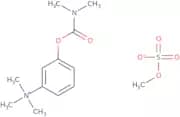
CAS:<p>Inhibitor of acetylcholinesterase</p>Fórmula:C13H22N2O6SPureza:Min. 95%Cor e Forma:PowderPeso molecular:334.39 g/molSildenafil
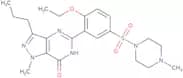
CAS:<p>Sildenafil is a pharmaceutical compound, which is a synthetic product derived from chemical processes. It functions as a selective inhibitor of the enzyme phosphodiesterase type 5 (PDE5). By inhibiting PDE5, sildenafil increases cyclic guanosine monophosphate (cGMP) levels within the smooth muscle cells of the corpus cavernosum. This leads to smooth muscle relaxation and vasodilation, allowing increased blood flow and facilitating penile erection in the presence of sexual stimulation.</p>Fórmula:C22H30N6O4SPureza:Min. 95%Cor e Forma:PowderPeso molecular:474.58 g/molPerakine
CAS:<p>Perakine is an indole alkaloid, which is a naturally occurring compound obtained primarily from the plant Rauvolfia species. As an indole alkaloid, it is synthesized through complex biosynthetic pathways within the plant, involving the secondary metabolism that characterizes many biochemical systems in flora.</p>Fórmula:C21H22N2O3Pureza:Min. 95%Peso molecular:350.4 g/molTariquidar
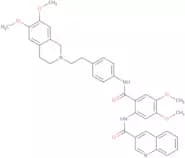
CAS:<p>Potent P-glycoprotein (P-gp) inhibitor</p>Fórmula:C38H38N4O6Pureza:Min. 97 Area-%Cor e Forma:PowderPeso molecular:646.73 g/molTDZD 8
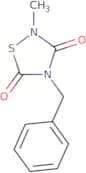
CAS:<p>TDZD 8 is a selective, non-ATP competitive inhibitor of the glycogen synthase kinase GSK3β. TDZD 8 inhibits GSK3β with IC50 of 2 μM and was reported to not significantly affect Cdk-1/cyclin B, casein kinase CK-II, protein kinase A and C (PKA, PKC) activities. TDZD 8 was also identified as an inhibitor of the main protease in coronaviruses. In an in vitro study, TDZD 8 was characterised as an aggregate-based inhibitor as the presence of Triton-X decreased the inhibitory potency to Mpro protease of the SARS-CoV-2 virus (IC50 without Triton-X: 2.15 μM).</p>Fórmula:C10H10N2O2SPureza:Min. 98 Area-%Cor e Forma:PowderPeso molecular:222.26 g/mol