Ligas Organometálicas
Nesta categoria, você encontrará um grande número de moléculas organometálicas usadas como ligantes em biomoléculas. Esses ligantes organometálicos podem ser usados em química orgânica e síntese no laboratório. Eles desempenham um papel crucial na formação de complexos de coordenação e na catálise de várias reações químicas. Na CymitQuimica, oferecemos uma seleção diversificada de ligantes organometálicos de alta qualidade para apoiar suas pesquisas e necessidades industriais.
Subcategorias de "Ligas Organometálicas"
- Ligantes de Buchwald(22 produtos)
- DPEN(4 produtos)
- DPHEN(4 produtos)
- JOSIPHOS(4 produtos)
- Fosfina(497 produtos)
- Porfirinas(75 produtos)
Foram encontrados 2887 produtos de "Ligas Organometálicas"
Ordenar por
Pureza (%)
0
100
|
0
|
50
|
90
|
95
|
100
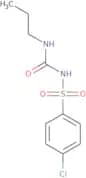
Chlorpropamide
CAS:<p>Hypoglycemic agent</p>Fórmula:C10H13ClN2O3SPureza:Min. 95%Cor e Forma:White Off-White PowderPeso molecular:276.74 g/molTrodusquemine
CAS:<p>Inhibitor of protein tyrosine phosphatase PTP1B</p>Fórmula:C37H72N4O5SPureza:Min. 95%Peso molecular:685.06 g/molIrdabisant
CAS:<p>Irdabisant is a novel small-molecule therapeutic, which functions as a histamine H3 receptor antagonist or inverse agonist. This compound is chemically synthesized and designed to target the central nervous system. The mode of action involves the selective inhibition of presynaptic H3 receptors, which are primarily responsible for modulating the release of histamine and other neurotransmitters such as acetylcholine, norepinephrine, and dopamine. By inhibiting these receptors, Irdabisant enhances neurotransmitter release, facilitating improved synaptic transmission.</p>Fórmula:C18H23N3O2Pureza:Min. 95%Peso molecular:313.39 g/mol9''-Methyl salvianolate B
CAS:<p>9''-Methyl salvianolate B is a naturally derived phenolic acid compound, specifically a methylated derivative, extracted from the roots of Salvia miltiorrhiza. This plant, commonly known as Danshen, is widely used in traditional Chinese medicine. The compound’s primary source involves a meticulous extraction and purification process aimed at isolating its bioactive constituents.</p>Fórmula:C37H32O16Pureza:Min. 95%Peso molecular:732.65 g/molVU0453379
CAS:<p>VU0453379 is a chemical compound that functions as a positive allosteric modulator (PAM) of the M4 muscarinic acetylcholine receptor. It is synthetically derived through medicinal chemistry processes designed to selectively enhance receptor signaling pathways. VU0453379 acts by binding to an allosteric site on the M4 receptor, distinct from the orthosteric site where endogenous neurotransmitters bind. This binding potentiates receptor sensitivity and activity in response to acetylcholine, thereby amplifying receptor-mediated signaling pathways.</p>Fórmula:C26H34N4O2Pureza:Min. 95%Peso molecular:434.6 g/mol5-Hydroxymatrine
CAS:<p>5-Hydroxymatrine is an alkaloid compound, which is derived from the roots of Sophora plants, notably Sophora flavescens. This compound is characterized by its structure as a quinolizidine alkaloid and is a modified form of matrine, with a hydroxyl group adding to its chemical complexity.</p>Fórmula:C15H24N2O2Pureza:Min. 95%Peso molecular:264.36 g/molLiarozole
CAS:<p>Liarozole is an imidazole derivative that functions as a non-specific inhibitor of cytochrome P450-dependent retinoic acid metabolism. It primarily acts by inhibiting the cytochrome P450 enzyme family, particularly affecting the 4-hydroxylation process. This inhibition increases the local concentration of retinoic acid in tissues, which can lead to a modulation of transcriptional activity by retinoic acid receptors and ultimately influence cellular proliferation and differentiation.</p>Fórmula:C17H13ClN4Pureza:Min. 95%Peso molecular:308.8 g/molGW 3965 hydrochloride
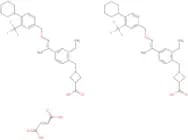
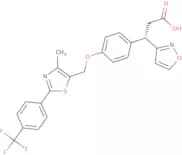
CAS:<p>GW 3965 hydrochloride is a selective liver X receptor (LXR) agonist, which is a synthetic compound derived through pharmaceutical research aimed at modulating lipid metabolism. It functions by binding to and activating LXRs, which are nuclear receptors that regulate the expression of genes involved in cholesterol, fatty acid, and glucose homeostasis. Upon activation, these receptors influence the transcription of various target genes, leading to increased cholesterol efflux, decreased intestinal cholesterol absorption, and modulation of inflammatory responses.</p>Fórmula:C33H31ClF3NO3•HClPureza:Min. 95%Peso molecular:618.51 g/molGLP-1 (1-37) (human, bovine, guinea pig, mouse, rat) trifluoroacetate salt
CAS:<p>GLP-1 (1-37) (human, bovine, guinea pig, mouse, rat) trifluoroacetate salt is a posttranslational modification of the endogenous human hormone GLP-1. It is a synthetic form of this hormone that has been modified to allow for improved stability and solubility. This peptide is found in the pancreatic alpha cells and intestinal L cells and stimulates the release of insulin from pancreatic beta cells. GLP-1 (1-37) (human, bovine, guinea pig, mouse, rat) trifluoroacetate salt has also been shown to increase glucose uptake by muscle tissue as well as stimulate the release of incretin hormones such as glucagon-like peptide 1 and gastric inhibitory polypeptide. GLP-1 (1-37) (human, bovine, guinea pig, mouse, rat) trifluoroacetate salt</p>Fórmula:C186H275N51O59Pureza:Min. 95%Peso molecular:4,169.48 g/molSiponimod fumarate
CAS:<p>Siponimod fumarate is a selective sphingosine 1-phosphate (S1P) receptor modulator, which is a synthetically derived agent with immunomodulatory properties. Its mode of action involves high affinity for S1P receptors 1 and 5, which plays a crucial role in immune cell signaling. By binding to these receptors, siponimod sequesters lymphocytes in lymphoid organs, reducing peripheral blood lymphocyte counts and thereby modulating immune responses.</p>Pureza:Min. 95%IRAK4-IN-1
CAS:<p>IRAK4-IN-1 is a small molecule inhibitor, which is a synthetic compound designed to interfere with specific biological pathways. This product originates from extensive chemical synthesis and medicinal chemistry efforts, aimed at targeting key components of the immune signaling cascade. Its primary mode of action involves selective inhibition of interleukin-1 receptor-associated kinase 4 (IRAK4), a crucial kinase in the Toll-like receptor (TLR) and interleukin-1 receptor (IL-1R) pathway. By inhibiting IRAK4, IRAK4-IN-1 effectively downregulates downstream inflammatory signaling processes.</p>Fórmula:C19H23N5OPureza:Min. 95%Peso molecular:337.42 g/molOdevixibat
CAS:<p>Odevixibat is a pharmacological agent that functions as an ileal bile acid transport inhibitor, which is synthesized through complex organic chemistry methods to create a specific molecular structure targeting bile acid transport mechanisms. It works by inhibiting the apical sodium-dependent bile acid transporter (ASBT) in the terminal ileum. This action reduces the reabsorption of bile acids from the small intestine back into the liver, thereby reducing overall bile acid levels in the body.</p>Fórmula:C37H48N4O8S2Pureza:Min. 95%Cor e Forma:PowderPeso molecular:740.93 g/molDoramapimod
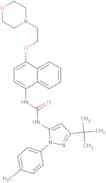
CAS:<p>p38α MAP kinase inhibitor; JNK2α2 protein kinase inhibitor</p>Fórmula:C31H37N5O3Pureza:Min. 95%Cor e Forma:PowderPeso molecular:527.66 g/molCl2A-SN-38
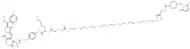
CAS:<p>Cl2A-SN-38 is an innovative antibody-drug conjugate (ADC), which is derived from a targeted delivery system designed to enhance the therapeutic index of chemotherapeutic agents. The product is synthesized through the chemical conjugation of the monoclonal antibody Cl2A with the potent topoisomerase I inhibitor, SN-38. This conjugation is achieved using a stable linker that facilitates selective delivery of SN-38 to cancer cells expressing the target antigen, thus minimizing systemic toxicity.</p>Fórmula:C73H97N11O22Pureza:Min. 95%Peso molecular:1,480.6 g/molARQ 531
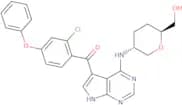
CAS:<p>ARQ 531 is a small molecule inhibitor specifically designed to target Bruton's tyrosine kinase (BTK), which is a type of enzymatic protein. This compound is meticulously developed within a laboratory setting to disrupt key pathways involved in cancer cell survival. Its mode of action involves the selective and reversible inhibition of BTK, thereby obstructing signal transduction that promotes malignant cell proliferation and survival.</p>Fórmula:C25H23ClN4O4Pureza:Min. 95%Peso molecular:478.93 g/mol1-(7Z-Pentadecenoyl)-rac-glycerol
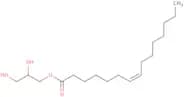
CAS:<p>1-(7Z-Pentadecenoyl)-rac-glycerol is a glycerol derivative, which is typically synthesized or isolated from natural fats and oils. This compound is part of the monoacylglycerol family, characterized by a glycerol backbone esterified with a single fatty acid chain. The source of 1-(7Z-Pentadecenoyl)-rac-glycerol can be varied, stemming from enzymatic processes that occur in biological systems, or through chemical synthesis that mimics these natural interactions.</p>Fórmula:C18H34O4Pureza:Min. 95%Peso molecular:314.46 g/molImidazole ketone erastin
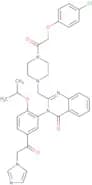
CAS:<p>Imidazole ketone erastin is a small molecule compound, which is a synthetic analog derived from erastin. The origin of this compound is rooted in the study of ferroptosis, a form of regulated cell death characterized by iron-dependent lipid peroxidation. Imidazole ketone erastin functions by inhibiting the cystine/glutamate antiporter system Xc–, leading to the accumulation of lethal reactive oxygen species (ROS) within cells.</p>Fórmula:C35H35ClN6O5Pureza:Min. 95%Peso molecular:655.14 g/molAM 4668
CAS:<p>AM 4668 is a biochemical compound, which is derived from synthetic origins with complex organic synthesis processes. Its primary mode of action involves targeted enzymatic inhibition, effectively interacting with specific enzyme active sites to modulate biochemical pathways.</p>Fórmula:C24H19F3O4SPureza:Min. 95%Peso molecular:488.48 g/molPRI-724
CAS:<p>PRI-724 is an investigational small molecule known as a selective inhibitor of the Wnt/β-catenin signaling pathway. It is derived from extensive research into targeting dysregulated cellular pathways implicated in oncogenesis. PRI-724 operates by binding to the transcriptional co-activator CBP, thereby disrupting the interaction between CBP and β-catenin, which is crucial for the transcription of genes involved in cell proliferation and survival.</p>Fórmula:C33H35N6O7PPureza:Min. 95%Peso molecular:658.6 g/molFelodipine
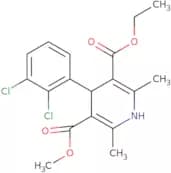
CAS:<p>L-type calcium channel blocker; anti-hypertensive</p>Fórmula:C18H19Cl2NO4Pureza:Min. 95%Cor e Forma:White PowderPeso molecular:384.25 g/mol