Ligas Organometálicas
Nesta categoria, você encontrará um grande número de moléculas organometálicas usadas como ligantes em biomoléculas. Esses ligantes organometálicos podem ser usados em química orgânica e síntese no laboratório. Eles desempenham um papel crucial na formação de complexos de coordenação e na catálise de várias reações químicas. Na CymitQuimica, oferecemos uma seleção diversificada de ligantes organometálicos de alta qualidade para apoiar suas pesquisas e necessidades industriais.
Subcategorias de "Ligas Organometálicas"
- Ligantes de Buchwald(22 produtos)
- DPEN(4 produtos)
- DPHEN(4 produtos)
- JOSIPHOS(4 produtos)
- Fosfina(497 produtos)
- Porfirinas(75 produtos)
Foram encontrados 2887 produtos de "Ligas Organometálicas"
Ordenar por
Pureza (%)
0
100
|
0
|
50
|
90
|
95
|
100
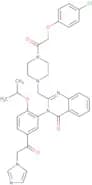
Imidazole ketone erastin
CAS:<p>Imidazole ketone erastin is a small molecule compound, which is a synthetic analog derived from erastin. The origin of this compound is rooted in the study of ferroptosis, a form of regulated cell death characterized by iron-dependent lipid peroxidation. Imidazole ketone erastin functions by inhibiting the cystine/glutamate antiporter system Xc–, leading to the accumulation of lethal reactive oxygen species (ROS) within cells.</p>Fórmula:C35H35ClN6O5Pureza:Min. 95%Peso molecular:655.14 g/molARQ 531
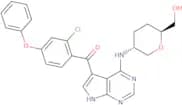
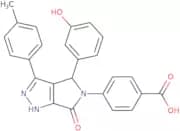
CAS:<p>ARQ 531 is a small molecule inhibitor specifically designed to target Bruton's tyrosine kinase (BTK), which is a type of enzymatic protein. This compound is meticulously developed within a laboratory setting to disrupt key pathways involved in cancer cell survival. Its mode of action involves the selective and reversible inhibition of BTK, thereby obstructing signal transduction that promotes malignant cell proliferation and survival.</p>Fórmula:C25H23ClN4O4Pureza:Min. 95%Peso molecular:478.93 g/molAG 14361
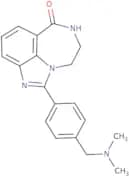
CAS:<p>AG 14361 is a potent inhibitor designed to target the interaction between the tumor suppressor protein p53 and the murine double minute 2 (MDM2) oncoprotein. It is synthetically derived, offering researchers a tool to perturb a critical protein-protein interaction involved in the regulation of the cell cycle and apoptosis. The mode of action involves the disruption of the p53-MDM2 interaction, leading to the stabilization and activation of p53. This results in the induction of p53-dependent transcriptional activity, facilitating cell cycle arrest and apoptosis in cancerous cells.</p>Fórmula:C19H20N4OPureza:Min. 98 Area-%Cor e Forma:PowderPeso molecular:320.39 g/molGW 3965 hydrochloride
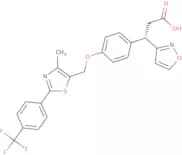
CAS:<p>GW 3965 hydrochloride is a selective liver X receptor (LXR) agonist, which is a synthetic compound derived through pharmaceutical research aimed at modulating lipid metabolism. It functions by binding to and activating LXRs, which are nuclear receptors that regulate the expression of genes involved in cholesterol, fatty acid, and glucose homeostasis. Upon activation, these receptors influence the transcription of various target genes, leading to increased cholesterol efflux, decreased intestinal cholesterol absorption, and modulation of inflammatory responses.</p>Fórmula:C33H31ClF3NO3•HClPureza:Min. 95%Peso molecular:618.51 g/molSalmefamol
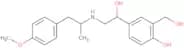
CAS:<p>A β2-adrenoceptor agonist that is structurally related to salbutamol. Ellicits β-adrenergic stimulatory effects on smooth muscles in trachea and bronchi. More effective (1.5 to 2 times more) as a bronchodilator than salbutamol.</p>Fórmula:C19H25NO4Pureza:Min. 95%Cor e Forma:SolidPeso molecular:331.41 g/molCID 16020046
CAS:<p>Puromycin is an aminonucleoside antibiotic, derived from the bacterium Streptomyces albus, with its primary mode of action involving the inhibition of protein synthesis. During translation, puromycin mimics the aminoacyl end of tRNA, enabling its incorporation into the growing polypeptide chain within the ribosome. This incorporation disrupts further chain elongation, ultimately leading to premature termination of protein synthesis.</p>Fórmula:C25H19N3O4Pureza:Min. 95%Peso molecular:425.44 g/molML191
CAS:<p>Please enquire for more information about ML191 including the price, delivery time and more detailed product information at the technical inquiry form on this page</p>Fórmula:C24H25N3O3Pureza:Min. 95%Peso molecular:403.47 g/molAM 4668
CAS:<p>AM 4668 is a biochemical compound, which is derived from synthetic origins with complex organic synthesis processes. Its primary mode of action involves targeted enzymatic inhibition, effectively interacting with specific enzyme active sites to modulate biochemical pathways.</p>Fórmula:C24H19F3O4SPureza:Min. 95%Peso molecular:488.48 g/molGLP-1 (1-37) (human, bovine, guinea pig, mouse, rat) trifluoroacetate salt
CAS:<p>GLP-1 (1-37) (human, bovine, guinea pig, mouse, rat) trifluoroacetate salt is a posttranslational modification of the endogenous human hormone GLP-1. It is a synthetic form of this hormone that has been modified to allow for improved stability and solubility. This peptide is found in the pancreatic alpha cells and intestinal L cells and stimulates the release of insulin from pancreatic beta cells. GLP-1 (1-37) (human, bovine, guinea pig, mouse, rat) trifluoroacetate salt has also been shown to increase glucose uptake by muscle tissue as well as stimulate the release of incretin hormones such as glucagon-like peptide 1 and gastric inhibitory polypeptide. GLP-1 (1-37) (human, bovine, guinea pig, mouse, rat) trifluoroacetate salt</p>Fórmula:C186H275N51O59Pureza:Min. 95%Peso molecular:4,169.48 g/molVX 702
CAS:<p>p38 MAP kinase antagonist</p>Fórmula:C19H12F4N4O2Pureza:Min. 95%Cor e Forma:SolidPeso molecular:404.32 g/molPAF (C16)
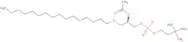
CAS:<p>PAF, short for Platelet-activating factor, is a mediator of platelet aggregation and a ligand for PAF receptors. It has roles in many other leukocyte functions around inflammation and immune response, as well as, chemotaxis and vasuclar changes. The PAF signaling system can trigger significant inflammatory and thrombotic cascades, and has been show to have roles in septic shock.</p>Fórmula:C26H54NO7PPureza:Min. 95%Peso molecular:523.68 g/molPRI-724
CAS:<p>PRI-724 is an investigational small molecule known as a selective inhibitor of the Wnt/β-catenin signaling pathway. It is derived from extensive research into targeting dysregulated cellular pathways implicated in oncogenesis. PRI-724 operates by binding to the transcriptional co-activator CBP, thereby disrupting the interaction between CBP and β-catenin, which is crucial for the transcription of genes involved in cell proliferation and survival.</p>Fórmula:C33H35N6O7PPureza:Min. 95%Peso molecular:658.6 g/molFelodipine
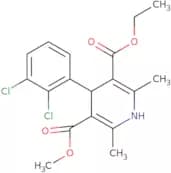
CAS:<p>L-type calcium channel blocker; anti-hypertensive</p>Fórmula:C18H19Cl2NO4Pureza:Min. 95%Cor e Forma:White PowderPeso molecular:384.25 g/molAMD 070 Hydrochloride
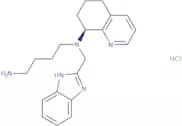
CAS:<p>an orally active, reversible and selective CXCR4 (CD184, fusin) antagonist</p>Fórmula:C21H28ClN5Pureza:Min. 95%Cor e Forma:PowderPeso molecular:385.93 g/molAZD4205
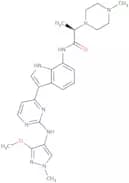
CAS:<p>AZD4205 is an investigational therapeutic agent, which is a small molecule inhibitor developed by AstraZeneca. It is designed to target specific signaling pathways involved in cancer cell proliferation and survival. The source of AZD4205 lies in the meticulous synthesis of a compound specifically engineered to interfere with aberrant molecular processes within cancer cells.</p>Fórmula:C25H31N9O2Pureza:Min. 95%Peso molecular:489.57 g/molPerakine
CAS:<p>Perakine is an indole alkaloid, which is a naturally occurring compound obtained primarily from the plant Rauvolfia species. As an indole alkaloid, it is synthesized through complex biosynthetic pathways within the plant, involving the secondary metabolism that characterizes many biochemical systems in flora.</p>Fórmula:C21H22N2O3Pureza:Min. 95%Peso molecular:350.4 g/molMiransertib (ARQ 092) HCl
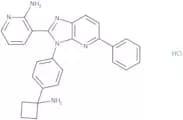
CAS:<p>Miransertib (ARQ 092) HCl is a selective inhibitor, which is a synthetic small molecule specifically targeting the AKT pathway. It is sourced through specialized chemical synthesis designed to interfere with key signaling pathways implicated in the proliferation and survival of cancer cells. The mode of action involves the inhibition of the serine/threonine kinase AKT, an integral part of the PI3K/AKT/mTOR signaling pathway that is frequently dysregulated in various cancers.</p>Fórmula:C27H25ClN6Pureza:Min. 95%Peso molecular:468.98 g/molIPTG Hemidioxane
CAS:<p>A non-metabolizable allolactose analogue, widely used in molecular biology for overexpression of recombinant proteins from inducible systems under the control of lac promoter. IPTG binds to the LacI repressor and causes its release from the lac operator, allowing gene expression to take place. Present in vectors of pGEX, pGEM-T, pET, pRSET, pMAL class and others.</p>Pureza:Min. 95%Peso molecular:282.35 g/molDT2216
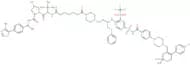
CAS:<p>DT2216 is a small-molecule anticancer compound, which is a product of rational drug design originating from advanced chemical synthesis techniques. The primary mode of action of DT2216 involves selectively targeting and disrupting BCL-XL interactions with pro-apoptotic proteins. By specifically degrading BCL-XL, DT2216 enhances the induction of apoptosis in cancer cells, thereby addressing the challenge of resistance associated with conventional therapies.</p>Fórmula:C77H96ClF3N10O10S4Pureza:95%NmrPeso molecular:1,542.4 g/molRosuvastatin
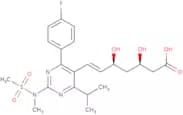
CAS:<p>Rosuvastatin is a synthetic lipid-lowering agent, which is a product of pharmaceutical manufacturing derived from extensive research in cardiovascular pharmacology. It functions as an HMG-CoA reductase inhibitor, effectively blocking the enzyme responsible for cholesterol biosynthesis in the liver. By inhibiting this enzyme, Rosuvastatin reduces the production of cholesterol, especially low-density lipoprotein (LDL) cholesterol, which is known to contribute to atherosclerosis.</p>Fórmula:C22H28FN3O6SPureza:Min. 95%Peso molecular:481.54 g/mol