Ligas Organometálicas
Nesta categoria, você encontrará um grande número de moléculas organometálicas usadas como ligantes em biomoléculas. Esses ligantes organometálicos podem ser usados em química orgânica e síntese no laboratório. Eles desempenham um papel crucial na formação de complexos de coordenação e na catálise de várias reações químicas. Na CymitQuimica, oferecemos uma seleção diversificada de ligantes organometálicos de alta qualidade para apoiar suas pesquisas e necessidades industriais.
Subcategorias de "Ligas Organometálicas"
- Ligantes de Buchwald(22 produtos)
- DPEN(4 produtos)
- DPHEN(4 produtos)
- JOSIPHOS(4 produtos)
- Fosfina(497 produtos)
- Porfirinas(75 produtos)
Foram encontrados 2887 produtos de "Ligas Organometálicas"
Ordenar por
Pureza (%)
0
100
|
0
|
50
|
90
|
95
|
100
Berubicin
CAS:<p>Berubicin is an anthracycline-based chemotherapeutic agent, which is a semi-synthetic derivative sourced primarily from the bacterium Streptomyces peucetius. It operates by intercalating into DNA strands, disrupting the replication and transcription processes, which ultimately induces apoptosis in rapidly dividing tumor cells.</p>Fórmula:C34H35NO11Pureza:Min. 95%Cor e Forma:PowderPeso molecular:633.6 g/molOltipraz metabolite M2
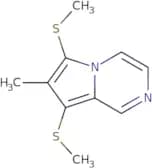
CAS:<p>Oltipraz metabolite M2 is a pharmacologically active compound, which is derived from the metabolism of Oltipraz, a well-known chemopreventive agent. This metabolite is produced through hepatic biotransformation processes and plays a critical role in mediating the biological effects associated with its parent compound.</p>Fórmula:C10H12N2S2Pureza:Min. 95%Peso molecular:224.4 g/molKUNB31
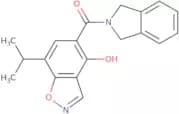
CAS:<p>KUNB31 is a synthetic enzyme inhibitor, which is an engineered compound designed to interfere with the activity of specific enzymes in various biochemical pathways. This product is synthesized through a series of complex chemical reactions, ensuring high specificity and activity against target enzymes. Its mode of action involves binding to the active sites of enzymes, thereby preventing substrates from interacting and altering enzymatic activity.</p>Fórmula:C19H18N2O3Pureza:Min. 95%Peso molecular:322.4 g/molLY 294002
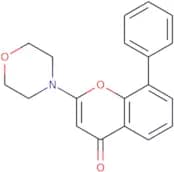
CAS:<p>First generation PI 3-kinase inhibitor</p>Fórmula:C19H17O3NPureza:Min. 95%Cor e Forma:White To Off-White SolidPeso molecular:307.12084Dooku1
CAS:<p>Dooku1 is a synthetic biochemical compound designed for advanced research applications. It is derived through a complex series of organic synthesis processes that utilize specialized reactants and catalysts to achieve high purity and specificity. The compound functions by selectively binding to molecular targets, allowing researchers to investigate cellular pathways and molecular interactions with greater precision.</p>Fórmula:C13H9Cl2N3OSPureza:Min. 95%Peso molecular:326.2 g/molMozavaptan
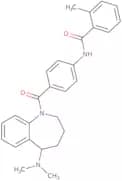
CAS:Produto Controlado<p>Mozavaptan is a pharmacological agent that acts as a vasopressin V2 receptor antagonist. It is derived through synthetic chemical processes designed to target specific neurohormonal pathways in the body. Mozavaptan exerts its effects by inhibiting the action of vasopressin, a hormone that promotes water reabsorption in the kidneys. By blocking the vasopressin receptors, it enhances water excretion and corrects imbalances in electrolyte levels, particularly addressing conditions like hyponatremia.</p>Fórmula:C27H29N3O2Pureza:Min. 98 Area-%Cor e Forma:PowderPeso molecular:427.54 g/molAlprostadil alfadex
CAS:<p>Alprostadil alfadex is a medicinal drug that has been found to have anticancer properties. It works by inhibiting the growth of cancer cells and inducing apoptosis, or programmed cell death. This drug is an analog of a naturally occurring protein that acts as a tumor inhibitor in humans. Alprostadil alfadex has been shown to be effective against various types of cancer, including those found in the urinary tract and prostate. It works by blocking the action of certain enzymes and proteins involved in the cell cycle, thereby preventing cancer cells from dividing and multiplying. Chinese researchers have also found that this drug has a kinase-inhibiting effect, which may contribute to its anticancer activity.</p>Fórmula:C36H60O30•C20H34O5Pureza:Min. 95%Cor e Forma:PowderPeso molecular:1,327.3 g/molALX-1393
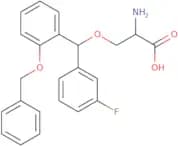
CAS:<p>ALX-1393 is a synthetic compound that acts as an inhibitor, specifically targeting the glycine transporter 1 (GlyT1). As a small molecule inhibitor derived from chemical synthesis, it modulates neurotransmitter systems by blocking the reuptake of glycine, an important co-agonist of the NMDA receptor, in the central nervous system. The mode of action of ALX-1393 involves binding to the GlyT1 transporter, thereby increasing the synaptic concentration of glycine. This elevation in glycine levels enhances NMDA receptor function, which is crucial for synaptic plasticity, learning, and memory.</p>Fórmula:C23H22FNO4Pureza:Min. 95%Peso molecular:395.4 g/molVasopressin
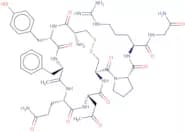
CAS:<p>Vasopressin receptor agonist; antidiuretic</p>Fórmula:C46H65N15O12S2Pureza:Min. 95%Cor e Forma:White PowderPeso molecular:1,084.23 g/mol2-Benzyl-2,8-diazaspiro[4.5]decan-1-one hydrochloride
CAS:<p>2-Benzyl-2,8-diazaspiro[4.5]decan-1-one hydrochloride is a chemical compound utilized chiefly in pharmacological research. It is synthesized through organic chemical processes designed to produce spirocyclic frameworks that can interact specifically with biological macromolecules. The compound acts as a ligand in receptor studies, allowing researchers to investigate the binding properties and activities at selective receptor subtypes.</p>Fórmula:C15H20N2O•HClPureza:Min. 95%Peso molecular:280.79 g/molBenzoic acid 5-amino-1-(4-methoxy-benzenesulfonyl)-1H-pyrazol-3-yl ester
CAS:<p>Benzoic acid 5-amino-1-(4-methoxy-benzenesulfonyl)-1H-pyrazol-3-yl ester is a synthetic chemical compound used primarily in advanced organic synthesis. It is derived from benzoic acid and functionalized with a pyrazole moiety, enhancing its reactivity and versatility in chemical transformations. This compound acts as an intermediate in the synthesis of more complex molecules, playing a crucial role as a precursor or reagent due to its unique structure, which facilitates targeted chemical modifications.</p>Fórmula:C17H15N3O5SPureza:Min. 95%Peso molecular:373.4 g/molUK 383367
CAS:<p>UK 383367 is a chemical compound classified as a synthetic small molecule, which is derived from a meticulously controlled chemical synthesis process. Its mode of action involves modulating specific biochemical pathways by binding to target receptors, thereby influencing cellular processes at a molecular level. This compound is utilized extensively in pharmaceutical research for its potential therapeutic effects, particularly in the context of investigating receptor activity and signaling pathways. Additionally, UK 383367 finds applications in various industrial processes, serving as an intermediate in the synthesis of more complex compounds. Due to its precision in targeting and influencing biological systems, UK 383367 is a valuable tool for scientists seeking to elucidate the mechanistic pathways underlying disease and for the development of novel therapeutic strategies.</p>Fórmula:C15H24N4O4Pureza:Min. 95%Peso molecular:324.38 g/molNalmefene
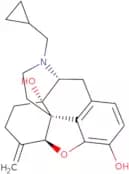
CAS:Produto Controlado<p>μ- and κ- opioid receptor antagonist; partial agonist of δ- opioid receptors</p>Fórmula:C21H25NO3Pureza:Min. 95%Peso molecular:339.43 g/molFAPI-46 trifluoroacetate
CAS:<p>FAPI-46 trifluoroacetate is a fibroblast activation protein (FAP) inhibitor, which is synthesized as part of targeted cancer research efforts. It is derived from chemical engineering processes focusing on the modification of small molecules to selectively interact with FAP, an enzyme overexpressed in cancer-associated fibroblasts (CAFs) within the tumor microenvironment. FAPI-46 binds to and inhibits FAP, reducing its enzymatic activity. By blocking FAP, FAPI-46 trifluoroacetate disrupts the tumor-promoting interactions between CAFs and tumor cells, potentially impeding tumor growth and progression.</p>Fórmula:C41H57F2N11O9•(C2HF3O2)xPureza:Min. 95%PI3K-γ inhibitor 1
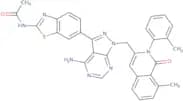
CAS:<p>PI3K-gamma inhibitor 1 is a small molecule inhibitor, which is selectively synthesized for targeting the PI3K-gamma isoform. This inhibitor is derived through precise medicinal chemistry, involving the synthesis of compounds that specifically interact with the catalytic domain of the phosphoinositide 3-kinase gamma (PI3K-γ) enzyme. Its mode of action involves the selective inhibition of the PI3K-γ pathway, a critical signaling route responsible for modulating immune cell functions and inflammatory responses.</p>Fórmula:C32H26N8O2SPureza:Min. 95%Peso molecular:586.67 g/molUM729
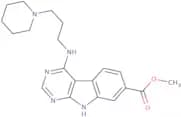
CAS:<p>UM729 is an advanced surface coating, which is a chemical formulation with the aim of enhancing surface durability and protection. Sourced from novel polymeric materials, UM729 is designed to form a robust and resilient layer when applied to various substrates. Its mode of action involves cross-linking at the molecular level, creating a cohesive barrier that offers resistance to environmental factors such as abrasion, moisture, and UV radiation.</p>Fórmula:C20H25N5O2Pureza:Min. 95%Peso molecular:367.44 g/molROPA
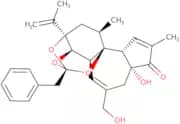
CAS:<p>ROPA or resiniferonol 9,13,14-orthophenylacetate is an analogue of resiniferatoxin that has been shown to have synergistic interactions with detergents, such as Tween-80, in the removal of wheat germ agglutinin (WGA) from Brucella. ROPA is also active against herpes simplex virus and tumour necrosis factor-alpha (TNF-α). When combined with a basic protein, it can activate the receptor and inhibits the formation of dry weight. ROPA has been shown to be able to inhibit the growth of infectious bacteria, such as those that cause tuberculosis or brucellosis. The mechanism for this inhibition is not clear, but may be due to its ability to bind to water molecules and inhibit their binding with bacterial cytoplasmic membranes.</p>Fórmula:C28H32O6Pureza:Min. 95%Peso molecular:464.55 g/molJ 104129 fumarate
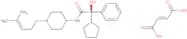
CAS:<p>A novel muscarinic M3 receptor antagonist with high selectivity for M3 over M2 receptors</p>Fórmula:C24H36N2O2·C4H4O4Pureza:Min. 95%Peso molecular:500.63 g/mol1,2-Dipalmitoyl-3-dimethylammonium-propane
CAS:<p>1,2-Dipalmitoyl-3-dimethylammonium-propane is a cationic lipid, which is a type of synthetic lipid commonly used in biochemical and biophysical research. It is sourced from chemical synthesis, involving the formulation of lipid molecules with specific chemical modifications to confer particular properties. The mode of action of this compound involves its ability to integrate into lipid bilayers and form liposomes. These liposomes can encapsulate nucleic acids, facilitating their delivery into cells by merging with cell membranes, which is crucial for gene delivery applications.</p>Fórmula:C37H73NO4Pureza:Min. 95%Peso molecular:595.98 g/molL-MobileTrex
CAS:<p>L-MobileTrex is an advanced analytical technology platform, which is a product of cutting-edge research in data science and computational modeling. This platform operates by integrating multi-dimensional datasets through sophisticated algorithms, providing enhanced data visualization and interpretability.</p>Fórmula:C23H23N5O5Pureza:Min. 95%Peso molecular:449.46 g/mol




![2-Benzyl-2,8-diazaspiro[4.5]decan-1-one hydrochloride](/_next/image/?url=https%3A%2Fstatic.cymitquimica.com%2Fproducts%2F3D%2Fthumb-webp%2FVSB16608.webp&w=3840&q=75)