Ligas Organometálicas
Nesta categoria, você encontrará um grande número de moléculas organometálicas usadas como ligantes em biomoléculas. Esses ligantes organometálicos podem ser usados em química orgânica e síntese no laboratório. Eles desempenham um papel crucial na formação de complexos de coordenação e na catálise de várias reações químicas. Na CymitQuimica, oferecemos uma seleção diversificada de ligantes organometálicos de alta qualidade para apoiar suas pesquisas e necessidades industriais.
Subcategorias de "Ligas Organometálicas"
- Ligantes de Buchwald(22 produtos)
- DPEN(4 produtos)
- DPHEN(4 produtos)
- JOSIPHOS(4 produtos)
- Fosfina(497 produtos)
- Porfirinas(75 produtos)
Foram encontrados 2887 produtos de "Ligas Organometálicas"
Ordenar por
Pureza (%)
0
100
|
0
|
50
|
90
|
95
|
100
VS1
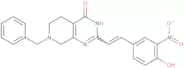
CAS:<p>VS1 is a novel synthetic peptide, which is engineered to function as an antimicrobial agent. This peptide originates from recombinant DNA technology, providing a customizable approach to target specific microbial strains. Its mode of action involves the selective disruption of microbial cell membranes, leading to the lysis and consequent death of the target cell. The specificity of VS1 for microbial cells over mammalian cells minimizes off-target effects, making it a highly effective agent for infection control.</p>Fórmula:C22H20N4O4Pureza:Min. 95%Peso molecular:404.42 g/molN-(5-Chloro-2-hydroxyphenyl)-3-(1-piperidinylsulfonyl)benzamide
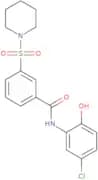
CAS:<p>A negative allosteric modulator of Flt-3 receptor tyrosine kinase</p>Fórmula:C18H19ClN2O4SPureza:Min. 95%Peso molecular:394.87 g/molCAY10727
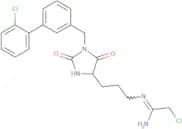
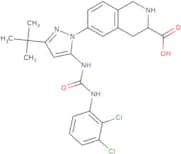
CAS:<p>CAY10727 is a potent biochemical inhibitor, which is derived from synthetic sources with specific action targeting cyclooxygenase-2 (COX-2) enzymes. It functions by selectively blocking the enzymatic activity of COX-2, which plays a critical role in the biosynthesis of prostaglandins involved in inflammatory responses. This targeted inhibition allows the study of COX-2-related pathways without interference from COX-1, which is significant for maintaining gastrointestinal integrity.The use and applications of CAY10727 are primarily in research settings where understanding the pathways involved in inflammation, pain, and cancer progression are critical. This compound is utilized in various in vitro experiments to delineate the role of COX-2 in cellular and molecular contexts, enabling scientists to dissect complex signaling networks. Given its specificity, CAY10727 is instrumental in the development of new therapeutic approaches where selective COX-2 inhibition might offer benefits over non-selective inhibitors.</p>Fórmula:C21H22Cl2N4O2Pureza:Min. 95%Peso molecular:433.3 g/molFoslevodopa
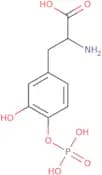
CAS:<p>Foslevodopa is a prodrug that is converted to levodopa in the body. This drug has been shown to be safe and effective for the treatment of Parkinson's disease with minimal side effects, although it does not affect the progression of the disease. Foslevodopa is a synthetic compound that has been synthesized using chemical methods. It can be manufactured in large quantities, making it a scalable pharmaceutical formulation.</p>Fórmula:C9H12NO7PPureza:Min. 95%Peso molecular:277.17 g/molN-(5-Aminopentyl) methotrexate amide-LC-biotin
<p>N-(5-Aminopentyl) methotrexate amide-LC-biotin is a specialized bioconjugate, derived through the conjugation of methotrexate, an established antifolate drug, with an LC-biotin moiety. This product is synthesized by covalently linking methotrexate, which is known for its role in cancer therapy through the inhibition of dihydrofolate reductase (DHFR), to a biotin moiety via a long-chain spacer. The resultant bioconjugate retains the therapeutic effects of methotrexate, particularly in its ability to interrupt nucleotide synthesis, thereby affecting cell division in rapidly proliferating cancer cells.The inclusion of biotin in the structure allows for facile attachment to avidin or streptavidin-labeled systems, facilitating targeted delivery and enhanced detection in molecular and cellular studies. The primary application of N-(5-Aminopentyl) methotrexate amide-LC-biotin lies in the realm of targeted drug delivery and advanced research into methotrexate metabolism. By leveraging the high affinity of biotin-streptavidin interactions, researchers can effectively study the biodistribution and cellular uptake of methotrexate, advancing cancer therapeutic strategies and providing insights into antifolate drug mechanisms at the molecular level.</p>Fórmula:C41H59N13O7SPureza:Min. 95%Cor e Forma:PowderPeso molecular:878.06 g/molOsmanthuside H
CAS:<p>Osmanthuside H is a natural compound, specifically a phenylethanoid glycoside, which is predominantly sourced from the plant Osmanthus fragrans, as well as other related species. This compound is characterized by a specific glycosidic linkage that contributes to its stability and bioactivity. The mode of action of Osmanthuside H primarily involves its significant antioxidant properties, attributed to the presence of its phenolic structure and glycosidic moiety. This facilitates its role in scavenging free radicals and reducing oxidative stress within biological systems.</p>Fórmula:C19H28O11Pureza:Min. 95%Peso molecular:432.4 g/molAlvameline
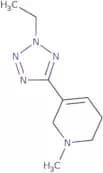
CAS:<p>Alvameline is a muscarinic receptor agonist, which is a small molecule drug derived from synthetic chemistry processes. Its primary source is the intricate design of pharmacologically active compounds targeting the central nervous system. Alvameline exerts its effects through selective agonism of muscarinic acetylcholine receptors, playing a pivotal role in modulating neurotransmission. Specifically, by activating these receptors, it enhances cholinergic signaling, which is crucial for cognitive functions such as memory and attention.</p>Fórmula:C9H15N5Pureza:Min. 95%Peso molecular:193.25 g/molBCR-ABL-IN-2
CAS:<p>BCR-ABL-IN-2 is a small molecule inhibitor, which is synthetically derived for precision-targeted therapeutic applications. It functions as a selective inhibitor of the BCR-ABL fusion protein, a tyrosine kinase that is constitutively active in certain leukemias, particularly chronic myeloid leukemia (CML). The product is engineered via chemical synthesis to ensure high specificity and selectivity in binding to the ATP-binding site of the BCR-ABL protein, effectively inhibiting its kinase activity.</p>Fórmula:C24H25Cl2N5O3Pureza:Min. 95%Peso molecular:502.4 g/molCB-1158
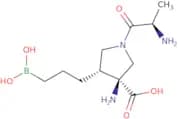
CAS:<p>CB-1158 is an arginase inhibitor, which is a small molecule derived from a synthetic source designed to modulate immune functions. Its mode of action involves the inhibition of the arginase enzyme, a key player in the urea cycle responsible for the hydrolysis of arginine into ornithine and urea. By blocking arginase, CB-1158 effectively prevents the depletion of extracellular arginine, a vital amino acid required for the activation and proliferation of T cells within the immune system. This inhibition leads to enhanced immune responses against tumors.</p>Fórmula:C11H22BN3O5Pureza:Min. 95%Peso molecular:287.12 g/molPF-06658607
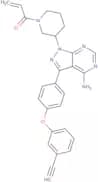
CAS:<p>PF-06658607 is an investigational drug that is classified as a small molecule inhibitor. It is developed from synthetic chemical sources with a specific mode of action targeting aggrecanases, enzymes that degrade aggrecan, a critical component of cartilage. By inhibiting these enzymes, PF-06658607 aims to prevent the breakdown of cartilage in joints.</p>Fórmula:C27H24N6O2Pureza:Min. 95%Cor e Forma:PowderPeso molecular:464.5 g/molFR-190809
CAS:<p>FR-190809 is a peptide that acts as an inhibitor of protein interactions. It binds to the receptor and blocks the activation of phospholipase C. FR-190809 also stimulates the production of cyclic AMP, which in turn activates protein kinase A, thereby inhibiting the production of cAMP. FR-190809 has been shown to have a high purity and is used as a research tool for studying protein interactions.</p>Fórmula:C29H34FN3O6S2Pureza:Min. 95%Peso molecular:603.7 g/molMK 4827
CAS:<p>Inhibitor of PARP1 and PARP2 enzymes</p>Fórmula:C19H20N4OPureza:Min. 96 Area-%Cor e Forma:White PowderPeso molecular:320.39 g/molTrypsin
CAS:<p>Trypsin (EC 3.4.21.4) is a protease that hydrolyses proteins by cleaving the peptide bond at the carboxyl side of the positively charged amino acid (Lysine or Arginine). Trypsin belongs to a family of serine proteases, as it has a serine in its active site. Trypsin can be inhibited by using trypsin inhibitor Alpha 1 Antitrypsin.</p>Pureza:Min. 95%Cor e Forma:White PowderRef: 3D-FT74908
Produto descontinuadoIxabepilone
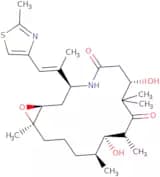
CAS:<p>Microtubule-stabilizing agent; antineoplastic;</p>Fórmula:C27H42N2O5SPureza:Min. 95 Area-%Cor e Forma:White PowderPeso molecular:506.71 g/molAR-R 17779 hydrochloride - Bio-X ™
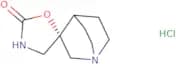
CAS:<p>AR-R 17779 is a selective agonist for α7 nicotinic acetylcholine receptors or nAChRs. It is suggested that AR-R 17779 reduces formation of atherosclerotic plaques and abdominal aortic aneurysms in apolipoprotein E-deficient mice.</p>Fórmula:C9H14N2O2•HClPureza:Min. 95%Cor e Forma:PowderPeso molecular:218.68 g/molArtesunate
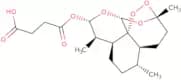
CAS:<p>Prodrug of dihydroartemisin (DHA); antimalarial</p>Fórmula:C19H28O8Pureza:Min. 98 Area-%Cor e Forma:PowderPeso molecular:384.42 g/molTAPI-1
CAS:<p>TAPI-1 is an inhibitor of TACE (TNF-α converting enzyme, also known as ADAM17) and matrix metalloproteinases (MMPs). It blocks the shedding of several cell surface proteins, including tumor necrosis factor-alpha (TNF-α), IL-6 receptor, and TNF receptors p60 (TNFRI) and p80 (TNFRII).</p>Fórmula:C26H37N5O5Pureza:Min. 95%Peso molecular:499.6 g/molRef: 3D-WGA23571
Produto descontinuadoElafibranor
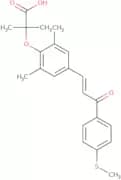
CAS:<p>Please enquire for more information about Elafibranor including the price, delivery time and more detailed product information at the technical inquiry form on this page</p>Fórmula:C22H24O4SPureza:Min. 95%Peso molecular:384.49 g/molUM171
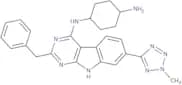
CAS:<p>UM171 is a small-molecule compound, which is derived from synthetic chemical processes with properties that enable the expansion of human hematopoietic stem cells (HSCs) in vitro. It acts by targeting and modulating specific cellular pathways to enhance the self-renewal and proliferation of HSCs without inducing differentiation.<br><br>The primary application of UM171 lies in the field of regenerative medicine and transplantation. By facilitating the expansion of HSCs, UM171 holds significant potential in improving the outcomes of bone marrow and cord blood transplants. This is particularly relevant in contexts where donor cell availability is limited or where augmenting the engraftment potential of HSCs is critical. The ability to expand HSCs ex vivo opens avenues for improved treatment of hematological disorders, potentially allowing for more effective and accessible transplant therapies. Researchers are exploring its utility in diverse experimental setups, aiming to translate this compound's capabilities into clinical settings to enhance patient outcomes in hematopoietic recovery and therapy.</p>Fórmula:C25H27N9Pureza:Min. 95%Cor e Forma:PowderPeso molecular:453.54 g/molD-Threonic acid lithium salt
CAS:<p>D-Threonic acid lithium salt is a cell signaling molecule that belongs to the class of ligands. It has been used as a research tool in pharmacology and protein interaction studies. D-Threonic acid lithium salt can activate ion channels, which are cellular membrane proteins that allow ions to flow in or out of cells. D-Threonic acid lithium salt also interacts with receptors, which are proteins on the surface of cells that receive chemical signals from outside the cells. Receptors can be either agonists or antagonists. D-Threonic acid lithium salt is a ligand for receptor tyrosine kinase, which is involved in cell growth and differentiation.</p>Fórmula:C4H8O5·LiPureza:Min. 95%Ref: 3D-VAA24626
Produto descontinuado