Ligas Organometálicas
Nesta categoria, você encontrará um grande número de moléculas organometálicas usadas como ligantes em biomoléculas. Esses ligantes organometálicos podem ser usados em química orgânica e síntese no laboratório. Eles desempenham um papel crucial na formação de complexos de coordenação e na catálise de várias reações químicas. Na CymitQuimica, oferecemos uma seleção diversificada de ligantes organometálicos de alta qualidade para apoiar suas pesquisas e necessidades industriais.
Subcategorias de "Ligas Organometálicas"
- Ligantes de Buchwald(22 produtos)
- DPEN(4 produtos)
- DPHEN(4 produtos)
- JOSIPHOS(4 produtos)
- Fosfina(497 produtos)
- Porfirinas(75 produtos)
Foram encontrados 2887 produtos de "Ligas Organometálicas"
Ordenar por
Pureza (%)
0
100
|
0
|
50
|
90
|
95
|
100
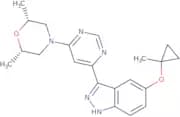
MLi-2
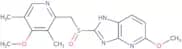
CAS:<p>A brain-penetrant inhibitor of leucin-rich repeat kinase 2 (LRRK2) with IC50 = 0.76 nM and anti-parkinsonian activity. Gain-of-function mutations in LRRK2 gene lead to increased familial and idiopathic risk of developing the disease. The inhibitors of the kinase activity have therapeutic potential against Parkinson’s disease.</p>Fórmula:C21H25N5O2Pureza:Min. 98 Area-%Cor e Forma:PowderPeso molecular:379.46 g/molTenatoprazole
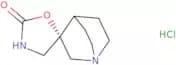
CAS:<p>H+/K+ ATPase inhibitor</p>Fórmula:C16H18N4O3SPureza:Min. 95%Cor e Forma:PowderPeso molecular:346.41 g/molAR-R 17779 hydrochloride
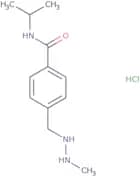
CAS:<p>AR-R 17779 is a selective agonist for α7 nicotinic acetylcholine receptors (nAChRs) (Ki value = 190 nM for rat α7 receptor). This compound has use as a tool to study the function of α7 nicotinic receptors. One such study revealed a role for α7 nicotinic receptors in nicotine-mediated excitatory effects on hippocampal learning and memory. AR-R17779 reduces formation of atherosclerotic plaques and abdominal aortic aneurysms in apolipoprotein E-deficient mice.</p>Fórmula:C9H14N2O2•HClPureza:Min. 95%Cor e Forma:White PowderPeso molecular:218.68 g/molProcarbazine HCl - Bio-X ™
CAS:<p>Procarbazine is an alkylating agent used in chemotherapy to treat brain cancer and Hodgkin's lymphoma. It methylates guanine in DNA which causes the strands to become prone to breakage, thus inhibiting both DNA and RNA synthesis. The drug has been shown to be effective in vitro against a variety of human carcinoma cell lines.</p>Fórmula:C12H20ClN3OPureza:Min. 95%Cor e Forma:PowderPeso molecular:257.76 g/molPNU 159682
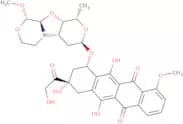
CAS:<p>DNA alkylating agent; highly potent metabolite of nemorubicin</p>Fórmula:C32H35NO13Pureza:Min. 90 Area-%Cor e Forma:Red PowderPeso molecular:641.62 g/molGNE 371
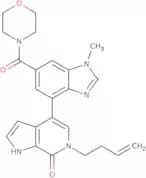
CAS:<p>A chemical probe for the dual bromodomains of human transcription-initiation-factor TFIID subunit 1 (TAF1). GNE 371 binds TAF1 with an IC50 of 10 nM and is selective over other bromodomain family members. Exerts anti-proliferative effects in synergy with BET inhibitor JQ1.</p>Fórmula:C24H25N5O3Pureza:(Hplc-Ms) Min. 98 Area-%Peso molecular:431.49 g/molPentoxifylline
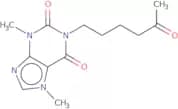
CAS:Produto Controlado<p>Phosphodiesterase inhibitor</p>Fórmula:C13H18N4O3Pureza:Min. 95%Cor e Forma:White PowderPeso molecular:278.31 g/molPYR 41
CAS:<p>PYR-41 is a small molecule inhibitor, which is sourced from chemical synthesis. It functions primarily by targeting ubiquitin-activating enzymes, particularly the E1 enzyme, to disrupt the ubiquitination process. This mechanism effectively hampers the transfer of ubiquitin to substrate proteins, thereby modulating protein degradation and signaling pathways.</p>Fórmula:C17H13N3O7Pureza:Min. 95%Peso molecular:371.3 g/molAZD 5069
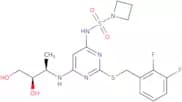
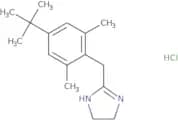
CAS:<p>CXCR2 antagonist</p>Fórmula:C18H23F2N5O4S2Pureza:Min. 95%Cor e Forma:White To Off-White SolidPeso molecular:475.11595Xylometazoline hydrochloride
CAS:<p>alpha-adrenoceptor agonist; nasal decongestant</p>Fórmula:C16H25ClN2Pureza:Min. 99 Area-%Cor e Forma:PowderPeso molecular:280.84 g/molBX471 hydrochloride
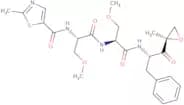
CAS:<p>BX471 hydrochloride is a selective antagonist of the C-C chemokine receptor type 1 (CCR1), which is synthesized through rigorous chemical processes. It operates by inhibiting the binding of chemokines to the CCR1 receptor, thus interfering with the signaling pathways that lead to inflammation and immune responses. This mechanism is specifically effective in modulating immune system functions and controlling pathophysiological responses in various tissue types.</p>Fórmula:C21H25Cl2FN4O3Pureza:Min. 98 Area-%Cor e Forma:PowderPeso molecular:471.35 g/molOprozomib
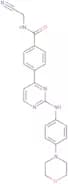
CAS:<p>Proteosome inhibitor; pro-apoptotic; has anti-myeloma activity</p>Fórmula:C25H32N4O7SPureza:Min. 95%Cor e Forma:White To Off-White SolidPeso molecular:532.61 g/molCYT 387
CAS:<p>Inhibits JAK1 and JAK2 kinases</p>Fórmula:C23H22N6O2Pureza:Min. 95%Cor e Forma:PowderPeso molecular:414.46 g/molPhosphorylated EGFR peptide substrate
<p>Phosphorylated EGFR peptide substrate.</p>Pureza:Min. 95%Peso molecular:1,700.8 g/molAmlodipine besylate - Bio-X ™
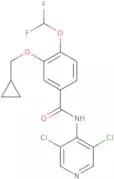
CAS:<p>Amlodipine is a calcium channel blocker that is used to treat hypertension and angina. This drug inhibits the influx of calcium ions into both vascular smooth muscle and cardiac muscle.</p>Fórmula:C20H25ClN2O5•C6H6O3SPureza:Min. 95%Cor e Forma:PowderPeso molecular:567.05 g/molRoflumilast - Bio-X ™
CAS:<p>Roflumilast is a selective phosphodiesterase-4 inhibitor that is used for the treatment of exacerbations in patients with chronic obstructive pulmonary disease (COPD). It is also used to treat plaque psoriasis. This drug has anti-inflammatory and immunomodulatory effects as it aids in increasing levels of cAMP.</p>Fórmula:C17H14Cl2F2N2O3Pureza:Min. 95%Cor e Forma:PowderPeso molecular:403.21 g/molDG 172 hydrochloride
CAS:<p>Potent inverse agonist of peroxisome proliferator-activated receptor PPARβ and PPARδ with IC50 value of 27 nM. In mouse myoblasts, DG 172 enhanced recruitment of transcriptional corepressor and down-regulated transcription of PPARβ/δ target gene Angptl4. DG 172 also possess a PPARβ/δ-independent activity on bone marrow cells and promotes dendritic cell differentiation.</p>Fórmula:C20H20BrN3·HClPureza:Min. 95%Cor e Forma:SolidPeso molecular:418.76 g/molPARP1 (651-660)
<p>Amino acids 651-660 of Poly(ADP-ribose) polymerase 1 (PARP1). PARP1 is a nuclear DNA repair enzyme that binds to DNA when damage is detected. PARP1 coordinates double and single strand break repair by first cleaving NAD+ into nicotinamide and ADP-ribose, and then synthesising poly-(ADP-ribose) (PAR) chains from ADP-ribose on target proteins (PARylation). PARylation of histone proteins mediates the relaxation of the chromatin and recruitment of DNA-break repair enzymes.PARP1 can also act as a transcriptional co-activator, modulating the expression of itself and many other genes by direct binding to or PARylation of enhancers and promoters. PARP1 is also involved in maintaining mtDNA.PARP1 belongs to the PARP family which has 7 known and 10 putative members. PARP1 accounts for >85% of the PARP activity in cellular systems.</p>Pureza:Min. 95%Cor e Forma:PowderPeso molecular:1,025.6 g/molDovitinib base
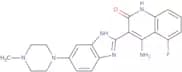
CAS:<p>Receptor tyrosine kinase inhibitor; anti-angiogenesis; anti-oncogenesis</p>Fórmula:C21H21FN6OPureza:Min. 98 Area-%Cor e Forma:PowderPeso molecular:392.43 g/molTraxoprodil
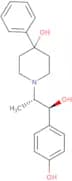
CAS:Produto Controlado<p>NMDA glutamate receptor antagonist; anti-depressant</p>Fórmula:C20H25NO3Pureza:Min. 98 Area-%Cor e Forma:PowderPeso molecular:327.42 g/mol